EU Sanctions Russian Propagandists, Military Suppliers, and Officials in New Listings

TRM User Conference
Which mission will you select?
Key takeaways
- The EU designated 34 individuals and 47 entities across three instruments: Russia’s military-industrial complex and shadow fleet, officials linked to Alexei Navalny’s persecution and death, and foreign information manipulation networks.
- Today’s FIMI listings include Kirill Fedorov, a military blogger who solicits crypto donations via Telegram for Russian frontline units. TRM has tracked his donations flowing to non-custodial exchanges, global exchanges via intermediary addresses, and Garantex.
- For investigators and compliance teams, the on-chain record provides a way to map these networks, identify services processing their funds, and act on sanctions even when a listing arrives without an address.
{{horizontal-line}}
On June 15, 2026, the EU adopted restrictive measures against Russia to further constrain Russian resources in response to its invasion of Ukraine. The measures target 34 individuals and 47 entities across three areas: energy revenues and the military-industrial complex, foreign information manipulation, and human rights violations. The measures subject those listed to an asset freeze and bar EU citizens and companies from making funds or economic resources available to them.
What the package covers
The largest instrument targets Russia’s military-industrial complex and the oil “shadow fleet.” It lists nine individuals and 45 entities, including drone and component manufacturers supplying the Russian armed forces, shipping companies operating tankers that move Russian crude under irregular practices, and oil-trade intermediaries that obscure the origin of Russian energy exports.
A second instrument addresses human rights, listing 15 individuals and one entity tied to the persecution, poisoning, and death of Alexei Navalny. Those listed include FSB officers, prosecutors, and judges, alongside a facial-recognition company whose technology Russian authorities used to identify and detain protesters.
The hybrid activities listings
The third instrument covers Russia’s foreign information manipulation and interference (FIMI): the coordinated use of propaganda and disinformation to undermine support for Ukraine and destabilize the EU and its partners. The Council listed ten individuals and one entity, naming pro-Kremlin media figures including television host Anatoly Kuzichev, writer Roman Antonovskii, and Maria Volkonskaya, editor-in-chief of the state-controlled newspaper Krymskaya Gazeta, as well as the Presidential Foundation for Cultural Initiatives, a body created by decree of Vladimir Putin.
Today's FIMI listings included Kirill Fedorov, a military blogger and propagandist. He authors the Telegram channel “Kirill Fedorov/War. History of Weapons” and hosts a program on the Russian channel Solovyov LIVE. The EU designated him for spreading propaganda that justifies Russia’s war of aggression, portraying occupied Ukrainian territories as “liberated” and glorifying Russian forces.
According to the EU, Fedorov also raises money for Russian frontline units, presenting the campaigns as volunteer work while carrying pro-war messaging. TRM Labs has previously tracked pro-Russian networks soliciting crypto asset donations through Telegram to buy frontline supplies like drones, radios, and vehicles. While today’s designation did not contain any cryptocurrency addresses, TRM has been monitoring Fedorov’s cryptocurrency addresses and found that donations flow consistently to non-custodial and high-risk exchanges with no KYC requirements, to global exchanges through intermediary addresses, and to Garantex — the Russia-based exchange designated by OFAC, the EU, and the UK, and seized by international law enforcement in March 2025.
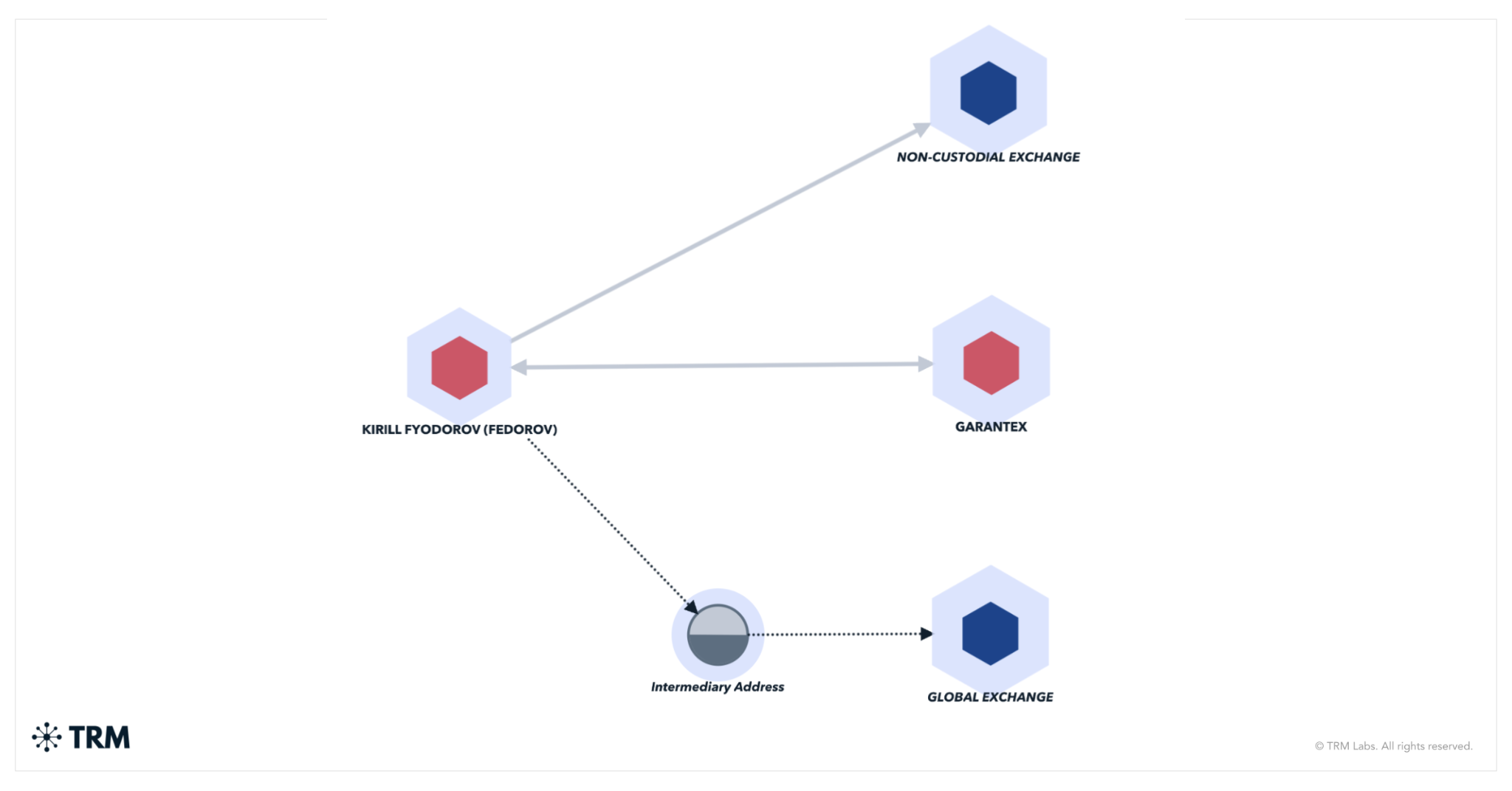
For investigators and compliance teams, the permanent on-chain record provides a way to map these networks, identify the services that process their funds, and act on sanctions even when a listing arrives without an address.
{{horizontal-line}}
Frequently asked questions (FAQs)
1. What did the EU designate on June 15, 2026?
The EU adopted three instruments designating 34 individuals and 47 entities for their roles in supporting Russia’s military-industrial complex and oil shadow fleet, human rights violations linked to Alexei Navalny’s persecution and death, and foreign information manipulation and interference targeting Ukraine and EU member states.
2. What is FIMI?
Foreign information manipulation and interference (FIMI) refers to the coordinated use of propaganda and disinformation to undermine support for Ukraine and destabilize the EU and its partners. The June 15 package designated ten individuals and one entity — including military bloggers, state media figures, and the Presidential Foundation for Cultural Initiatives — for FIMI activity.
3. Was Garantex designated in today’s package?
No. Garantex was previously designated by OFAC, the EU, and the UK, and was seized by international law enforcement in March 2025. It appears here because TRM’s on-chain monitoring of Kirill Fedorov found donations flowing to Garantex before its seizure.