Americans Are Buying Peptides From the Same Chinese Chemical Vendors Selling Fentanyl Precursors: Sales Up 32% Since 2023

TRM User Conference
Which mission will you select?
Key takeaways
- Chinese chemical vendors are adding peptides to catalogs that include fentanyl precursors, and some have promoted both openly
- Crypto inflows to these vendors grew each year from 2023 to 2025, and most payments have moved from Bitcoin to USDT on TRON
- The United States is the largest identifiable source of buyer funds
- The data shows that many grey-market peptide purchases are supporting the same Chinese chemical vendors that supply fentanyl precursors to drug trafficking networks
{{horizontal-line}}
The suppliers behind the peptide boom
Americans buying weight-loss peptides on the grey market are, in many cases, paying the same Chinese chemical manufacturers that US authorities have identified as a source of fentanyl precursors. About one in eight American adults have used a GLP-1 weight-loss or diabetes drug such as Ozempic or Wegovy, and with brand-name versions running well over USD 1,000 a month, a growing number are turning to a grey market that sells the same active ingredients as “research-grade” powder online, without a prescription. Weight-loss drugs are the most visible part of a broader boom in peptides — buyers also seek compounds sold for muscle growth, recovery, and tanning — and most of the powder going into those compounds is made in China.
Many of those Chinese suppliers are long-established chemical manufacturers. The Department of Justice (DOJ) and the Treasury Department have identified China-based chemical companies as a primary source of the precursor chemicals used to make fentanyl, including the precursors that reach drug trafficking organizations in Mexico. The DOJ brought its first charges against China-based chemical companies for trafficking fentanyl precursors in June 2023, and when the Treasury Department sanctioned one such firm, Guangzhou Tengyue, in 2025, TRM’s analysis noted its advertised catalog ran from fentanyl and amphetamine precursors to peptides. A March 2026 federal indictment charged Chinese fentanyl suppliers with terrorism financing, widening the legal exposure these firms face.
What has changed for these long-standing suppliers is how prominent peptides have become. More of these vendors now heavily feature peptides for weight loss and other use cases on their websites and advertising materials, even as they continue to sell fentanyl precursors from the same domains. Chinese chemical sellers have long accepted cryptocurrency for payment. TRM data shows inflows to these firms reached a high of USD 37.3 million in 2025. The United States is the biggest identifiable source of that customer spending.
How Chinese chemical suppliers sell both peptides and fentanyl precursors
As of Q3 2026, TRM has identified over 150 unique Chinese chemical manufacturers accepting payments in cryptocurrency, though not all of them are currently active. Of those, roughly 75% list both fentanyl precursors and peptides on their websites. That figure should be read as a lower bound, since some vendors may not openly list sensitive products like fentanyl precursors following a wave of sanctions and indictments.
On many of these sites, the peptides sit front and center while the fentanyl-class chemicals are partially hidden. Vendors typically keep precursor pages off the homepage and out of the site’s navigation, reachable only with a direct link. In TRM’s assessment, this concealment is deliberate: since the DOJ charges and Treasury sanctions described above, some sellers have pulled fentanyl-class listings from public view and quote them only in private messages.
Despite these obfuscation efforts, TRM research shows that Chinese chemical vendors are actively promoting and selling both fentanyl precursor chemicals and peptides concurrently. It is not possible to quantify what share of crypto inflows is associated with which products.
Anhui Rencheng Technology (ARTC) shows what these chemical storefronts look like. In June 2023 the DOJ charged ARTC in the Eastern District of New York with conspiring to manufacture and distribute fentanyl, one of the first US cases against a China-based chemical maker. As of September 2026, its site listed Melanotan II and semaglutide next to fentanyl-class chemicals including protonitazene and 1-Boc-4-piperidone.
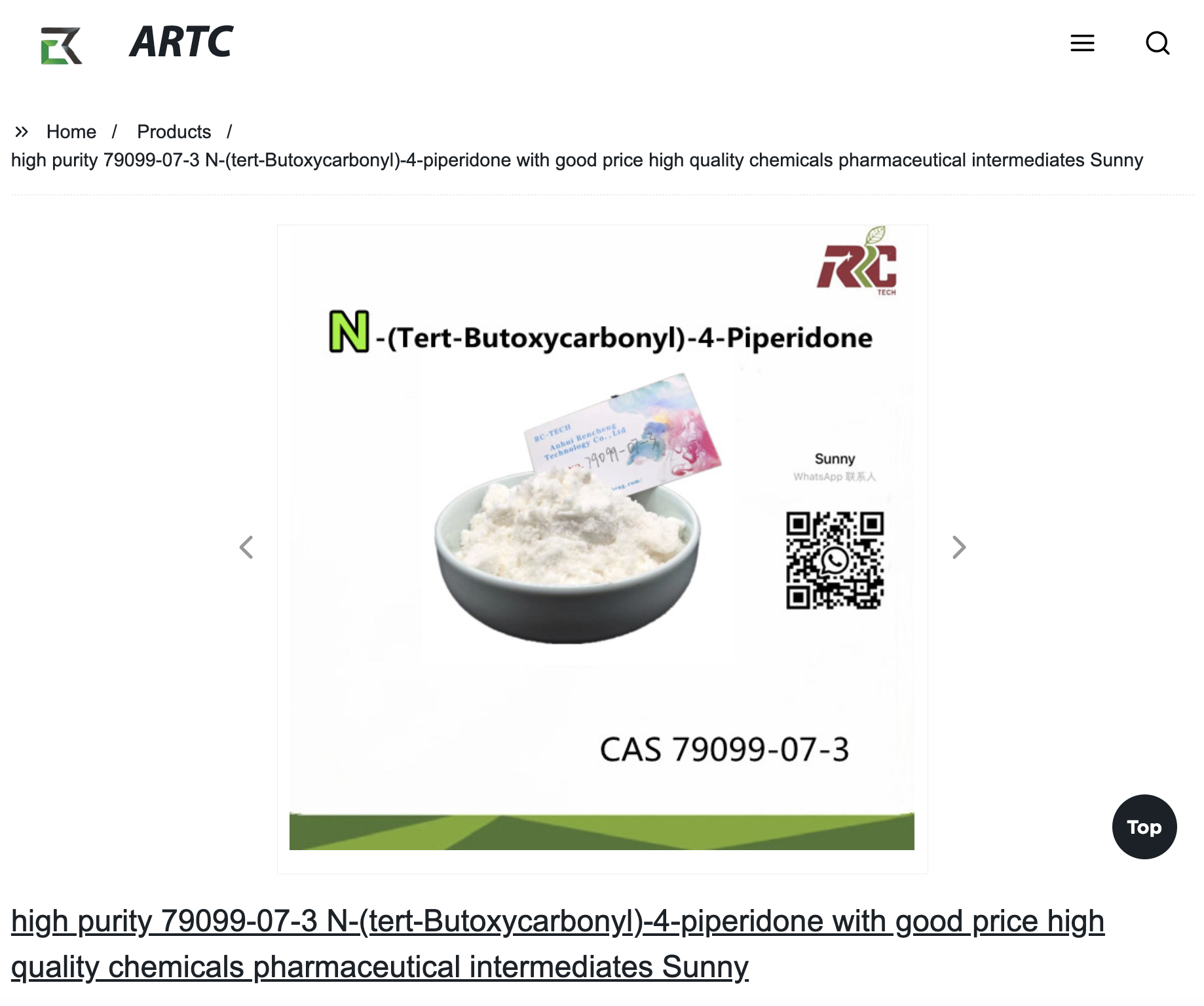
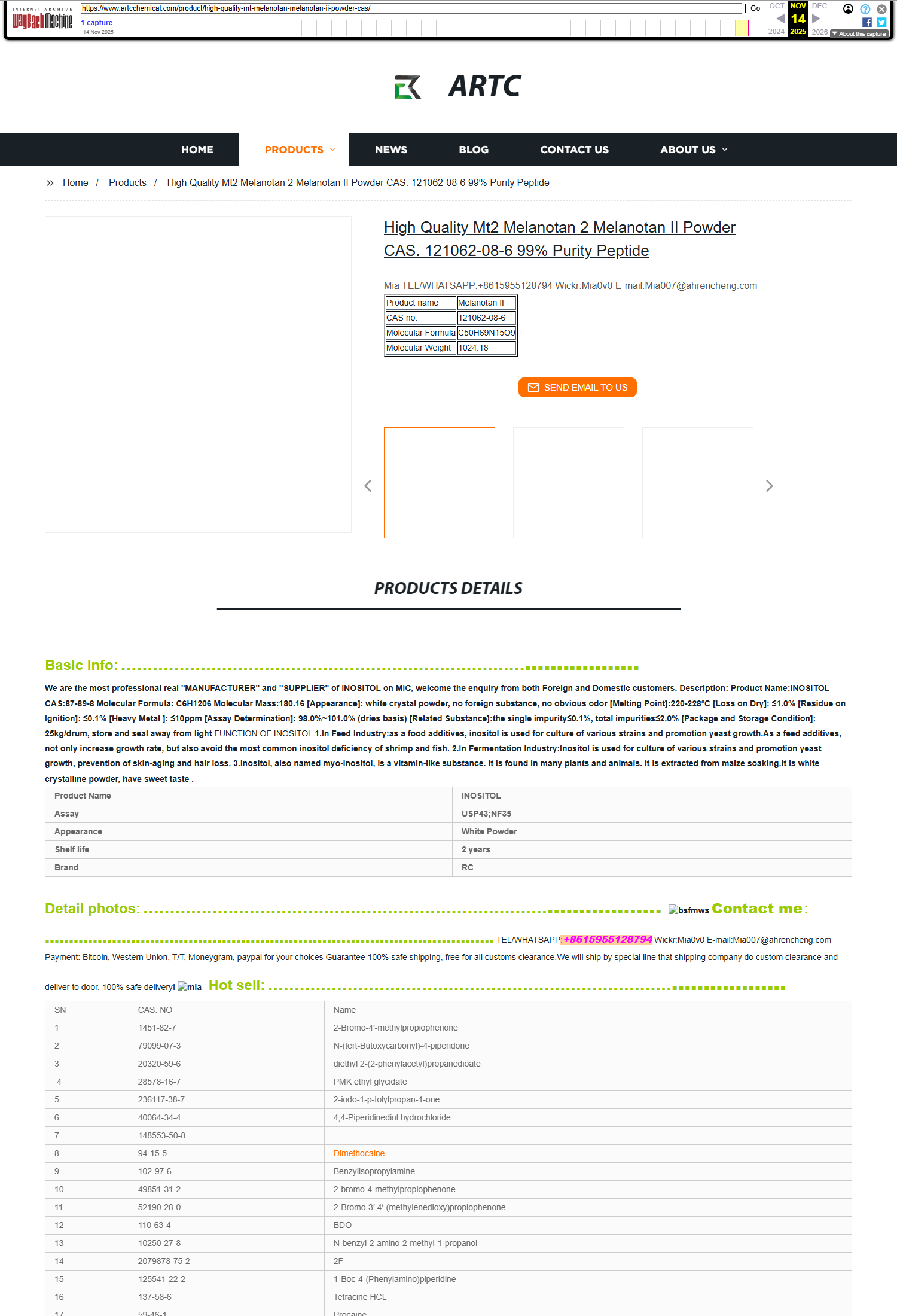
The site also tells buyers where the goods ship from, claiming warehouses in the United States, Canada, Germany, and Mexico and claiming to serve “many customers in the United States.”
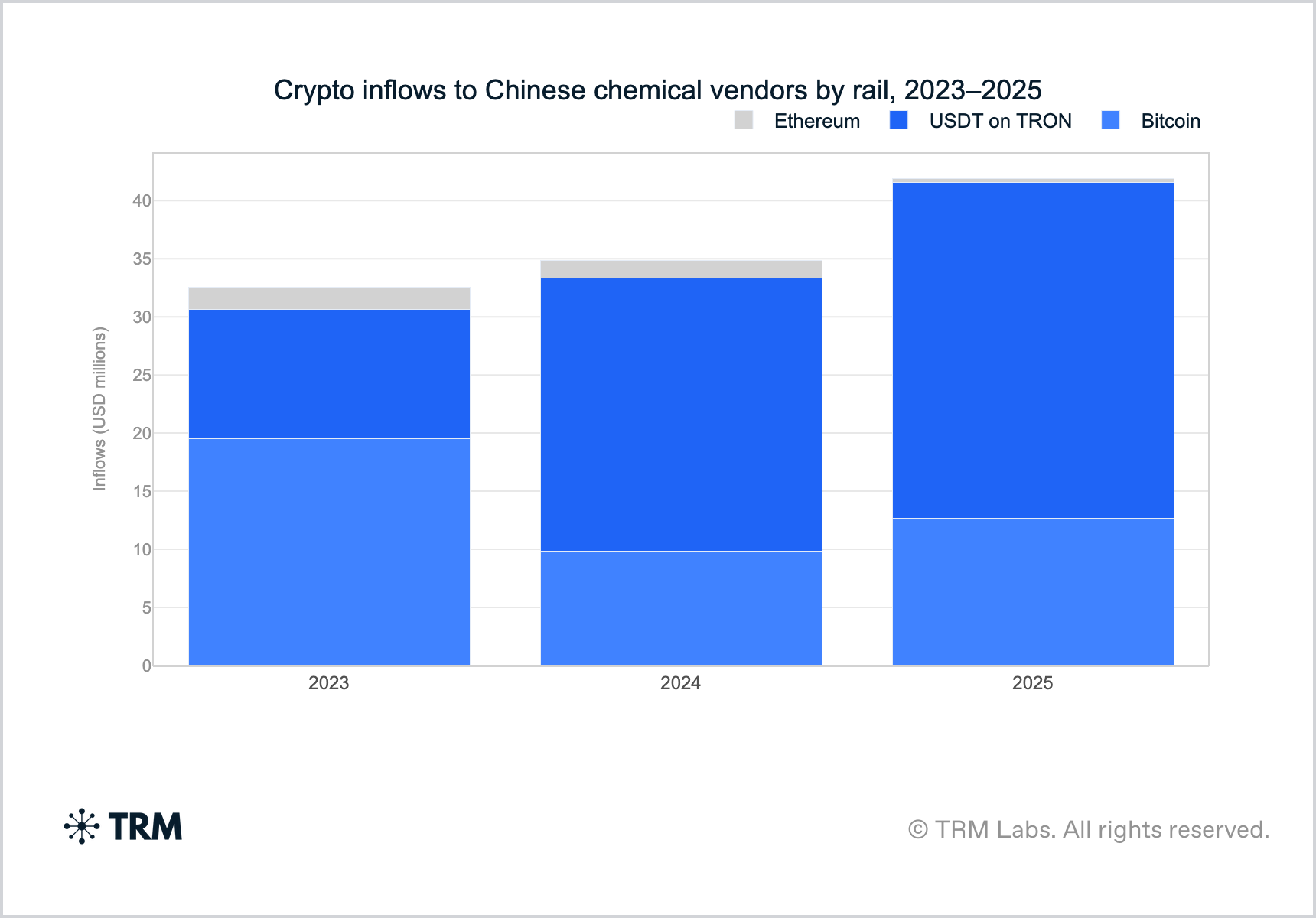
Crypto inflows to vendors selling both peptides and fentanyl precursors are up 32% since 2023
Payments to the vendors confirmed to sell both peptides and fentanyl precursors have risen in recent years: from USD 28.2 million in 2023, to USD 33.8 million in 2024, to USD 37.3 million in 2025, up about 32% over two years. That growth comes despite US law enforcement actions against chemical manufacturers like those described above, as well as recent crackdowns by Chinese authorities. Over the time period studied, most of these sellers moved off Bitcoin and onto USDT on TRON, which now accounts for the majority of payments — consistent with the broader migration of illicit volume onto stablecoin rails that TRM documented in Stablecoins at Scale.
The US is the largest identifiable source of buyer funds
Buyer geography is hard to measure, as on-chain transactions do not identify either party’s location. However, by analyzing payments to these vendors that were routed through cryptocurrency exchanges serving just one country, and applying other findings from TRM investigations into chemical vendors, we can estimate buyer location for a small but representative slice of payments. Over the last two years, the United States accounts for 60% of all identifiable value sent to any Chinese chemical vendor.
Narrowing that identifiable slice to cover only Chinese chemical vendors confirmed to have listed both peptides and fentanyl precursor chemicals over the same time period, the numbers stay largely the same: the United States is still the largest source, at about 57% of volume, followed by Australia at about 25% and Thailand at 10%.

The US payments in this slice arrive largely through crypto-supporting consumer payment apps rather than traditional cryptocurrency exchanges, consistent with the behavior of individual, retail buyers. It is a partial view — most payments route through global exchanges that cannot be tied to any single country — but among the funds we can place, the US is the single largest source.
What this means for buyers, crypto businesses, and law enforcement
For grey-market peptide buyers
Buyers weighing the health risks of purchasing peptides without a prescription are taking on a second risk they may not have priced in. If they are buying from Chinese chemical vendors like those described above, their peptide purchases may be funding manufacturers of fentanyl precursors — a key node in the synthetic opioid supply chain that has wrought havoc on US public health.
For crypto businesses
These vendors are a screening problem that is getting larger. Chinese chemical vendors already move meaningful volume on-chain, and by capitalizing on the peptide boom, they are opening up a new revenue stream from retail customers. Compliance teams should be on the lookout for such activity originating from their platforms, and be ready to act if users are attempting to buy from chemical vendors involved in fentanyl precursor sales. TRM Wallet Screening and TRM Transaction Monitoring both surface exposure to these vendors at the point of transaction.
For law enforcement
The evidence supports continued pursuit of the chemical vendors that sell fentanyl precursors. The peptide business has given these firms a wider customer base and a more legitimate-looking storefront, which can help them stay in business longer.
That same exposure creates opportunities for disruption. Selling peptides requires that stores remain open and discoverable to retail customers, which puts targetable information in plain view. For the broader picture of how crypto moves through the precursor trade, see TRM’s The Rise of Cryptocurrency in the Synthetic Drug Trade.
{{horizontal-line}}
Frequently asked questions
1. Are weight-loss peptides sold by the same companies that sell fentanyl precursors?
In many cases on the digital grey market, yes. Of the 150+ Chinese chemical manufacturers accepting cryptocurrency that TRM has identified, roughly 75% list both fentanyl precursors and peptides on their websites.
2. How much cryptocurrency are these vendors receiving?
Payments to vendors confirmed to sell both product lines rose from USD 28.2 million in 2023 to USD 33.8 million in 2024 to USD 37.3 million in 2025 — about 32% growth over two years.
3. Where are the buyers?
Among payments that can be tied to a single country, the United States is the largest source at about 57% of volume for vendors selling both peptides and precursors, followed by Australia at about 25% and Thailand at 10%. Most payments route through global exchanges that cannot be attributed to any one country.