
Aug 27, 2025 - 36min
EPISODE 92
From HSI to IP House: Steve Francis on Leadership, Enforcement, and Innovation
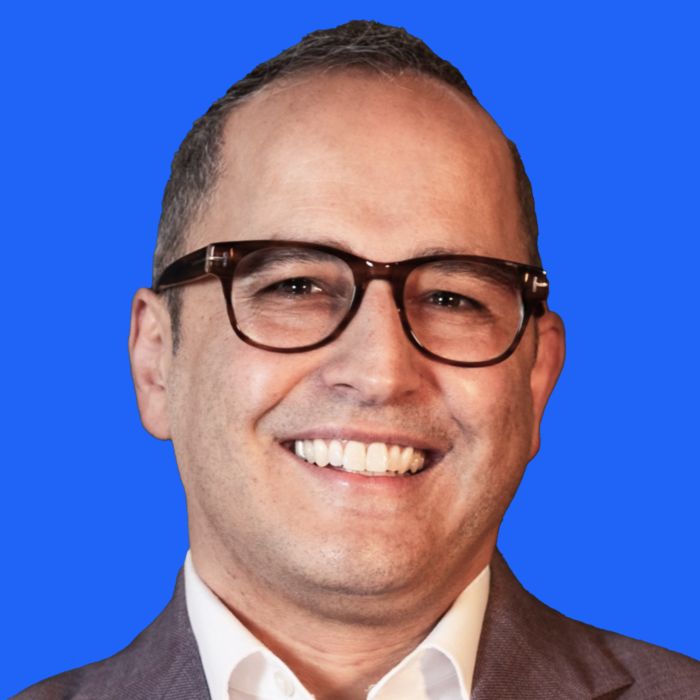
With Steve Francis, and , and and
Former Homeland Security Investigations (HSI) Director Steve Francis dedicated his life to public service from a young age, rising to the pinnacle of US federal law enforcement.
On this episode of TRM Talks, Steve joins Ari Redbord, TRM's Global Head of Policy, to reflect on a career defined by protecting the financial system, empowering agents in the field, and building innovative enforcement programs that span borders and sectors.
Steve understood early that almost every crime is a financial crime and every investigation is about following the money. During Steve's tenure at HSI, cryptocurrency became a bigger part of that equation. Recognizing its growing role in transnational crime, Steve prioritized crypto-focused training for agents, built a cadre of blockchain intelligence experts, and championed the use of advanced investigative tools to track and disrupt illicit activity on-chain. That commitment to leveraging technology gave HSI new capabilities to keep pace with rapidly evolving threats.
From uncovering Saddam-era money laundering in Iraq to leading operations against counterfeit PPE during the pandemic, Steve’s leadership combined operational experience with strategic foresight. Now as Executive Chairman of IP House, he is applying that mission mindset to the private sector, building a 550-person global intelligence and enforcement network in just over a year.
The conversation explores lessons in humble, high-impact leadership, the central role of crypto and cyber in modern investigations, how cross-agency collaboration has driven landmark cases, and the future of public-private partnerships. Whether you work in government, tech, or compliance, this is a masterclass in innovation, leadership, and mission-driven work.
Click here to listen to the entire TRM Talks: From HSI to IP House: Steve Francis on Leadership, Enforcement, and Innovation. Follow TRM Talks on Spotify to be the first to know about new episodes.
Ari Redbord (00:02):
I am Ari Redbord and this is TRM Talks. I'm Global Head of policy at TRM Labs. At TRM, we provide blockchain intelligence software to support law enforcement investigations and to help financial institutions and cryptocurrency businesses mitigate financial crime risk within the emerging digital asset economy. Prior to joining TRM spent 15 years in the US federal government, first as a prosecutor at the Department of Justice, and then as a Treasury Department official where I worked to safeguard the financial system against terrorist financiers, weapons of mass destruction, proliferators, drug kingpins, and other rogue actors. On TRM Talks, I sit down with business leaders, policymakers, investigators, and friends from across the crypto ecosystem who are working to build a safer financial system. On today's TRM Talks, I sit down with former HSI Director Steve Francis, but first Inside the Lab where I share data-driven insights from our blockchain intelligence team.
(01:04):
In today's Inside the Lab, we're unpacking FATFs, the Financial Action Task forces sixth targeted update on recommendation 15 implementation, focusing specifically on jurisdictions with materially important virtual asset activity. That's a long way of saying that fat if the global standard setter for anti-money laundering has recently put out a table focusing on where implementation is occurring globally. The report released on June 26th, 2025 assesses how the world's most significant crypto markets are enforcing anti-money laundering in counter-terrorist financing standards. It covers 67 jurisdictions, representing about 98% of global vast activity, including 38 FATF members and nine newly added markets where crypto has become materially significant. Here's what the new data shows. Nearly 97% of these jurisdictions have now conducted or started virtual asset risk assessments. About 90% are enacting or advancing legislation to license and register VASPs and 76% have actually licensed or registered providers. Enforcement and oversight are also gaining traction.
(02:16):
84% have begun supervisory inspections and 75% have initiated enforcement actions. Meanwhile, adoption of the travel rule, ensuring sender and receiver info travels with the crypto is underway or complete in roughly 85% of markets. Yet 9% of jurisdictions are still banning virtual asset or vast operations altogether. The progress is meaningful, but limitations remain. Fatted flags, ongoing challenges in licensing, identifying vast actors, especially offshore firms, and properly supervising next generation platforms. The update also addresses evolving risks. FATF calls out the growing use of stable coins by criminal networks, North Korea activity terrorists and drug traffickers. Strategically, FATF released a new jurisdictional implementation table alongside best practices on travel rule supervisions with updates contributed by TRM. The table is meant as a benchmark and practical roadmap showing policy makers and regulators where they stack up against peers and what actions remain urgent. Check out our blog for the latest on fatf and specifically this June, 2025 update. Now I sit down with Steve Francis. Today I am joined by friend, president and executive chairman of IP House and former director of Homeland Security Investigations, Steve Francis. Steve, thank you so much for joining TRM Talks.
Steve Francis (03:50):
Thanks for having me, Ari. Pleasure to be here.
Ari Redbord (03:52):
Look, you really had a special journey to HSI Director to one of the leading voices in law enforcement. Can you talk a little bit about your journey?
Steve Francis (04:00):
Yes, absolutely. I have a pretty, I guess, interesting journey here. So I was born overseas, born in Beirut, Lebanon. My family immigrated here, all of Iraqi descent just for a better life in the United States. And so board overseas always had this fascination and excitement of wanting to go into law enforcement. It started really early on when I was in elementary school and a police officer came to the school and I was instantly kind of in love with that profession and position. But shortly thereafter, I realized, hey, I got to be a US citizen here. So not that I would never want to be one, but it started early on in my career and as I went through high school at the age of 19, I became a United States citizen as a naturalized USC, and that was kind of a moment that was really exciting because I knew I'm on my way to be a law enforcement official in the United States, first one in my family to actually become a citizen, and then the first one to go to college and get a degree.
(04:58):
So 19 citizen at the age of 21, I'm starting my internship with the Michigan State Police. At the age of 22, I become a federal law enforcement officer, and that's really the career that was supported by my family. Grew up in an Arabic speaking household, the Arabic community, but very, very supportive. And then shortly thereafter in a couple of years, and at 23 I believe I was special agent and doing protection details for the Secretary of Healthy Human Services, and they had a mission to Beirut, Lebanon, my birthplace, and had a crazy opportunity to see where I was born and lived and it was incredible. So this is a bit surreal. And then in 2003, I was asked to go to Baghdadi, Iraq to support the US law enforcement military mission there. And those were kind of moments as I was going through my career to think and look in the mirror and say, I can't believe I'm here. So yeah, it was pretty fascinating. One pretty cool moment when I was in Iraq, and this is where my financial background started. I'm sitting there at the Iraq National Bank and I'm looking at a letter copied handwritten letter by Saddam Hussein that authorized the withdrawal of a billion dollars from the financial system. And by the time US law enforcement was on the ground there in 2003, we're investigating where the money went and where it was potentially going and being laundered. And that really started my career into law enforcement.
Ari Redbord (06:33):
I just have to ask, what was it? There's very few people that I've talked to in law enforcement who have this story where they can identify a time in their childhood where they met a police officer and literally, I mean, you've gone through every possible steps to the pinnacle of US federal law enforcement. What was it about that moment? What are the attributes of someone in law enforcement that you really wanted to emulate when you were growing up?
Steve Francis (06:54):
I really think it was just the background really being in the United States, appreciating what we had. The sky was the limit. My father wasn't very educated, just hard work, do the right thing and just being surrounded by people that care about you and love you and support you, and having this opportunity to kind of be in the us not really understanding the sacrifices that your family made at that time, but just being really fascinated by rule of law and always had an interest. I never thought I would be a lawyer, although it kind of came into my mind, but anytime there was any sort of police shows or anytime there was a law enforcement kind of event, I was always just kind of intrigued by it. I think the family aspect, the culture, the religion, and really just the community that I was in, it was unique here in Detroit, it's at the time, one of the largest Middle Eastern Christian populations outside of the Middle East, and it was just a town within a city in Detroit where we lived. That kind of brought me to what is this I want to do with my career? And it was pretty wild. I just always stayed focused on what I wanted to do. And I attributed to a lot of people. I mean, as I kind of got into the career, there's so many people that have been influential in my life that supported me throughout my career path and from intern to the director, you can imagine a lot of people that helped and supported me in that way.
Ari Redbord (08:23):
I mean, just extraordinary. I was lucky enough to be at your retirement a couple of years ago, and I was just struck by just that how many people came up there, how many people were there. It was probably the most well-attended retirement party that I've ever been to. But yeah, I mean, I think your story very much speaks to that. It's just inspiring to rise through the different ranks ultimately to that role. And how do you go from really the bottom of the rung all the way through the director? I mean, I know it's a life journey of a lifetime, but what are the types of leadership principles or what are the types of things you did to move through the ranks in that way?
Steve Francis (08:56):
Yeah, I always believed that do the job that you have and do it really well, right? I know people that know me know this is true. Never looked beyond the title that I had at the time that I had it. And I think just being humble and kind of using some of the experiences of my life and background to be just completely transparent all the time, kind of equitable, knowing that all things aren't equal all the time, but at least trying to make and create an equal playing field as you're aware, right? The evolution of HSI, I mean, I was customs agent for a minute, but on land security and the opportunities there, that kind of opened up the floodgates for anyone that was in the Department of Homeland Security at its inception. I think that, and really the way you treat people and what I'd like to say, just really a true common sense approach to treating people the way you want to be treated always right?
(09:51):
Regardless of the positions I've had. And I think that really helped me with I think the workforce and doing the job in every kind of supervisory and leadership title that I had really helped build a good reputation. And I think it was just the hard work and grinding it out. I never felt that any position or anyone in any sort of title was any different than anyone else, whether it was administrative support, whether it was law enforcement. I mean, of course throughout my career I've matured a lot. I began to realize that everyone plays a critical role in law enforcement, and if you don't believe that or see that, then there's going to definitely be some challenges. So I try to think about when I was leading, how everyone felt in the room and try to relate to everybody and why that was important. Because as you know, most people really their perception of most things and the reality of things that are most impactful or the things that impact them individually, and I find that today with my new physician, it's really important to relay this change in the culture. And at HSI, it continued to evolve. It helped me grow as a person, as a father, as a husband. It just teaches you to understand your surroundings and also be able to touch and relate to everybody in the room.
Ari Redbord (11:11):
I do think you have a very unique perspective on leadership, particularly in law enforcement, which is also oftentimes bogged down by title and how many people are under you, and you'll have to have the right titles in the right room. I feel like you always looked at the subject matter experts as opposed to what title someone had, which I think is really unique.
Steve Francis (11:28):
Yes, I could agree with you more. I definitely wasn't the smartest person in the room.
Ari Redbord (11:32):
Oh, the secret to any of our success is you surround yourself with really extraordinary people. You mentioned IP House sort of in terms of using those leadership principles to what you're doing now. Let's just talk a little bit about your role there. I think people will probably have less perspective on what you're doing today than your role as director, although I really would like to get back to HSI also. But let's talk a little bit about IP House.
Steve Francis (11:53):
Yeah, sure. Was eligible to retire in May of 23, had a unique opportunity. Actually, it was something I learned at HSI, right when I was the director of the national IPR Center, that there was just an opportunity to build something greater than what was happening, I think in the IP enforcement world. And I had a great model and the IPR Center, the Interagency cooperation across 25 government agencies, private sector, all working to enforce IP violations and enforcing international trade laws. So I had a great perspective of meeting the largest companies in the world, working alongside them during the pandemic post pandemic. And I got an offer of a lifetime. I know Ari, you say you have the greatest job in the world. I might have the second greatest job in the world. I love it. And I came on as a consultant to a private equity firm to build a end-to-end solution to IP enforcement.
(12:49):
My thesis was that the government is really not the answer to all these IP crimes and referrals that the private sector, if they had and solution to this problem, I think there would be a lot more interest. We tested that thesis for almost a year speaking to C-suite executives across every sector from pharma, automotive, luxury brands, footwear. And they said, yes. The biggest challenge we have today is we have to hire multiple vendors, service providers to resolve one issue. If you guys could build something through kind of trusted network, we would definitely be interested in that. And in essentially May of last year, we launched IP House. I was the first employee, but today we've gone through a management and acquisition process and we've acquired 10 companies. We have over 550 employees. We're in five continents. And essentially we provide online monitoring for illicit streaming, counterfeit products to offline investigations with boots on the ground in Africa, India, Asia, middle East, us Europe, and we're growing each day. So it's a pretty amazing journey. And cool thing is it still sits with that mission set of enforcement. I like to believe, and it's true, we're protecting innovation jobs. We're fighting against illicit trade. This space in counterfeits and the theft of an intellectual property is devastating to brands and companies.
Ari Redbord (14:22):
I think it's just absolutely extraordinary. I mean, when I try to describe to people that I get to stay on this mission of building a safer financial system, but get to do it in a super cool growing startup, you're having that exact experience. I love that you're able to do it on the same mission. You've been on your entire career stopping bad actors from taking advantage of the economy of individuals of companies.
Steve Francis (14:41):
Yeah, I was always called this fairy idea or idea fairy at times. I had a lot of good ideas. Not a lot of them came to fruition, but this was one that was pretty exciting that it's still, the thesis has been proven. We're doing some great work. We're working with law enforcement. We're signing MOUs. I mean, similar to what you guys have done at TRM labs, we're actually connecting these dots that were difficult with other people doing 'em, but having the right people and the right tools, software capability, people are excited to work with us. So I Kind of love it.
Ari Redbord (15:15):
I need some of that. Steve Francis fairy dust. I think everybody does. And that thing, any cool wins that you can talk about in terms of stopping some of these bad actors through partnership?
Steve Francis (15:26):
I mean, obviously HSI at the IPR Center each and every day, right? The pandemic was a perfect example of working with private sector. We launched operations stole Promise because we anticipated that there's going to be a flood of counterfeit, illicit, substandard products coming to the United States. And the only way to kind of get the word out and be more effective was with the private sector. We actually did interoral notices. We worked with financial institutions. We did a lot of public awareness around all the substandard and hazardous and fake PPE that was coming to the United States. And it was prior to the vaccinations and the launch. So there was a lot of awareness, and of course there was a lot of fraud with all the different programs out there. So that without the private sector, I don't think we would've been very effective at IP House.
(16:15):
Now, yes, we have a lot of enforcement operations that we've been able to execute in New York. We're working with big pharmaceutical companies on products that are being distributed across the United States, but leveraging the law enforcement network and sort of educating 'em on the risk of public safety and harm, and then they're providing the information to execute the warrants. So we're making a pretty good impact. So it's really cool because I mean, it was already kind of happening in silos, but having a global company connecting these dots, I would say the most unique and cool thing about a win was the first time I was on a call with our investigators in Africa, in India, the US Europe, and they're all talking about their capabilities in those areas and their law enforcement network. And then we had this global issue and how we were going to execute it around the world. So I felt like for a moment I was back at HSI definitely much more challenging in the private sector to get financial data.
Ari Redbord (17:16):
You have fewer authorities for sure. Definitely. It's interesting, just listening to you now and having known you in previous roles, I think at least one of the reasons you were such a perfect leader for HSI is what we're talking about right now. And it's like the fairy dust thing, right? It's the hustle. HSI has always been the startup in terms of when it comes to law enforcement agencies. When I was a prosecutor, we'd always want HSI on the team in large part because they quite frankly would do some stuff other agencies wouldn't do. It was always that hustle like, Hey, how can we do something better? How can we move faster? How can we maybe cut through some of the red tape to get things done? Does that resonate in terms of your leadership at HSI and the agency?
Steve Francis (17:56):
Yes, absolutely. I mean, we were always hungry, right? I think as an HSI agent, you always kind of felt that. I mean, there was a lot of challenges initially with the merger with and becoming ice, but the authorities in the jurisdiction and the ability, and of course it always overlapped majority of the time with another agency. And I felt like we always had to kind of prove ourselves and we would always do the right thing despite some other challenges with other agencies. And I would always get the pushback, at least when I became the special agent in charge, and then further, why do we always have to do it when others aren't necessarily sharing this information or data? And I just always felt like, Hey, because ultimately we can say we did the right thing, but there was always this hunger there. There's always this kind like, Hey, what can we do that's different?
(18:48):
And I think it just always stemmed from leadership. We always would adapt to do certain things in different ways. It's never been done before and there's a better outcome, and then we adapt that kind of model. And the undercover operations didn't hurt our creativity. But as you can imagine over time, and I do think HSI is at an incredible place as we're evolving, but being considered now in multi different leadership roles. I don't know if we're going to get into it, but there is some excitement about these Homeland Security Task forces, the evolution of those. I know the current administration's considering putting HSI and FBI to lead those, and they kind of stem from the border enforcement security task forces. But to kind of finalize that point, there was just so many different things that we enforced. It was challenging at times because you're like, what don't we do?
(19:41):
And can we focus more on these crime sets? But I was a firm believer that we need to have, I mean, entire workforce needs to be focused on financial and cyber capabilities or expertise because all the other crime sets would be easier to enforce or investigate over time. And I think we have started to move in that direction because it's true and it's always been true. I think it needed that kind of investment leadership to focus and say, Hey, these are our top two priorities. So that's focus here and then support all the other work that we're doing. And that was our startup investment. I guess
Ari Redbord (20:18):
You have that sort of young scrappy and hungry startup law enforcement agency. One of the ways to move faster is to leverage technology. It was very clear for me in the time that I spent with you that tools training cyber crypto, this was going to be a huge focus for you as director. Can you talk a little bit about how you thought about utilizing technology, but also just investigating crypto related cases when you were a director there or even before?
Steve Francis (20:43):
Yeah, I think mean the writing was on the mall with these financial digital assets, investigative work, and they were fascinated. I was honestly fascinated by some of the work that was being done out there, of course, by IRS and FBI and HSI. And I remember just continuously reading about, at least at the time, there was this perception that they're challenging. And of course they are. And I was thinking to myself, why can't we have every one of our analysts and investigators educated or trained or certified in this type of training? So I started to ask about the different opportunities out there, the software tools. And I think this is the first time when we met, I met the team at TRM Labs and you talked about your software tools capabilities to help our investigative work. Definitely felt, Hey, this is a simple investment that we were going to make. And as I was starting to think about each year setting the goals and priorities of HSI that this was a no-brainer. And then we started to look at CAM certification and really supporting that.
(21:43):
I think historically it was always thought of if we train and educate and certify our agents and analysts with the highest investment in certifications that they were probably going to leave. But I always felt like, Hey, if we can get a great workforce and broaden that opportunity across every analyst and investigator that's out there, it's a win for us. Even if our investigators or analysts leave and go to the private sector, we're still building this capability across the workforce. And it just became more and more true as we started to look and go after criminal organizations and individuals. There's a significant number of different cases that have made the media, but I authorized a significant number of certifications for the CAM certification. Obviously working with you guys at TRM and significant outcomes with financial seizures, tracking and tracing the proceeds all critical to any investigative kind of work we do.
(22:43):
It just really is not that intimidating. I think once you start doing that work, and I was kind of more motivated as I started to visit offices and people thanking me for, thank you for giving our office TED spots for the certifications for the TRM certification, for the training, and here's what we did. Here's the case that, by the way, did you know our analysts were behind that investigation in New York City? Did you know that our analysts were behind that investigation? Right. Or the TCO out of Miami, the Venezuelan corrupt public officials. And I was like, no. And then people kept on asking for more, right? So that was kind of cool. It was definitely something I believed in, but everyone wanted to tell me more about what they were doing on crypto tracing and how they become the experts. And I was like, this is awesome.
Ari Redbord (23:35):
No, absolutely. And not to mention the seizures and the strategic reserves and all the things that are being built today. Following up on that, one of the things I think we're seeing now, and you mentioned these task forces, and I always believe this was a huge focus for you, is that these types of investigations oftentimes have been one off. You follow the funds from one bad guy, you maybe have a disruption potentially, maybe you can seize the funds back. Maybe there's an arrest if they're not in Russia or North Korea or somewhere else. We can't get our hands on somebody. But I feel like your vision was much more around building out networks, understanding how the funds are flowing, tracking and tracing, but ultimately building out these networks, understanding I think we are now, even in the last couple of years, it's even gotten more of a focus on that, particularly for HSI and broader Department of Homeland Security when it comes to cartels and some of the issues there.
Steve Francis (24:23):
So I think the border force enforcement security task forces, there's over 100 now, and that was always this model of collaboration across state, local, federal, international teams, bringing the expertise together and really going after the larger networks. I do think, I mean, the challenge is every agency has multiple task forces, somewhat competing interests of sorts. And that was always a challenge. But having that kind of border nexus to our best teams helped us really be at the forefront. I mean, working alongside and working with CBP and all the other organizations to combat the transnational criminal organizations. That being said, I think there is a lot more that I think could be done to consolidate some of that work, share data and information. And I think what's happening today, from what I understand, is that there is this vision of bringing all these, let's call it 500 plus task forces, maybe thousands across the United States into a global homeland security task force with interagency collaboration at the highest levels focused on similar targets and then putting all the resources to it.
(25:37):
So I think that is an incredible vision and opportunity for the US government across the board. When you're kind of a leader of one agency or one entity, you can only do as much as you can do internally. And then there are, I know you're going to find this surprising. There are some politics involved in law enforcement agencies, but I think there's some excitement. And with the Homeland Security Task forces area, I'm hearing that there's going to be a lot of funding to support those. And I think that was kind of a big challenge with the border enforcement security task forces. They were kind of self-funded within kind of HSI and bringing all the resources and the investments within the different tools and capabilities to those task forces. But I do think this is a great evolution of what was and what could be. Of course, the biggest challenge probably to these is going to be the personnel and the resources and the leadership around the Homeland Security task forces. But I do believe that's a great concept. That's something that can really build on, I would say somewhat historically been compartmentalized across multiple law enforcement agencies.
Ari Redbord (26:41):
It's a great point, and I agree. It's a really, really exciting moment where we're seeing a convergence of different law enforcement agencies really come together on these issues, particularly around border security on cartels, which are H-S-I-D-H-S issues to begin with, which is exciting. One thing that I was always struck by is that you'd hear about these turf wars, and when I was a prosecutor, I would see them. But in the crypto cases that we focus on so much now, you almost see, if you read one of these press releases to me, which is just emblematic of it, is like HSI Director, IRS-CI Director, FBI, you'll have a deputy attorney general or head of the criminal division. They'll all have a quote in these press releases, which to me really says that, Hey, these agencies in large part are working together. And I think it's at least in part because there is still just a cadre of investigators across the US federal government that really do these cases that are power users. They all know each other. We know all of them. Is it true when you're seeing these cases that are really leveraging technology involving technology, was there more collaboration cooperation just because it had to be?
Steve Francis (27:42):
Yes. I mean, look, IRS incredible financial experts, FBI. Great. Obviously, investments, tools, agents, HSI. Yeah, a hundred percent accurate. I loved it though. It was kind when I heard we have multiple interagency cooperation. This is going to be one of the largest crypto seizures. And I mean, we're hearing about this months before the indictments and the seizures, but it is exciting. And then that's actually when I was meeting with the different agency leaders. Those are the cases we highlight like, Hey, this is really cool. This is something we can continue to do across all the different kind of crime sets. And that to me, and especially I would say in the financial crypto world, yes, there are some leading experts that and incredible prosecutors that can actually bring it to bear. And there are some districts that are better than others and some that are just really driven by that working relationship. And there's nothing better than working together and bringing and everyone kind of getting credit for it. And that even as leaders or as an agent, those were things that you always kind of didn't care about necessarily. Like you would say, oh, but as time went on, it's leading the case. Why aren't we doing more? But in the crypto and financial space, there was enough to do together and bring the different authorities and resources and contract support.
Ari Redbord (29:10):
What in your view makes HSI special?
Steve Francis (29:13):
I just love the ability to be creative and nimble and adapt at any level. So I felt like our biggest asset was leadership not getting too involved, because the investigators...
Ari Redbord (29:30):
I love that from the director more than anything else. But yeah, keep going.
Steve Francis (29:35):
Yeah, because honestly, a lot of, especially with the fentanyl crisis and all the different kind of trade angles with the precursor chemicals, I mean, some of these initiatives were just, I mean, in the smallest offices you can imagine were just so unique or remarkable that I sat there in awe like, wow, wait, you're in. I'm just using that example. You're like in Huntsville and you thought of this, or you're in Des Moines, Iowa, and this is unbelievable. And it was usually because the first line supervisor just let the case agent run with it, and it got to a point where they probably thought, oh man, we should probably breathe headquarters. Oh, what's coming and everything, right? And of course, you can't talk about HSI without talking about the child exploitation investigations and victims and that we save and rescue. So that was the biggest challenge because we did so many different things, but it was also the most rewarding because we also did so many different things. So that to me was kind of what made HSI really special.
Ari Redbord (30:44):
It's cool. I think it's really unique to have the perspective of having been an investigator just focused on that one case, but then wow, having that bird's eye view on just everything going on across the globe for the entire agency. I'm going to let you go with a personal question, and that is, you seem busier today with IP House than probably you are as director of HSI. But when you do have a free moment, what does Steve Francis like to do?
Steve Francis (31:05):
So spending more time with the kids. So I'm sure I annoy them that I'm home and I see them a lot more, but playing poker on Monday nights with childhood friends, love it. Picked up golf. It was about my first set a month ago after taking lessons in Myrtle Beach, and I'm sort of got this addictive personality of I really want to keep hitting this ball. Yeah, honestly, it's great. Just the small things that I never was able to do, especially kind of the last two years as the director and now making up
Ari Redbord (31:37):
For lost time. I think the only thing you and I have ever disagreed about is college basketball. I know you're a big Michigan State guy. You feel a really unique connection. I think, frankly, and I relate to it, I feel Kelly and I feel this way about Duke. What is it about your experience there, what it gave you or what it prepared you for that I feel like has left you with this? It is different than just being a fan of their basketball team to you or their football team.
Steve Francis (31:59):
Yeah, it's this really obviously just being a student there and then staying connected. I got my internship through that Michigan State internship program, got connected through Michigan State Police there, started my first federal internship through that program. Later throughout my life, I stayed connected. We started the first internship with DHS, where students actually got a background and got a secret clearance that we launched through Michigan State University through our Detroit office. And then I was on the board for their anti counterfeiting program at MSU, and then they supported me. They did the research for the certification. We launched for our certified trade and intellectual property specialist program. So CIPS, but MSU did the academic research and they're getting ready to publish the research on who in this world of IP, which kind of titles and positions would be interested in this certification. So that's pretty unique as well.
Ari Redbord (32:58):
Just awesome. I mean, there's nothing cooler than being able to combine your personal and professional in this way. I love it. Steve, thank you so much for joining TRM Talks. This was an awesome conversation, and it's just so cool to see your trajectory really across HSI, but then really into your current role, which is building a really important function for the world.
Steve Francis (33:17):
Thank you. Appreciate it.
Ari Redbord (33:22):
I was at Steve's going away party a couple years ago, and I mentioned that on the podcast because really I asked him to tell his story and to go a little maybe deeper than usual into his background because I was so blown away when I heard that on the stage and through his family that was there as well. I'm still a little speechless right now about this whole idea where you're a young child, you're not a US citizen. You've come over here to find a better life, and you meet a law enforcement professional police officer in school, and you're just realized, I want to be this. I want to protect this place that has given me so much. And to have him rise then through an intern, be the first to go to college in his family, to an investigator, to a special agent, to a special agent in charge to the director of one of the three or four most important law enforcement agencies in the United States.
(34:11):
Just what an extraordinary journey. And then to leave that role and go build a 500 person information sharing network on really a critical issue for the world. And that is the theft of IP data in a year or two. I think there's so much about Steve's journey that's instructive and inspiring, and that's not even getting into the way he supported agents and investigators and staff across HSI. He literally saw his job, and I can say this as someone who knew him in that role as an enabler, he wanted to make sure that his people had the tools, had the training, had the expertise, had the support to do their job in the best possible way. And I'm inspired as I think about leadership and try to be a leader by Steve. And I think that if there was one takeaway that I'd want folks to do, it's like, wow, what really, really excellent humble leadership can look like. And I think that's what we heard today. On the next TRM Talks, I am joined by Flashpoint, CEO, Josh Lefkovitz. If you love the show, leave a review wherever you're listening to it and follow us on LinkedIn to get the latest news on crypto regulation, compliance, and investigations.
TRM Labs (35:24):
TRM Talks is brought to you by TRM Labs, the leading provider of blockchain intelligence and anti-money laundering software. This episode was produced in partnership with Voltage Productions. The music for this show was provided by iKOLIKS.
Ari Redbord (35:40):
Now let's get back to building.
About the guests
Steve currently serves as the Executive Chairman and President of IP House, leading a team of over 500 professionals dedicated to intellectual property enforcement across five continents.
Steve collaborates with the CEO and investors to strategize mergers and acquisitions, focusing on technology and talent to enhance IP House’s global solutions while fostering trust with major corporations to protect their brands from IP theft.
Previously, Steve held the position of Acting Executive Associate Director at Homeland Security Investigations (HSI) in Washington, DC, where he managed a USD 2 billion budget and led a workforce of over 10,000 personnel across 50 countries, directing efforts against illicit trade and criminal activities.
Additionally, Steve was the Director of the National Intellectual Property Rights Coordination Center from 2019 to 2021 in Arlington, VA, he coordinated responses to IP theft, partnering with 25 federal agencies and the private sector to uphold international trade laws.
More TRM Talks
Subscribe to TRM Talks
Subscribe to be the first to hear about new episodes, and to stay in the know about all things blockchain technology and crypto policy.