
Jan 28, 2026 - 31mins
Climbing Capitol Hill: Breaking Down Crypto Market Structure with Chainlink’s Adam Minehardt
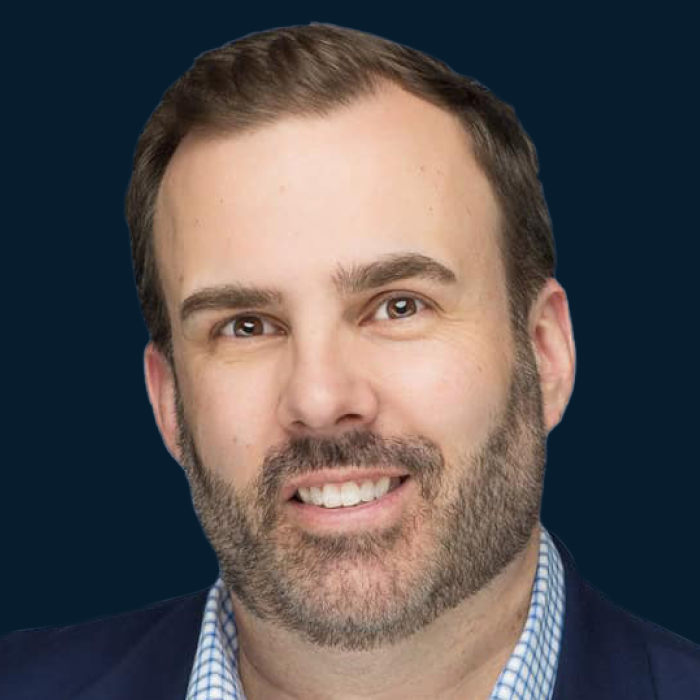
From the Federal Reserve on 9/11 to Capitol Hill during the 2008 financial crisis, Adam Meinhardt’s career spans some of the most pivotal moments in economic policy. Now, as Head of Public Policy at Chainlink, he's helping shape crypto regulation during a historic legislative push.
In this episode, Adam joins Ari Redbord, Global Head of Policy at TRM Labs, to explore what it takes to engage policymakers, why market structure legislation matters, and how Chainlink is enabling the next generation of decentralized infrastructure.
Key takeaways from their conversation:
- Why the US market structure debate hinges on five critical issues
- How traditional finance is entering crypto — and what that means for innovation
- The role of Chainlink oracles in powering secure, data-driven smart contracts
- What regulators can learn from blockchain’s broader use cases across government
Backed by decades of experience in policy and financial services, Adam offers a rare behind-the-scenes look at how decisions in Washington will shape the future of crypto. This episode cuts through complexity to surface what matters now — and what's coming next.
Click here to listen to the entire TRM Talks — Climbing Capitol Hill: Breaking Down Crypto Market Structure with Chainlink’s Adam Minehardt. Follow TRM Talks on Spotify to be the first to know about new episodes.
Ari Redbord (00:02):
I am Ari Redbord and this is TRM Talks. I'm Global Head of Policy at TRM Labs, we provide blockchain intelligence software to support law enforcement investigations and to help financial institutions and cryptocurrency businesses mitigate financial crime risk within the emerging digital asset economy. Prior to joining TRM spent 15 years in the US federal government, first as a prosecutor at the Department of Justice, and then as a Treasury Department official where I worked to safeguard the financial system against terrorist financiers, weapons of mass destruction, proliferators, drug kingpins, and other rogue actors. On TRM Talks, I sit down with business leaders, policymakers, investigators, and friends from across the crypto ecosystem who are working to build a safer financial system On today's TRM Talks, I sit down with chain links, head of public policy, Adam Menehardt.
(00:58):
But first, inside the lab, where I share data-driven insights from our blockchain intelligence team. On today's Inside the Lab, we're spotlighting the recent RCMP takedown of TradeOgre, an offshore crypto exchange used to launder tens of millions. Canada's RCMP seized over 40 million US dollars, 56 million Canadian in illicit assets, leveraging on-chain forensics to trace flows, identify wallets, and convert what many assumed was unrecoverable into actionable evidence. That 56 million in Canadian dollars was a record seizure. What makes this case powerful? TradeOgre operated with minimal know your customer, handled high risk assets, including privacy coins, and acted as a hub for ransomware, dark net markets, hacks, and scams. The investigation used TRM's blockchain intelligence to map the exchanges structure, spot choke points, follow layering patterns, and support judicial seizures. It also deployed TRM seat analysis tool, which lets investigators convert recovered seed phrases into wallet addresses and transaction histories, turning pneumonic fragments into full forensic linkage.
(02:15):
This isn't just a win for Canadian law enforcement. It's a signal. Even exchanges built for anonymity leave trails. Platforms must comply, bad actors must reckon with accountability and global collaboration pairs with blockchain visibility to make the once hidden visible. For more on trade ogre, read TRM's blog post at www.trmlabs.com/resources.
(02:42):
And now, Adam Minehardt. Adam, thank you so much for joining TRM Talks.
Adam Minehardt (02:52):
Awesome to be here, Ari. Thanks for having me.
Ari Redbord (02:53):
Been really looking forward to this. Look, I mean, quite honestly, I got into this space about five years ago or so, and I'm a prosecutor by training right now. So this whole idea of government affairs or engaging with policymakers, what's a little foreign, you were a regulator and now you've been in this space so long working on policy issues. Talk to me a little bit about that journey.
Adam Minehardt (03:13):
Yeah, as long as I can remember, I always wanted to be involved in government. So even going back to, I did student council all throughout, kind of one of those guys did it through college and I knew I wanted to work in government. So after going to college, grad school, I really wanted to get on the Hill somehow. I took a mild detour to the private sector, but then quickly found my way to the Federal Reserve where I spent three years there during 9/11 and learned a ton about the banking industry, financial services, how things work in terms of the economy in a more practical way and took that to the Hill where I was fortunate enough to land a job working for a member of the House Financial Services Committee, Nydia Velasquez. And then 17 years later, I finally left the Hill. So it was an amazing time to be on the Hill, got to see it through Republican administrations, Democratic administrations, changes in power, lots of historic events, including the financial crisis of 2007 and 2008.
(04:13):
Really lots of things, learned a lot, felt really fortunate to be there and be in the middle of the policy process. So that government service between the Fed and the Hill was really kind of my foundational part of my life. I just really loved being in government, having the ability to shape policy across a wide range of areas. And for me, I really was taken to economic and financial policy. So that's kind of where I ended up.
Ari Redbord (04:38):
It's extraordinary. It's fun to hear. Look, we threw around sort of like I worked on the Hill. You hear this all the time and a 20-year career on the Hill is very different than I did a summer internship in Washington kind of thing. What does that mean to work on the Hill, especially as you rose through seniorority?
Adam Minehardt (04:54):
Working on the Hill can mean a lot of different things depending who you're talking to. Just like you with your background in law, the different roles are very meaningful. So I think for at least the entry level part of the job, a lot of it is administrative. It's answering the mail, it's answering the phones, it's providing constituent services. It's getting flags for people that want to flag flown over the Capitol. It's taking families on tours of the Capitol. It's really connecting with the voters in your boss's district or state. So a lot of it really isn't in the policy world at all. It's really service oriented. Someone may need help getting their veterans benefits. So a lot of it is this very administrative function. That is really the entry level on the Hill. I think once you get beyond that and start to develop some policy expertise is where the job starts to change and that really can take a couple paths.
(05:53):
Do you work for an office that's on the committee that has jurisdiction over an issue or are you off committee? Very different jobs, very different roles. If you want to have more impact, you want to work for a member that's on the committee with jurisdiction over the issues you care about. If you want to have the greatest impact, you would want your boss to be the lead Republican or Democrat on the committee and even work for the committee. And I think to me, working on the Hill, it's really less about the policy knowledge and more about the process, about really how the sausage is made. It's really obscure. And as we can see with market structure, not transparent, very complicated, and lots of different layers. So to me, that's what really working on the Hill is about.
Ari Redbord (06:40):
I love that. We've done about a hundred episodes of TRM Talks over the last couple of years. And one theme that's run throughout is how people have started their careers and why. And really two dates essentially almost always surface. And that is 9/11, particularly when it comes to law enforcement and sort of that national security path. And then the financial crisis, which a lot of times comes to sort of that crypto piece. You mentioned both in your history. Talk me through how meaningful those dates were for you.
Adam Minehardt (07:10):
Oh yeah. I was at the Federal Reserve, the board of governors on 9/11 the morning of it, and actually all of us ran up. In the Martin building, which is now being renovated, they have the cafeteria on the top floor with a balcony. So all of us went up, saw the Pentagon right after it got the plane went into it, and we all just fled the building and went out. I was required staff to come in. So the Verizon building that had all the switching for Wall Street went down as part of World Trade Center 6, I think. So all the payments activity during that day was pended. You had payments in process between master accounts at the Fed that were unsettled. So you had banks ending the day in massive net debit positions to the Fed, which at the time got converted into discount window loans.
(08:03):
So from just a mechanic's perspective, kind of taking out the emotion of the day of which it was a very emotional day, seeing how critical infrastructure is to the operation of our economy was just wild and how we have government agencies that provide this backstop that still allowed payments ultimately to settle. If you imagine billions of dollars of payments in the middle of transaction not being settled, collateral being on either side and the systems being unable to talk, that was really, I'd say, a foundational part of seeing that really important point of how infrastructure is so critical. And then after nine eleven, you saw a lot of places move systems or to have redundant systems across New York into New Jersey. So you really started to see kind of the policy of redundancy take hold after events like that. So really interesting time to be there.
(09:00):
Anyway, that's the Fed story. The financial crisis was totally different. I think just seeing the degree of sophistication that evolved in our financial markets and then the lack of oversight, almost, I don't want to say laziness, but almost just an acceptance of all the steps that had to cascade from rating agencies to mortgage-backed securities to underwriting standards for lenders and how it affected average investors was just wild to see. All these processes that we really took for granted as being kind of solid really were not. So I think that's a lesson that's also stuck with me, which is always to question the things that we kind of take for granted in our markets as being tried and true. Maybe they're not.
Ari Redbord (09:50):
No question. I feel like we're in this moment where we've never done this more than ever, particularly folks in our space. Talk me through your journey into crypto and now your role at Chainlink.
Adam Minehardt (10:00):
Yeah. After leaving the Hill, I went to Citigroup and a large GSIB, massive bank. I was working across all the different issues. I had a lot of interest in crypto and digital assets, really from the perspective that it was a new area of financial services policy. And the idea of being able to get in on the ground floor, help design the rules was really exciting. At the time, I think a lot of folks in the banking world were a little reluctant to kind of weigh in heavily. So I really looked for opportunities in crypto, and that's when I found Stellar, and I was so happy I did. Awesome company doing some of the most really impactful work, I think, in the future of blockchain technology in terms of cross-border payments and helping vulnerable populations, really bringing a real use case narrative about how blockchain can help lots of different populations.
(10:54):
I think they do a lot of the tough work to actually make DLT useful for everyday people so that they can use it to send money, pay wages, things like that. I learned a ton there from the people there, from Donell, from Candace, great people to work with, worked with Leslie Chavkin who we both know over there, great team, and really got an understanding of what crypto is, what blockchain is, the difference between the technology and the financial products, and really got deep in terms of the policy issues at the time. From there, I went to FSVector where I helped launch their crypto practice and brought in six or seven clients and worked for many of them there, representing them in DC. Shortly before that, I created the layer one blockchain coalition, which kind of gave me a taste of doing some more multi-client type work. I loved being at FS Vector. It was great.
Ari Redbord (11:48):
For folks who aren't as closely tracking the space and FS vector, it's essentially a hybrid consultancy gov affairs shop that's really leaned into FinTech, particularly digital assets in a really sort of boutique way. Is that a fair representation?
Adam Minehardt (12:02):
Definitely.
Ari Redbord (12:02):
But there's something different about being in a sort of consultant role and in a building role. Is that what preempted the sort of next move?
Adam Minehardt (12:11):
It was. And really, Chainlink is a big player in terms of the company size. I mean, 600, 700 employees, one of the first tokens listed on Coinbase, a long-storied history of being one of the core innovators and builders in the space when it comes to smart contracts and DeFi to really not have a structured government affairs policy presence. So when the opportunity came up to help stand up a policy GR shop for one of the biggest players that lacks it was just too good of an opportunity to pass up. So I jumped at it.
Ari Redbord (12:46):
Give me a little background, sort of like, what is the day-to-day? What are you building?
Adam Minehardt (12:49):
Chainlink at its core is really about bringing data that's off-chain that lives just in the world onto the blockchain. And I think the most identifiable need is for smart contracts. And that was really the genesis of the company was that in order for smart contracts to operate an if then statement, if X happens, then Y, you need a source of truth for X. And that's the problem really that Chainlink wanted to solve was if a smart contract needs to key off of something, how do we get data that's verifiable, secure, safe, because all of these transactions on DeFi are being keyed off of that data. If that data's not right, the data's hacked, you can only imagine the consequences of this. So to me, this is kind of like the plumbing that we all take for granted in all different parts of infrastructure of our life, whether it's how electricity gets to our house, how our cell phones work.
(13:50):
But for people in crypto using smart contracts on a daily basis, no one really thinks of, well, how do I know the smart contract is keying off of the right price point of Ethereum? Where are they even getting that price point of Ethereum? So that's really the problem that Chainlink sought to solve. And they've become really the incumbent in the space providing this sort of Oracle services, which is what it's called, to more than 80% of the smart contracts on Ethereum. They've really built a large, I'd say, moat around this service. What we've done is really take the ability to bring data that's off chain on chain into a wide range of base level infrastructure services. These can include everything from digital identity, cross chain interoperability and compliance. So it's really about moving data across chain within chain and to other entities, both on and off chain.
Ari Redbord (14:44):
Terrific. Digging into your key issues. And I imagine where Chainlink sits in the space, the issues for Chainlink when it comes to Capitol Hill and executive branch are pretty similar to the sort of overall industry as we build. What are the key issues right now that you're focused on? And why don't we just start with the biggest one out there in the world right now, and that is market structure.
Adam Minehardt (15:06):
Market structure, as you know, and for some of the listeners, it's an issue that is really at its core about determining what crypto assets are and how they're regulated. I'd say the main thrust of it is determining whether or not crypto assets are securities or are commodities. And with that decision comes a whole host of regulatory responsibilities in terms of disclosures on each side, enforcement responsibilities, fraud manipulation responsibilities. So I think for folks on the exchanges, it's important to them about what tokens they can list. For people that issue tokens, it's important for them for how those tokens will be treated once they're out in the open, either selling them or on the secondary market. So it really comes down to kind of this fundamental need to have some form of transparent law and framework for how these very unique novel assets are treated from a regulatory perspective.
(16:03):
Historically, now we're probably five years in from when Maxine Waters and Patrick McHenry really started the dialogue on this. And here we are today still working on it. For us at Chainlink, we're very supportive of having rules of the road here. I think everyone in the industry wants some form of clarity on where the lines are for what's a security, what's a commodity, some form of path that if you're going to be a broker exchange, something that makes sense for the treatment of these assets and how to trade them. I think in terms of where we're most focused, for us, it really is on how the industry is going to be held responsible for complying with these rules and making sure that we embrace innovation and it's not so heavy-handed that we cause folks to maybe shrink back at the thought of entering the US market.
Ari Redbord (16:57):
You know what's amazing is looking back, I love that Maxine Waters reference. When I testified, I think it was 2021 before House Financial Services, she was the chair and I got the very first question out of the box from her and it was, "Can we delay stablecoin legislation any further?" And I said, "Absolutely not. It has to be done now." Four years later, we get the GENIUS Act, but the reality is that was the narrative at the time and that's how fast. She was the one pushing for stablecoin legislation
(17:26):
And that's just how fast the politics of this are moving and changing. And I think about that experience all the time, just how different things are right in this moment. But one thing that's amazing just listening to you talk, and this wasn't true six months ago, but I almost feel like we have total agreement amongst most of the things, and at least the conversations I'm in, amend many of the things that you mentioned, right? Is it a commodity, is the security, is the CFTC, is the SEC? But it still feels like we're very, very held up right now. Talk me through where do you think things are right now and how do we push forward?
Adam Minehardt (17:53):
Yeah, there's really five issues that I would say are kind of in play in which the Bill's future really rests on. The first one are the issues I just really talked about, which is Title I, which is really how much disclosure will these tokens have to face in the market? And as this new concept of an ancillary asset, which is a commodity, not a security, how much disclosure will they have to have? What's the right level there for them? Issue number two is around DeFi and whether and how much DeFi should be brought into the fold in terms of regulation. The third issue I think most of your viewers would know about is regarding stablecoin yield and whether or not exchanges can still pay yield on stablecoins. This is talking about Coinbase and USDC. And then I would put two issues which are really, I don't want to say they're less, they're certainly substantive, but they're almost more political.
(18:48):
And that's really about quorum in the SEC and CFTC requiring those agencies to have a full roster of members. Right now, there's no Democrats at the SEC or the CFTC. So I think that's an issue for Democrats on the Hill. And then finally, there's the issue of ethics regarding the Trump family's interest in crypto holdings, which has become a lightning round issue. So those five issues, disclosure issues in Title I, stablecoin yield, DeFi, agency quorum, and ethics issues regarding to government employees and their families operating in the space. Those five issues are really kind of where the rubber hits the road here. So we'll see. We'll see how these things come together, but a lot of work will be done. As you know, when there's a deadline, things happen. So I think we're in the space of things happening.
Ari Redbord (19:38):
And that's clear. That's why we're seeing certainly Republicans push for that deadline. I think one thing people are often missing in this conversation, and maybe because GENIUS was such an aberration, is that no matter what happens, this is going back to the House. I won't ask you to prognosticate too much, but how are you trying to anticipate what's going to happen over the next few months?
Adam Minehardt (19:59):
My assumption is that a bill will get done. I think right now, that's where I'd put the majority of it. We know the administration wants it. We know the Senate, Republicans want it. I think many Democrats want it done. The issues are extremely complicated in the weeds here, but I think at the top level, the political level of it, I think enough people want this bad enough right now that we're really in a moment that I think this thing could get done. To me, the most important step of this is really getting it through the Senate Banking Committee, which is really a Herculean task. I think actually on the Senate floor, it gets a little bit easier, ironically. And then as you said, there is a House game to be played here. The House certainly has their own ideas. They have a bill that passed with 80 Democrats on it, so they have a product.
(20:46):
So I would say I'm hopeful, but also I think the closer we get to midterms, the easier it becomes for Democrats to delay this thing in the Senate. So that's out there. And then you have a very capable CFTC and SEC right now who we know are pursuing rulemakings in this area on innovation exemptions. Mike Selig just went over to the CFTC, expect a very strong working relationship there with the SEC, so lots can be done at the agency level too.
Ari Redbord (21:16):
I think it's such an important point. And I thought actually it was probably the biggest takeaway from that 163-page White House report on digital assets was like, "Hey guys, talking to the executive agencies, you can provide clarity to the industry without Congress." And I think that's what we've really seen an aggressive charge from CFTC and SEC over the last six months trying to do just that like, "Hey, we might not need market structure to provide you at least some of the rules of the road that you're looking for. " Any other sort of major policy issues that you are focused on or thinking about?
Adam Minehardt (21:49):
I think looking at what the Federal Reserve is proposing on skinny accounts is pretty interesting. That's something we're tracking there and how the bank regulatory agencies are thinking about permissible crypto activities is something we're tracking. I think clearly with what the OCC's done, the FDIC and now the Fed both winding down some of the relics of specialized supervision for crypto and then the embracing of these kind of potentially a skinny charter that could give OCC chartered entities in the FinTech space access to Fed payment services, what all of us had hoped the industry would turn into, which is having some form of connectivity, some sort of regulated parameter around some of it. So I think you're seeing that with a lot of these entrants into the space. Anchorage has their OCC charter. Paxos got one this year, some others did as well. If you add payment services, Fed payment services into that, you're really looking at a new breed of financial entities.
(22:54):
So I think we're following that closely. And then also what's going on on Wall Street, which I do think makes it hard for large banks to play in this space politically because on one hand, I think they probably see crypto as a competitor, but on the other hand, they see it as a huge market opportunity. So I think looking at this convergence, it's going to be bumpy. And for someone like Chainlink, which really, we're not a layer one, we're not an exchange, we're basically providing infrastructure to anyone that wants to use DLT. So we're really tracking it all, whether it's TradFi using DLT or DeFi using DLT. And I think what's happening in the banking regulatory agencies is just a lot of new roads opening for Wall Street and TradFi to enter the space in a regulated manner. So that's pretty exciting to see.
Ari Redbord (23:45):
That's awesome. And I love that perspective. If people ask me what the biggest story of 2025 in crypto, in our little world, it's GENIUS. It's sort of like this passage of this massive bill, the first primary crypto bill in the US. I actually think the biggest story is what's been happening on Wall Street. Now, one couldn't happen without the other probably. I would say that a year ago, 75% of conversations I've been having were with regulators and law enforcement. Today that's flipped to the banks. Talk me through why that's so important.
Adam Minehardt (24:14):
Yeah, I mean, for a couple of reasons. I think one, it's legitimizing to the industry, to crypto. I mean, a lot of us have been in this industry for a while and we were seen as kind of the outsiders, the barbarians at the gate. I think now we've crashed through the gate and I think a lot of those incumbents are seeing, wait a second, there's an opportunity here to make money. It has become legitimized. And I think for a lot of us, it represents clearly opportunity to get things built on your blockchain for exchanges to bring in new business, for infrastructure providers to sell more infrastructure, for folks like TRM and Chainalysis to have a whole bunch of new clients. So I think from an economic perspective, it's very powerful to see these very big entrants come into the space to really lift some of the prospects of the industry.
(25:02):
I think where it's a little daunting is how the competition shakes out here. We've seen this with Citadel. We've seen this with the banking industry about people looking at, wait, is this fair? Is this not fair? And this story in the financial services sector, as you know, is as old as there is time here. The credit unions fighting the community banks, the thrifts fight. Everyone's always staking the money market mutual funds versus the banks after the financial crisis. There's always people looking for edges here. And I think what we're seeing is that shaking out. It's going to take a while, but it feels like we've finally got over that hump. It's cliche, but of this crypto is here to stay. I think it's here to stay, but it's certainly finding a home, not just in crypto native, but in Wall Street.
Ari Redbord (25:48):
It's exciting. I mean, it was an amazing 2025, I think on the Hill and on Wall Street for sure. Looking at 2026, I mean, market structure's probably the story. It's probably your focus for most of at least the next several months. Is that sort of what is getting you out of bed in the morning right now is a thing you're most focused on, excited about?
Adam Minehardt (26:04):
It is. Market structure, what's going on with GENIUS and the bank regulators. A third area that we're thinking more about is really the broader use of blockchain technology in the government space, not necessarily financial, but blockchain has a lot of applicabilities for reducing fraud, waste and abuse. It's a transparent ledger. So that is something that we're thinking more and more about is how can we think about getting government to look at blockchain in these non-financial uses? Could it be FEMA? Could it be a reconceived USAID? Could it be in the procurement space? So those are areas that we're starting to think about more and more as kind of broader applications of this technology.
Ari Redbord (26:45):
Yeah. I think when you look around at every US federal executive branch agency, you immediately find a use case. Can we put vaccines on chain? Are you making sure you're getting exactly what you need from a health and human services perspective? I did a lot at commerce with the munitions list. What are the export control use cases? I mean, there's so much out there. So no, I love that. When you are not eating, drinking, and sleeping, crypto policy, spending most of your time on Capitol Hill, what is Adam Meinhardt doing to relax hobbies, interests, music, podcasts? What are you
Adam Minehardt (27:18):
Up to? So a lot of concerts, big music guy. And then I have two kids, so they keep me busy. They're in the age of doing lots of sports, which I think to any would be parent, this wasn't on my radar. The sheer amount of driving that is involved and having kids engaged in sports was not on my bingo card of kind of a parenting hurdle. I didn't have that mapped out of how much time I'd be spent in the car driving.
Ari Redbord (27:45):
It is unbelievable.
Adam Minehardt (27:47):
And then the other, I'm a huge Rutgers. I went to Rutgers undergrad. It's a very painful sporting life to be part of when you're in a big conference like the Big 10. So I do go up to Rutgers a lot and watch games and catch Rutgers a lot. So Rutgers is a big passion of mine.
Ari Redbord (28:02):
That's awesome. I'm a New Jersey guy born and raised. So yes, definitely the University of New Jersey for sure. And tell me about music real quick. You mentioned concerts. What are you into? Specific genre?
Adam Minehardt (28:15):
Yep. Saw Lumineers, Bruce Springsteen recently. A lot of rock, kind of like '80s, '90s rock bands when they come back around touring is kind of what I'll like to see. A lot of concerts at the Anthem. So really anything and everything, just love live music.
Ari Redbord (28:29):
That is awesome. As obviously I mentioned the Jersey connection, so huge Springsteen fan. And I'll say one thing that's really extraordinary, you talk about a role model in terms of aging, right? I mean, he gets off the stage in his late 70s now, mid 70s. I mean, the shape that you ... I mean, he's a professional athlete for all intents and purposes, but he's 75 years old or older now, maybe.
Adam Minehardt (28:50):
And he doesn't take a break in his sets, which is because I saw him recently.
Ari Redbord (28:54):
Yeah, it's Incredible.
Adam Minehardt (28:55):
He goes straight through. The town I grew up in was next to his town and the gym my family went to was the gym him and Clarence Clemons went to. So I would be at the gym when he was working out and I was always struck. He is tiny.
Ari Redbord (29:09):
Yeah.
Adam Minehardt (29:10):
He is a small guy, but he would do very, very high reps with almost no weight. That was his thing with his trainer. So something to think about, bring up those heavy weights.
Ari Redbord (29:21):
Just awesome. All right. Well, next time at Nats Park or whatever the new Commander's stadium is, hopefully. We'll have to go see Springsteen together. That would be amazing. Definitely. Adam, from one Jersey guy to another, thank you so much for joining TRM Talks and really looking forward to continuing the conversation, particularly as market structure moves and all the new developments on Capitol Hill. So thank you so much.
Adam Minehardt (29:40):
Yeah, thanks so much for having me, Ari. It's been a pleasure.
Ari Redbord (29:49):
I love that conversation. At one point I kind of said this, but on TRM Talks, I think we've really focused on compliance. So we've had the most important chief compliance officers at cryptocurrency exchanges, Investigations. We've had FBI agents and IRS CI agents focusing on how to investigate cases, but I don't know that we've ever had a masterclass on how to engage with policymakers, particularly on Capitol Hill, particularly in the craziest moment we've ever had for crypto legislation with market structure really all over the place right now. I think the next few weeks, few months, maybe more realistically will be a defining moment for market structure. And to have Adam on in this moment was really cool and I think really instructive for folks. So hopefully the government affairs folks out there, this episode was for you. And I thought the conversation was really extraordinary today.
(30:39):
On the next TRM Talks, I sit down with former Malaysian regulator and head of blockchain and digital assets at UOB, Ka Kit Yi. If you love the show, leave a review wherever you're listening to it. Follow us on LinkedIn to subscribe to our newsletter, the weekly Roundup, to get the latest news on crypto regulation, compliance, and investigations.
TRM Labs (31:02):
TRM Talks is brought to you by TRM Labs, the leading provider of blockchain intelligence and anti-money laundering software. This episode was produced in partnership with Voltage Productions. The music for this show was provided by iKOLIKS.
Ari Redbord (31:19):
Now, let's get back to building.
About the guests
Adam Minehardt is the Head of Public Policy for Chainlink Labs. Prior he was a Principal at FS Vector, Global Head of Government Relations for the Stellar Development Foundation, and a Director of Federal Affairs for Citigroup. Adam was appointed to the CFTC's GMAC Digital Asset Subcommittee in 2023. His government service includes 17 years in the US House, including serving as a Chief of Staff and a Committee Staff Director. He co-founded the Layer One Blockchain Coalition in 2022 and has worked for or represented six of the top 20 crypto/blockchain projects by market cap. Named Top Lobbyist by The Hill for 2022, 2023 and 2024.
More TRM Talks
Subscribe to TRM Talks
Subscribe to be the first to hear about new episodes, and to stay in the know about all things blockchain technology and crypto policy.