
Dec 17, 2025 - 32mins
Inside the Monetary Authority of Singapore’s Digital Asset Strategy with Kenneth Gay
How do you build a forward-looking regulatory framework while keeping innovation moving at internet speed?
In this episode, Ari Redbord, Global Head of Policy at TRM Labs, is joined by Kenneth Gay, Chief FinTech Officer at the Monetary Authority of Singapore (MAS), for a wide-ranging conversation on technology, regulation, and the future of finance.
Together, they trace Kenneth’s 21-year journey across enforcement, markets, macro-financial analysis, and hands-on experimentation — right down to spinning up a Bitcoin node to understand blockchain data from the ground up.
Kenneth explains how early explorations such as Project Ubin laid the foundation for Project Guardian, a cross-border sandbox that brings together regulators and financial institutions to test real-world tokenization of funds, bonds, stablecoins, and bank liabilities. He highlights the emerging frameworks MAS has developed to help the industry operationalize tokenization across asset classes, and why collaboration and shared standards are essential to scaling safely.
The conversation also dives into artificial intelligence, outlining MAS’s four-pillar approach — capabilities, adoption, governance, and workforce — and explains why curated pathways, including solution marketplaces and centers of excellence, will be critical to responsible AI deployment.Grounded, pragmatic, and optimistic, this episode shows how a regulator can be both rigorous and innovation-minded—without losing sight of risk. Listen in to learn how the next phase of finance is being built in public, with standards, sandboxes, and shared incentives at the core.
Click here to listen to the entire TRM Talks: Inside the Monetary Authority of Singapore’s Digital Asset Strategy with Kenneth Gay. Follow TRM Talks on Spotify to be the first to know about new episodes.
Ari Redbord (00:02):
I am Ari Redbord and this is TRM Talks. I'm Global Head of Policy at TRM Labs, we provide blockchain intelligence software to support law enforcement investigations and to help financial institutions and cryptocurrency businesses mitigate financial crime risk within the emerging digital asset economy. Prior to joining TRM spent 15 years in the US federal government, first as a prosecutor at the Department of Justice, and then as a Treasury Department official where I worked to safeguard the financial system against terrorist financiers, weapons of mass destruction, proliferators, drug kingpins, and other rogue actors. On TRM Talks, I sit down with business leaders, policymakers, investigators, and friends from across the crypto ecosystem who are working to build a safer financial system. On today's TRMTalks, I sit down with MAS' Chief FinTech Officer Kenneth Gay.
(00:58):
But first some reflections on today's episode, which is our hundredth TRM Talks. I've told this story before, but when I first got to TRM, my former boss, Jesse Lou from the US Attorney's Office for the District of Columbia, reached out and said, how can we support you in this really cool thing that you're doing, joining an early stage startup like this at such an extraordinary moment in this space? And she said, why don't we do a webinar where friends from government talk about cryptocurrency policy regulation and enforcement? And I said, sponsor a webinar? What does that look like? How do we do this? And I reached out to Esteban Castaño and I said, what do you think of this idea? And he said, I love this idea. And ultimately Jesse connected us with Sujit Raman, who is now the chief legal officer at TRM and the author of the DOJ Cryptocurrency Enforcement Framework at the time.
(01:50):
And then Jesse and Sujit and I reached out to my close friend, Chris Janczewski who was an IRS Criminal Investigation expert and asked him to join the show. And he said, well, you don't want me, you want my boss. So he connected me with the Greg Monahan, who was the squad supervisor for all the big IRS Criminal Investigation cases. And our very first TRM Talks, a hundred episodes ago,, was Jesse Sujit, and Greg talking about the cryptocurrency enforcement framework. And that first episode really set the tone. When we started TRM Talks, I honestly had no idea we'd be sitting here celebrating a hundred episodes. I never knew we would have a second episode. But what began as a few conversations with friends and colleagues about crypto financial crime policy and national security turned into something way bigger than I ever imagined. For me, TRM Talks has always been about the people, the investigators chasing ransomware across continents, the regulators building frameworks from scratch.
(02:44):
The builders trying to get this right. As we see institutional adoption at financial institutions across the world, every single episode has been a reminder that behind every blockchain transaction, every enforcement action, every policy debate, there are real people working to build a safer financial system. Those are the people who have shared their stories on TRM Talks. My favorite parts of every episode are two questions. The first, where we ask about a guest's journey, how they got to this point in an extraordinary career. And the last where I ask about their interests and hobbies, what they do, the gamers, the martial arts experts, the whitewater kayakers, and the long distance swimmers. These are people who are extraordinary, not just in their careers in crypto, but beyond. Reaching a hundred episodes isn't a finish line, it's a milestone. And I'm grateful to everyone who has listened, shared their stories, and helped turn these conversations into a platform for learning and collaboration. Here's to the next a hundred episodes, and now I sit down with the monetary authority of Singapore's Kenneth Gay. Today I have a very special guest, the Chief FinTech Officer for the Monetary Authority of Singapore, my friend Kenneth Gay. Kenneth, thank you so much for joining TRM talks.
Kenneth Gay (04:05):
Thanks for having me. Ari.
Ari Redbord (04:06):
Let's start with you. Would you talk a little bit about your journey? You've been at MAS for 21 years, which is really an extraordinary amount of time, particularly in this moment of technology where we've seen it really evolve and MAS lead globally. Talk to me a little bit about maybe some of those early days and your journey at MAS in particular.
Kenneth Gay (04:25):
So when I look back at my career in MAS, I see myself as being in a way at the intersection of a few key trends, intersection of data markets, policy, collaboration, and also technology. I actually started my career in MAS' Enforcement Unit in 2004, and back then I was investigating insider trading, market manipulation cases, and got early exposure to using market surveillance tools. So back then already I gained an important realization of how important it is to have good data and digital tools to carry out our work in finance. After that, I was actually a fixed income portfolio manager at MAS' Market Desk during the global financial crisis. That was an exciting time actually to be a portfolio manager. I remember when Lehman Brothers went under, I actually had to sell overnight MAS' holdings of Lehman Brothers bonds, which suddenly went from investment grade to junk overnight and the market is all scrambling around and it was this exciting time. I already learned a lot and experienced up close and personal, the importance of markets.
Ari Redbord (05:34):
It's really interesting of the guests that we've had a lot are obviously in financial services or in finance, and that period was such a huge watershed for so many people, whether it's as a regulator, really sort of understanding, hey, we need more guardrails or we need the right guardrails, but as folks who are bankers, also understanding how to work with your regulator and understanding risk. So it's just really interesting that you're someone else that brings this up. We had Wee Kee on a couple of weeks ago you may have seen, and he was talking a lot about how he was influenced as a time as a regulator, but then at financial institutions by that exact same sort of period.
Kenneth Gay (06:04):
Exactly. We all have our own kind of foundational times in our careers and that was really a foundational time for me. A lot of times when we analyze risk, we look at a chart, we look at the spreadsheet, we run models, but you don't get to experience what it means to be in a time of crisis that when credit spreads are really high, inter bank markets are freezing up. What that actually looks like in practice when people are afraid to place even term deposits with each other, that's really a sign of stress in markets that many people forget when times are good. And I think it's important to have that grounding. And I was happy for that time. So after my time at the markets, I also, I went on to spend several years as a microfinancial economist. And there I was looking now at risk more from what I shared earlier from a data perspective, looking at building models, building code in order to better understand financial stability risks.
(07:02):
And during that time I went through key events in financial history such as the Eurozone financial crisis. And back then also what's interesting was a time in my life where I had a chance to get up close and personal to some extent with the crypto market. I still remember it quite clearly. The year was 2017 and Bitcoin I think had started the year at around 1,000 plus US dollars, and it ended the year close to 20,000 US dollars. That was quite a key year. And across central banks, there are a lot of questions as to what is happening in this space, what is crypto, how do I understand it? Since I happened to be at a analytical function within the MAS at that time, I was asked by my management, whether you go and look at the crypto market and give us a presentation on it, what is it about what's actually happening?
(07:49):
And so I was like, okay, lemme give it a shot. Right? I had a team with me of economists, and I also had brought in a couple of developers as well because when I joined this macro surveillance function, I realized the importance of data and how to actually wrangle that data. So I had a couple of engineers with me as well, and we set about saying, okay, so how do we actually understand the crypto market? What's the best way to go about doing it? And my team, after doing an initial round of checks and analysis, they said, Kenneth, why don't we look at APIs? I think that's a very good source of data. Crypto exchanges publish APIs, it can get good kind of detailed price information whether we do that for our analysis and something we didn't miss it, said hold on. I think that's actually a much bigger and valuable source of information of Bitcoin. And of course we all know that's the blockchain itself, and I didn't know anything back then about what the blockchain was, but there was just something within me. That's it. I think you should go look further into this.
Ari Redbord (08:49):
How was that received by management at the time? I mean, we're talking 10 years ago, really early days of Bitcoin as you said. I mean we saw that huge price jump, but still relatively early. How was it received by management?
Kenneth Gay (09:01):
I would say back then the degree of awareness wasn't that high. Yeah. Most of us didn't know what a blockchain was or what the concept was of wallets, wallet addresses, pseudonymity. There were some in the organization who also thought that a blockchain address was the same as the IP address, for example. I mean, not surprising because both have the word address as well. So there's a lot of, in a way, myth busting that we had to do in those early times. And we've come a long way since then our other initiatives and so on. But this was thing of this as really just very, very early days in terms of our understanding.
Ari Redbord (09:36):
Absolutely. When I listen to you speak now and honestly and every time we've ever spoken, you just exude this passion about the technology, and I think it's so important when you talk to regulators that not only are they working on regulation, but they also put their hands into the technology that they played around with these things. Would you talk a little bit about how you have leaned in? I mean, it feels like it's more than a job for you. It's a passion and it's an interest. It's a hobby.
Kenneth Gay (10:00):
So since even when I was really young, I have had a deep passion for technology. I was the kind of kid that would be really enthusiastic about building their own PCs, thinking about the parts that go inside it, tinkering around with it, failing a lot of times when things don't work and thinking through about how I can solve the problem, actually that's a very foundational skill. I realized being able to push through and things are difficult and trying different versions, right? Different ways of getting things to work. I actually studied economics at university, but I was very, very close to studying information technologies. It's just that I think at that time that field wasn't as well known. And when I talked to my parents about it back then, they're like, ah, I think probably go with something that's a bit more regarded and established. And when I look back, I think it went out well. I mean already it came out well. I managed to get a grounding in finance as well, which came to be very handy. And through that whole time, I've really kept that passion for technology, even my hobbies as well, in a way technology related. I'm always thinking about what is the latest technologies out there on the personal front while the latest schedules out there. So that's in a way how I think and function.
Ari Redbord (11:09):
That's fantastic. Talk about the way MAS really got involved in this space or sort of got deep in this space. MAS has been an early mover on tokenization, interoperability. Project Guardian almost always comes up in these types of conversations. Talk me through how MAS has maybe thought about cryptocurrencies, markets mitigating risk and yet not stifling innovation in the process.
Kenneth Gay (11:34):
I think when it comes to digital assets, you guys had a Wee Kee on a couple of weeks ago, I think he shared the genesis of Project Uben, and that really was I think a watershed, our early kind of efforts in order to better understand digital asset technology, digital ledger technology and early days of thinking about how to collaborate with the industry as well. Because ultimately technology is a fast moving beast. You need to really bring together both the public and the private sectors. And that's something that MAS embark on early on. And back then for Uben, we explored the area of central bank digital currency. I think when you fast forward couple of years after that in 2022, we then came to the realization that beyond Central Bank digital currency, there is actually an imperative for broader tokenization of assets. And we need discussions to happen in terms of how do we actually go about the process of tokenizing different types of financial assets, whether it's FX, whether it's fixed income, whether it's a money market funds.
(12:43):
And that was really how Project Guardian came about. It serve as a cross border sandbox program that brings together more than 40 financial institutions, industry associations, central banks and regulators across seven jurisdictions. And thus far, we've actually carried out a lot of industry trials across various financial products, including tokenized funds, bonds, stablecoins, and bank liabilities. On top of that also, I think what I'm happy about is that over the years we've actually published a range of standards and industry best practices across asset classes that really help each segment of the financial industry to better understand how to bring about the benefits of organization for their asset class. For example, in 2024, we published the Guardian Funds framework, which is a set of recommendations of establishing a framework for tokenization of the fund lifecycle and activities. We also published a Guardian fixed income framework last year as well that aims to integrate a bond data taxonomy, token standards and design principles for tokenized securities. On top of that, earlier this year, we also published FX related report on tokenized bank liabilities, sharing how tokenized bank liabilities can help to enable real-time settlement and optimize liquidity management as well. So in short, think about our work really as for Guardian, trying to bring about the real life tokenization at scale of different types of financial assets so that the financial industry can best benefit from tokenization.
Ari Redbord (14:13):
Fantastic. Taking you back a moment to that first Bitcoin presentation, I would love to kind of hear how you feel like MAS has moved and how you've moved personally sort of in that process to where you are today really and what you're most focused on right now. I recall you mentioning at one point that as part of that initial presentation, you actually ran a Bitcoin node. So you could what understand it better yourself and maybe share some of your learnings with your leadership team. To me that is absolutely extraordinary. And then we start to see Project Guardian where you're actually doing an ultimate sandbox scenario.
Kenneth Gay (14:47):
My team basically came out with I think a good idea, but I wanted to push it further, go beyond APIs and find a way to look at the blockchain. And that's really how I did some research, understood what a Bitcoin node was, understood the difference between, if you will, a partial note and a full node, a full node hosting the entire blockchain, understanding what the technical requirements to host this node, and also looking for software back then that can actually analyze the blockchain. So all this was very early years, but there were already frameworks out there. I remember this technical framework called the Blockside framework that just came out around that time that enabled the users to actually analyze the individual transactions. And what we used them for was actually this concept of clustering the idea that if you analyze a transaction coming from associated wallets, you could actually make some inferences that these could be from perhaps a particular entity or from a particular country.
(15:47):
And we could then make analysis of how these Bitcoin flows, what were the trends like over a particular period of time, particularly over 2017 when the Bitcoin price rose by a lot. And we gave some initial hypothesis to our management in terms of what could have been the drivers of this. So if you fast forward then to what you mentioned about Guardian, now, I wasn't actually involved during the genesis of Guardian itself. I took on this role in early 2025, but the lessons that I think I drew from my early analysis I think are still quite relevant today. First, I think most importantly is collaboration. I wouldn't have been able to carry out that analysis if not for the team that I had with me of economists like what I shared earlier, who understood financial markets of developers who were able to help to compile the technical code and run the computations required in order to carry out the Bitcoin analysis.
(16:40):
And we see this very much in this ethos of collaboration across our digital asset initiatives. At MAS, we are just one party. We don't have all the answers. The industry is the one that's really driving a lot of the commercial work and thinking on how best organization can help them. We come in as a party really to help to understand what are the remaining challenges, right? And a lot of these challenges revolve around standards, and that's an area that MAS being in a position of trust can actually help in. And we've been through our various digital asset initiatives really building up these standards and frameworks so that parties can really come together and scale their digital asset activities
Ari Redbord (17:23):
Really extraordinary. I would say that probably if you asked me what we were most focused on at TRM right now, it would be very much collaboration, partnership, what we're calling partnering for disruption. For us, it's always a focus on bad actors and how can we partner with the public sector with other private sector entities to disrupt them. But I think collaboration is absolutely essential when this space is moving as fast as it is, there's no other way to do it than with data sharing, with partnership, with real time. So I love the focus that MAS has had always had, but really I feel like has right now on collaboration sort of moving slightly. I was actually on a panel today and the last question I was asked was, what keeps you up at night? And over the years it's been all kinds of things from North Korea to ransomware. I think right now it's AI and just how fast for us bad actors are moving. But I know for you AI has been a huge focus in terms of processes. We can now move faster. We can understand data in ways that we never could before, really at the speed of the internet. Now, as a regulator, how are you getting your head around this?
Kenneth Gay (18:25):
So the way I see AI right now, and it does keep me up at night, is we're already at the cusp, if you will, of this almost. It is a revolution that is happening unfolding before our eyes right now. So many of us use chat GPT in our daily lives, but in financial institutions, the potential is still, we're barely scratching the surface, right? We can imagine a future right now or other, we can imagine a future where instead of manually putting together spreadsheets or performing research, the financial work of the future would've agents carrying out these more basic paths for them. And even in the area of compliance, for example, there's a lot of talk already about compliance agents that can already help to perform the first analysis of perhaps a compliance issue, pulling together the rules from different jurisdictions, making an initial assessment as well.
(19:21):
And in fact, on the TRM side, when I spoke with Esteban a few weeks ago, I think there's also some work, I think thinking about how agents can also enhance the financial crime detection process. So there's so much potential and so much work that's going on, but the challenge that I see is really one of getting to that state, getting to a state five years from now, 10 years from now, when all of us treat AI as really just part of our work lives. And it's really enabling so much efficiency and improvements for us, allowing us to focus on the deeper issues, the more important issues, the human to human interactions that help to shape and grow the financial sector. How do we actually get to that state is something that really I think about daily and how we do that at MAS then is true.
(20:06):
If I can quickly go through four key pillars. So first pillar really is on capabilities. We really want our financial institutions in Singapore to have top-notch capabilities in building, testing, deploying and scaling AI solutions. Right now, a lot of institutions are, the larger ones are already building AI tools and solutions, but they're doing so more in a silo situation. They may not know what's happening across the industry. They may not have communities of practice where they can come together. MAS together with the Singapore government, we've set up more than 30 AI, so-called special centers of excellence for financial institutions in Singapore already. So we are helping to grow this community of builders so that our capabilities are strong. The second pillar is that of adoption, like what I shared earlier, basic tools. A lot of people are using copilot and stuff like that already, but the more effective tools, the tools that actually help with financial work processes, whether it's on customer service, risk assessment, portfolio analysis and so on, a lot of financial institutions still aren't adopting these tools.
(21:09):
They're on the lookout for such tools, but they don't know where to start. So that's where MAS came in with this program called the Pathfinder Initiative, which I started back in July this year. Think of it as a platform where we bring together financial institutions on one hand and the solution providers on the other hand. And we help to create in a way, a curated list of solution providers who have already deployed their products to financial institutions and financial institutions find this list really, really helpful because it cuts out so much of their time required to find out what's out there and they get a chance to really go through and narrow down to solutions that are helpful to them right now. So now we have more than a hundred financial institutions and also more than a hundred solution providers on this platform, and we really hope that it can boost this AI adoption pillar.
(21:57):
The third very important pillar of AI for us is governance. So MAS been thinking about AI governance for several years already. We started with the feat principles in 2018, and since then we've grown our AI so-called governance principles to generative AI for Project Mind Forge. And we've also rolled out recently a set of supervisory guidelines on AI as well. So these guidelines, like what you said, guardrails from a regulatory perspective helps the industry to understand what the key risks are so that they can innovate with confidence. The last pillar of AI is looking at the workforce, and that is an area where MAS is working very closely with our partners, both in government and also the private sector to really help to reskill and upskill financial sector workers. We want them to be really prepared for the changes they're about to come. If there are role changes that are required, we want them to be at the forefront of it, to be able to learn what they need and get the skills that they need.
Ari Redbord (22:50):
It's really extraordinary to listen to that and following up there, right. MAS in the crypto space, I feel like this very much mirrors that the early days of crypto where MAS was saying things, quite frankly before most other regulators globally, and now we're hearing specific pillars when it comes to financial institutions and ai. Why do you think Singapore is a place that is able to maybe move more quickly than other jurisdictions?
Kenneth Gay (23:17):
Yeah, so I was at the Bloomberg New Economy Forum at the dinner where our prime minister actually shared great things can come from small places. And so when I reflected on that, I mean it is true that being small has its advantages. We are able to move faster, we're able to engage our ecosystem perhaps more efficiently because all pretty much within a fairly small area as well. And when I reflect on it, I think that that does help quite a bit. Having a smaller size, being able to move faster does allow us to better think and implement some hypotheses that we have about the future of finance, test them up in a smaller setting so that we can scale them more easily. To your question also, I think perhaps one or two other enablers I think is finding people with the right kind of capabilities and skill sets in technology and finance. I'm very blessed to have members of my team who have these good mix of capabilities. They're not only able to engage on the policy side of things, but also to talk to their industry counterparts about what the latest technologies are there and suggests improvements as well. That I think is a key differentiating factor that we have.
Ari Redbord (24:31):
That's fantastic. It's amazing to watch, and thank you for sharing it with this audience. I saw you at the Singapore FinTech Festival recently, which was great, and I really had a real honor to moderate a panel with deputy managing director, Ho Hern Shin, and she talked a lot about this idea of harmonization, which I think we're hearing from regulators really across the globe. And that is this idea that, look, we're never going to have global regulation when it comes to crypto or AI or anything else, but we may have consistency, we may have harmonization, and we're starting to see that play out a little bit. Can you just talk a little bit about the way MAS looks out at the rest of the world, works with other regulators trying to bring some clarity or harmonization to the space? I don't think anyone, I think the nature of digital assets, right, cross border value transfer at the speed of the internet lends itself to the need for this type of collaboration.
Kenneth Gay (25:27):
So as a regulator, we are part of global communities, whether it's the Basel Committee, which I used to sit more of the subcommittees during my time heading banking policy for MAS, to payments in the area, say the CPMI as well. MAS is represented there for us. We do have seats at these global regulatory tables, which we take seriously. We think through the issues that regulators face around the world and contribute our perspectives on it. So I think that's a helpful starting point to your question about how we can move towards greater harmonization. Because at the end of the day, for each jurisdiction, each regulator, they'll always have their own domestic considerations to take into account when they set policy, including financial policy. But at the same time also there's global so-called considerations, global priorities that need to be taken into account. And for MAS, we really believe in working at both levels, working at the global level so that we can help to of course advocate our views, but also think on behalf of the global community about what the key risks are and how to address them. And that I think is an important driver in moving towards that harmonization that you speak of.
Ari Redbord (26:36):
You have a really unique role right now, obviously Chief FinTech officer at MAS in this environment. Are people reaching out to you, other sort FinTech leads globally? I mean there still are not that many who are at critical regulators. Are you having conversations with your counterparts on a lot of these issues we've been talking about that you're working on?
Kenneth Gay (26:53):
Yeah, so it's interesting. The role of a Chief FinTech officer I think is still quite uncommon. I think MAS was the first one to adopt it, which is my predecessor, but there are central banks and regulators with such a role, and I have engaged them during my time here. Another, I think, related role is that of the chief perhaps innovation officer that I also engaged with during the FinTech festival. I had the honor of coal launching a partnership, AI and finance partnership between the MAS and the UK FCA, and I'm really excited to be working with them to advance the AI outcomes that I shared earlier. The UK in particular is I think really strong on testing AI solutions and very excited to work with them and learn with them.
Ari Redbord (27:36):
That's fantastic. After some of the work, maybe a white paper or something, we can have you both on and we can talk about the work that's coming. Speaking of your crazy job, I imagine it is 24/7, and I know you're working a lot. I see you working a lot all the time, day and night. What do you do to relax other than build computers and run Bitcoin nodes and all that stuff.
Kenneth Gay (27:59):
Like what I shared earlier, I strangely find it quite relaxing to dabble even in technology as well. For some reason, I find it energizing and perhaps sometimes even relaxing to some extent.
Ari Redbord (28:12):
What would you say is in the things that you've built from a technology standpoint, I mean, and fair enough if it's running the node or building a computer, but what do you think the coolest thing is, the most interesting thing that you've dabbled in when it comes to technology?
Kenneth Gay (28:26):
Something that I've done quite recently, just last night in fact, is trying to run large language models on I home computers, right? Because technology has really advanced to the stage where you can actually buy a fairly small kind of computer that can even run the large language model already previously. You need a huge kind of box, if you will, hosting multiple GPUs inside it. And I just find this idea of being able to run your own LLM and ready. Interesting. I have a lot of ideas then of how I'm going to use it. For example, maybe searching for the best kind of restaurants, the newest restaurants that I can eat at, recommending places for me to go, recommending things that I can do with my kids as well over the weekend. So I'm just thinking of new ideas or new recipes that I can try out. It's also a lot of my interests really. Also, personal interests also revolve around technology. I think it can be enhanced by technology. And I also bring that ethos pretty much when I go to work.
Ari Redbord (29:18):
You were born and are working and have the right role at the right time in human history. What an extraordinary thing. Kenneth, I can't thank you enough. I've wanted to do this with you forever and really thank you for joining TRM Talks and excited to do much more together. Likewise. Thank you so much.
(29:39):
A couple really, I think significant takeaways from this were first, how cool is it to have a regulator as personally passionate about technology as Kenneth, right? I mean, this was clearly, he's building computers, he's running Bitcoin nodes, he is using language learning models at home. It's extraordinary to see the passion there and that passion is just so clear in the work. So I think that was a huge takeaway for me. I think two, when I asked him that question about why does MAS continue to innovate, continue to lead from a technology standpoint?
(30:11):
And I love this sort of idea that Singapore is this giant sandbox or tiny sandbox, if you will, where you have this really important market in this relatively small place so it can move quickly and innovate and really sort of help financial institutions that are being regulated in Singapore. So I think that was another huge takeaway there. And then finally, just how deep MAS already is on AI and how they've really thought through those different pillars. I don't know if there are a lot of regulators globally that could say, this is where we are right now and these are the way we're working with our regulated financial institutions today. It really reminds me going back to 2017, 2018 when MAS was leading the charge in crypto regulation. So really a whole bunch of takeaways today. There's probably plenty more, but really a fabulous conversation with a really, really sharp regulator who brings deep technical expertise to that chief FinTech officer role. On the next TRM Talks, it's our New Year's Eve Spectacular where I sit down with TRMers from across the company: investigations, product marketing, to discuss 2026 predictions on a very special TRM Talks. If you love the show, leave a review wherever you're listening to it. Follow us on LinkedIn to subscribe to our newsletter, the Weekly Roundup to get the latest news on crypto regulation, compliance, and investigations.
TRM Labs (31:47):
TRM Talks is brought to you by TRM Labs, the leading provider of blockchain intelligence and anti-money laundering software. This episode was produced in partnership with Voltage Productions. The music for this show was provided by iKOLIKS.
Ari Redbord (32:03):
Now let's get back to building. Let.
About the guests
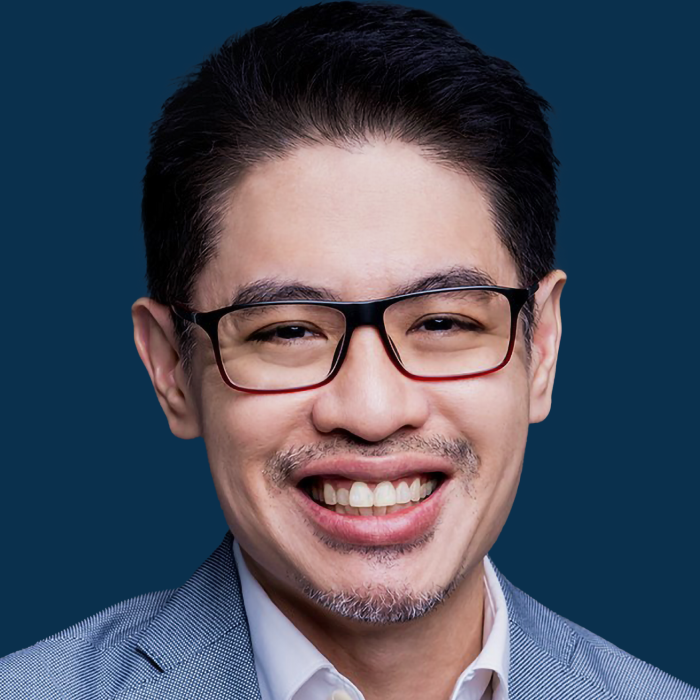
Kenneth heads the FinTech and Innovation Group at the Monetary Authority of Singapore (MAS). The Group is responsible for development strategies for technology and innovation, to strengthen competitiveness, manage risks and enhance the efficiency of the financial sector.
Kenneth’s recent prior experience focused on digital transformation, enterprise GenAI and data governance. He previously headed the Enterprise Knowledge Department at MAS. Besides formulating data and knowledge strategies and governance policies, the department also pursues data transformation by architecting and developing platforms and applications that improve outcomes for financial supervision, central banking and other use cases.
Kenneth also has experience in regulatory policy, having previously headed MAS’ Prudential Policy Department. The department develops capital and liquidity standards, including MAS’ approach on the implementation of Basel III as well as contributions to international policy forums. Prior to this, Kenneth headed the international financial relations and financial stability surveillance functions in MAS, and served in MAS’ reserves management and enforcement functions.
Kenneth holds a BA in Economics and MA in International Relations from the University of Chicago. He enjoys experimenting with technology at work, and as a pastime.
More TRM Talks
Subscribe to TRM Talks
Subscribe to be the first to hear about new episodes, and to stay in the know about all things blockchain technology and crypto policy.