
Jul 15, 2026 - 33mins
Criminals Don't Have Compliance Officers: The AI Arms Race in AML with ComplyAdvantage’s Vatsa Narasimha
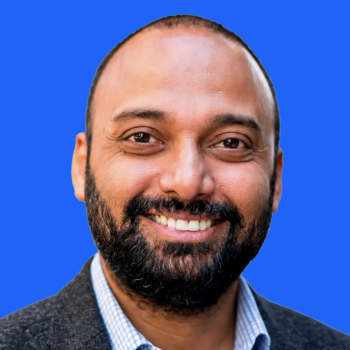
Criminals have no compliance officers and no regulators looking over their shoulder. That means their barrier to adopting new technology — including AI — is effectively zero. They don't need a tool to work for five years. They need it to work for the next five hours. Vatsa Narasimha, CEO of ComplyAdvantage, has been watching this asymmetry define the fraud landscape for years, and his answer is a platform built to match it.
Vatsa joins Ari Redbord, TRM's Global Head of Policy, to talk through what building ComplyAdvantage have taught him about fighting financial crime as a network problem rather than a point-in-time compliance exercise.
The conversation covers the industrialization of fraud (synthetic IDs, money mule recruitment at scale, AI-enabled targeting of retirees and immigrant workers), the architecture behind ComplyAdvantage's new Mesh platform, and the case for information sharing as a structural defense against crime networks whose strength lies in their interconnection. TRM focuses on the on-chain world; ComplyAdvantage focuses on the off-chain. Together, Vatsa argues, they cover the full picture.
Click here to listen to the entire TRM Talks: Criminals Don't Have Compliance Officers: The AI Arms Race in AML with ComplyAdvantage’s Vatsa Narasimha. Follow TRM Talks on Spotify to be the first to know about new episodes.
Ari Redbord (00:02):
I’m Ari Redbord and this is TRM Talks. I'm Global Head of Policy at TRM Labs, we provide blockchain intelligence software to support law enforcement investigations and to help financial institutions and cryptocurrency businesses mitigate financial crime risk within the emerging digital asset economy. Prior to joining TRM spent 15 years in the US federal government, first as a prosecutor at the Department of Justice, and then as a Treasury Department official where I worked to safeguard the financial system against terrorist financiers, weapons of mass destruction proliferators, drug kingpins, and other rogue actors. On TRM Talks, I sit down with business leaders, policymakers, investigators, and friends from across the crypto ecosystem who are working to build a safer financial system.
(00:52):
On today's TRM Talks, I sit down with ComplyAdvantage CEO Vatsa Narasimha. But first, Inside the Lab, where I share data-driven insights from our blockchain intelligence team. On today's Inside the Lab, we're analyzing what a 30-year sentence tells us about crypto-enabled drug markets. The operator of Incognito Market received a 30-year sentence for running a global dark net drug marketplace that relied on cryptocurrency for settlement. Marketplace models like Incognito are financially structured. They typically use escrow systems where buyer funds are held until transaction confirmation with the platform collecting a fee. That creates repeatable inflows and predictable payout schedules. Over time, those transaction flows create consistent financial signatures. Investigators can identify escrow wallet clusters, vendor disbursement patterns, and fe consolidation addresses. When analyzed longitudinally, these patterns reveal operational control and revenue structure. How do you like that? Longitudinally. This is the broader point. Rypto does not eliminate evidence.
(02:04):
It creates a durable financial ledger. When marketplaces operate at scale, they produce revenue trails that can be reconstructed and tied to individuals. 30-year sentence reflects the seriousness of the underlying conduct, but it also reflects confidence in the financial evidence underpinning the case. For a much deeper dive on Incognito and other marketplaces, check out TRM's blog at trmlabs.com. And now, Vatza Narasima. Vatza, thank you so much for joining TRM Talks.
Vatsa Narasimha (02:38):
Thank you, Ari.
Ari Redbord (02:39):
I really think for years when I've looked around the space at who's really building the most significant and important sort of compliance solutions, ComplyAdvantage has come up in so many of those conversations. I'm excited to partner with you and the team there at TRM. But before we get into all the nuts and bolts there, would love to hear about your journey to CEO of really one of the most important compliance companies in the space.
Vatsa Narasimha (03:02):
Where do I start? I think I was with the Boston Consulting Group for the longest time based here in New York. I'm a New Yorker. The best way to identify myself as a New Yorker is I don't even have a valid driver's license. So I live in the city and if I'm going outside the city anywhere, I'm in the mercy of someone else to drive me around. When I was at BCG, most of my clients were financial institutions, be it the bulge bracket banks or the exchanges, the data providers, the asset servicers, all the way down to the belly of the beast of capital markets, DTCC. And along that journey, I ended up having a client, which was my only venture-backed client, and that was Oanda. Oanda was a FinTech foreign exchange trading platform, and Oanda became my smallest client. So at the end of the engagement, the VCs were like, "Hey, a lot of good recommendation on what we should do about our strategy, but how would you like to come actually execute it?"
(04:03):
So went over to Oanda and after a six and a half year journey at Oanda, we exited it to private equity ownership with CVC Capital coming in. Stayed on a CEO for about nine months post the CVC acquisition, and then woke up one morning and said, "I've probably been around the carousel on too many times, so I wanted to take some time off." Probably the best decision I made in my personal life. So took all of 2019 off and I actually traveled the world. Worked out well because starting 2020, none of us could really travel anywhere.
Ari Redbord (04:38):
Totally. What timing there to do that. Wow. I know.
Vatsa Narasimha (04:41):
In hindsight, right? And in 2019, meeting Charlie Dellingpol, who's the founder of Comply. Index Ventures had just invested in Comply and Index had also been in my previous company at Oanda. And Index said, "Hey, I think it'll be good for the two of you guys to connect." And we spent a few months here and there talking on understanding what Charlie wants to do, why he started the company. Everything resonated. And then towards the end of 2019, early 2020, we decided to team up. A couple of months in, then the pandemic hit.
(05:15):
Are sitting in your apartment in lower Manhattan trying to work with the engineering team in London with the data team in Romania trying to build the business. But it was good. It's been a good journey. So it's been six plus years, six and a half years at Comply. There are days I still wake up and I go, it still feels like week one. So very exciting times.
Ari Redbord (05:35):
That's amazing and super relate to that. I joined TRM about six years ago right in the midst of the pandemic as it kicked off. We were seven people. We're about 420 people today across the globe. And it is that sort of building remotely, building across different teams. What an amazing journey. I don't think I've ever asked a question about time off, but when you tell me you're traveling the world, what did you need in that moment and where did you go and find inspiration?
Vatsa Narasimha (06:02):
A lot of different places. I think my last day at Orlando was Feb 28th, 2019. I was still on the board after that, but I was not CEO. And I think on March 2nd, I was on a flight to India. My parents lived in India, so went and spent some time with them. I was actually in India for about eight weeks, trveled around India a fair bit. And then I'd asked my mom where did she want to go on vacation? It was just going to be the
(06:32):
Three of us, my parents and I. And all the places in the world, she picked Sri Lanka, which is actually a very short flight from where my parents live in Chennai. And so we went over to Sri Lanka for 10 days. Then I came back here, went to board meetings, few other things meant I was back in Asia in Singapore and Hong Kong. And then I went over to Japan. Summer of 2019, there was a Cricket World Cup going. I ended up going over to London and watching a bunch of cricket games. Two of my best friends, I'm the Godfather for their two kids and kids were much younger back then six years ago. So we were all up in New Hampshire for a month of August. I think I then went over to Europe and was in Paris and parts of Spain in the fall. Oh, I also did one safari that year in Africa. And then after that I felt, okay, I'm racking up a lot of air miles, but now it's for work.
Ari Redbord (07:31):
What a just transformative experience. And it's interesting. I always tell people to take advantage of those opportunities between jobs, but how often do you get to do it at that stage in your career? What a really cool experience.
Vatsa Narasimha (07:42):
I personally think we tend to rush through things a lot. We tend to go one job to another. And if you have the opportunity, again, I feel very lucky thatHad the opportunity to be able to go. I finished a significant journey at Owanda and I knew wherever I was going to go next, I was going to embark on what I consider legacy building part of my career. And to have a gap, have some time to reset, to think through and spend time with friends and family and stuff made a lot of sense. So I feel very fortunate and very lucky that I was able to do that and then come back to it and make a conscious choice that I wanted to be at Comply for the foreseeable future.
Ari Redbord (08:25):
Extraordinary. So let's get into that a little bit. Talk to me a little bit about how you see your role and then also what you're building today at ComplyAdvantage.
Vatsa Narasimha (08:33):
So for your audience who are not familiar with Comply, Comply is the only fully AI native AML and fraud solution, full lifecycle solution that is available out there. We are known for having our own proprietary data that makes AML and fraud solutions both for bad actor identification and bad behavior identification across the AML and fraud lifecycle from onboarding to ongoing monitoring of individuals and entities to transaction monitoring and transaction fraud solutions.
Ari Redbord (09:13):
Fantastic. Obviously at TRM, we are incredibly focused on really leveraging AI at every layer of our platform, and there's so many fun synergies, and I know we're building this together in many respects. Talk to me through about the AI piece. Obviously that's relatively new. I think there's a pivot in the world. It was interesting, I was in a panel yesterday conversation and they asked me, I thought sort of foolishly, is it possible to separate AI and crypto from a conversation today? And I said, it is impossible to separate AI and anything today. Healthcare, infrastructure, the way we work, the way we live, the way we eat, farming. I mean, am I right there?
Vatsa Narasimha (09:53):
I 100% agree. I'm being not too serious about this, but it's an interesting way to think about it. The original Matrix movie, the machines have frozen the human civilization in the late '90s because they go after that it really became the AI civilization.
(10:10):
It feels that way. AI is such a part of your everyday life today. I mean, even think back on what we used to do. Even five years back, everything became, let me do a Google search. Now it's no longer a Google search. The minimum everyone's using AI is they're going on OpenAI or cloud or whatever's your favorite tool and you're using that as a Google search. That's the minimum everyone's doing. Minimum. And that's just a bare minimum. Everyone's actually doing a lot more than that. And it's so prevalent in everything. And in fact, it's gotten to the point where every company that you talk to or every organization, it's all about how everyone is AI native. So that the phrase AI native has become so overused in a way. And every time I hear that phrase and every time I hear it, I say that about myself and about Comply, I have to stifle a chuckle.
Ari Redbord (11:10):
Yeah, no, no, it's such an interesting term. And it's interesting at TRM we've gone from being AI native where you're prompting these tools for that being unacceptable today. You need to be building coworkers that can do everything that isn't this right now. And maybe I should build the TRM Talks that could just have me knock these out. But yeah, that is really where we are today at TRM, and it sounds like you're having a similar transformation at ComplyAdvantage.
Vatsa Narasimha (11:37):
We are. So Comply, I'd say if I go back 10 years when Charlie founded it, the thesis was always that financial crime is a network problem. It's not just one individual doing something. It's a network of things, individual working with a particular institution and a other group of other entities or individuals. And so we felt that if you had good data and good intelligence on top of it, you always get to better outcomes. The challenge obviously was where do you get good data? So at least obviously TRM, very complimentary to Comply. You focus a lot on the on-chain stuff. We focus more on the off-chain world. So you have some legacy data providers who typically have had the data and the data we felt was always very noisy and it was very siloed. So a lot of the solutions that were out there were building intelligence on top of that bad data.
(12:41):
But we said, let's take a different approach. Let's go ingest data ourselves and build the intelligence on top of it. That's what we did for the first six, seven years. About three or four years ago, I came to the realization that all the stuff that we've done was great, but a couple of things were happening. Technology was changing. We had two separate platforms. One was a bad actor platform, the other was a bad behavior platform. And our clients were starting to say, "Hey, it'll be great if you can bring the two of them together. And you're also thinking about the next phase of the company growth and type of clients, so you want scale." So we went and built a brand new platform. So everything we have today, and we launched it late last year, it's called our Mesh platform. Every line of code has been written since 2023.
(13:28):
And we went in and said we want to do data ingestion using AI. Our data gets resolved and configured and cleaned and made proprietary in a knowledge graph. That's the belly of the beast. In November, December of last year, we released our first AI remediation agent, which helps. We can be either a copilot to an L1 analyst or it can actually help fully remediate a case. And now we have a suite of agents. We have a couple of agents for our screening and ongoing monitoring ap, and we've also launched our first agent for our transaction monitoring solution. So it's that piece of how do you get agents to help resolve the decisions? And then it's up to our clients. We are not in the business of saying how much risk you should take. That's our client's business. But it's our job to provide them with the right tools and the best insights that helps them make their job easier.
Ari Redbord (14:28):
That's awesome. I think you answered this in large part, but I would want to ask you, we have a pretty robust group of compliance professionals who are listeners of TRM Talks. What should they know about Mesh today as they think about leveraging tools?
Vatsa Narasimha (14:44):
Look, I think if you're thinking about a solution from post ID verification, we partner with a lot of the ID verification players, but post ID verification, when you think about AML and fraud, Mesh should be your first thought for a scalable AI native solution. That's because we pick everything up right after IDV if we are looking to onboard you or one of your customers is looking to onboard you, let's say as an individual. They check for if you're a good actor or a bad actor, that's the bad actor detection platform, through the entire lifecycle off that customer, all the transactions they do and looking for suspicious activity, filing those reports. And especially in an era where compliance officers are increasingly having conversations with their own CPO and CTO on what type of tools they bring in, how does that marry with the client's own roadmap?
(15:52):
So your listeners must be in an interesting place where they're going, we still have our compliance obligations. Regulators have not suddenly said, oh yeah, no, no, use a bunch of AI tools. I'm not going to ask you what's going on. So the compliance obligation is still there. But what I'm seeing is the conversation from the business side has become different. It used to be don't say no to anything we want to try out to now like, okay, maybe is there a way using AI we can get to it? Yes. And can we get to it faster? So the CPOs and the CTOs are getting more involved in the compliance roadmap. How can technology better help it? And that's the era that Mesh has been built for because it's truly a AI native roadmap. And one of the interesting things that I find in a lot of conversations these days is how every time there's an Anthropic press release on, oh, anthropic is now getting into legal, it's getting into healthcare, and invariably it's getting into compliance and risk.And look, anthropic, I mean I use COP too. It's an amazing tool.
(17:00):
But the reality of it is it can help with certain workflows, but for the areas that TRM and Comply serve, having that subject matter expertise is so important. Knowing where crime is happening on chain, or in our case, knowing how the proclivity of certain individuals based on who are their nearest neighbors and next nearest neighbors in terms of connections. A lot of that compute can happen in what I call the belly of the beast. And you're just doing differential compute based on each client's risk profiles and risk requirements. So that's what we've built Mesh for. So if you're interested in a tool that you can consume in a modular way, but in the end can actually help you through the entire life cycle, I think Mesh is definitely one of the things your listeners should be getting to know.
Ari Redbord (17:51):
I love that. It's funny, we mentioned Isabella Chase as we were talking, getting onto the show. She's my colleague who leads our team in the UK and she was at ComplyAdvantage for years. She has made the point to me many times that, look, these tools are only as powerful as what you're putting in and the expertise that you have and the meetings that you've had and the conversations that you've had with regulators and policymakers and compliance professionals. And I think you really nailed it with that. The machines can do a lot, but they need to be fed information from really true experts. Look, I see this as two pieces to a puzzle and I think we've really nailed the, hey, how should compliance professionals be using AI to go after bad actors? But there's this other piece that you've talked a lot about as well, and that is how bad actors are leveraging the technology today.
(18:34):
And at TRM, we've seen a 500% increase in AI enabled scams. We've seen ransomware groups deploying affiliates at scale. You don't need darknet affiliates anymore. You can just leverage agents. North Korea's using it to launder proceeds of hacks. Talk to me about how you have thought about how bad actors are using it and maybe how to meet that moment.
Vatsa Narasimha (18:59):
I'm very fond of saying criminals don't have compliance officers. Criminals don't have regulators to answer to. So their ability always to try new things is easy. So the barrier to entry for them is always low. On top of it now with technology itself becoming so accessible, the barrier to entries becomes zero. So they're willing to try any new piece of technology anytime and every time. And all they need to do is they don't need it to work for the next five years. They need something to work for the next half hour, five hours. And they'll maximize it. And because the barrier to entry is solo, the effort is so low, all they try to do is if this can get me $100,000 in an hour, I'll do it. And then if the door's sharped and I can't do that anymore, that's fine. I'll go try something else somewhere else.
(19:54):
And I can do that in a remote location. And so one of the things you've obviously seen is synthetic IDs, elements of a real person. You can layer it in with details that they're missing. And it really creates a truly creates a fake person, almost a fake person, but it's synthetically real. But the biggest thing that I'd say is, as I think about this all the time, it's the industrialization of fraud. So back in the day, I mean, I'm really dating myself here, fraudsters had to call people one-on-one. And then if it went to one-on-one messaging. But now with AI, you can tailor something. So the other day, one of my employees in London, his brother got a very, very specific message, which tailored in things like, "Oh, you're doing this in your job. This is where you're working. This is the type of stuff." So tailoring and targeting, and you can do that for so many people.
(20:51):
So it looks like a very personal approach. And particularly I think now that you have with the boomer population retiring and stuff like that, you have a particularly susceptible retiree population that is understandably a little unfamiliar with the technology change. So their retirement and post-retirement years are coinciding with a hockey stick shift in technology.
(21:20):
And that is where in some of those things, I find that to be the most vulnerable population. And the other area that I see is recruiting money mules. So social media had made this very feasible. The number of people, number of times you hear people scammed in through Facebook messaging and stuff like that to say, "Hey, you and I have this in common. Can I get your help on doing something? I'm new to the country," and stuff like that. Now you're starting to see that again happen at such rapid scale. It's that industrialization of fraud. So everything they used to do that criminals used to do, they can now do it using AI. They can do it better. They can do it faster and they can do it at scale. And one of the things you mentioned around North Korea, bad states, it's become easier for states to do that.
(22:12):
So cyber attacks is one piece, but all of this then results in money laundering opportunities and any ransomware, if it gets paid and stuff, that is money laundering and it gets shuffled off. So it is not easy. And I've had compliance officers tell me it feels like whack-a-mole. It is and it isn't in my mind. It does feel that way. But the part I think all of us have to, who are financial crime fighters as I call ourselves, is where we need to be serious about is let's use the technology, but let's also use the human intelligence on top of it.
(22:49):
Because AI still is not perfect and it's still going to hallucinate on a few things, but let's use human judgment. Let's use the AI to do a lot of the things that used to consume so much of our time before, and let's focus the human time and energy on that 10%, the 5% where typically they're the high risk, typically where the edge cases, because compliance is really about the edge case. It's not about the middle of the fairway type stuff. So that's where I think humans can spend their time. And that's where, yes, it might feel like whack-a-mole, but that's also where the excitement is because you're the cutting edge of the problem solving.
Ari Redbord (23:30):
Totally. When I was a prosecutor, I used to describe this. People say, "Oh, it's just whack-a-mole." I'm like, "Yeah, but you got to whack some mole sometimes." And when you whack-a-mole, you add friction to the laundering process, you make it more difficult, you cut off certain money laundering. And then you think about end-to-end message. When I was a prosecutor, the only people who used end-to-end encrypted messaging apps were prosecutors, agents, and terrorists. Now we use them to organize my kids' basketball games with the other parents who's going to bring the oranges today. So it's like bad actors are always early adopters of transformative technology and we're seeing this with AI today. Is that your take?
Vatsa Narasimha (24:05):
It totally is. You see this every single place. I was in Singapore. We have an office there. I was there probably a couple of months back. And when I go over there, I usually spend the whole week. And one of the things we have helped some of our clients with this, but Singapore obviously has a lot of immigrant population to do some of the work. The number of friends of mine in Singapore and employees of mine who talked about how their helpers who have come in, particularly from the other ASEAN countries like Philippines and stuff, how they get suckered into giving up their account details to a friend who they became friends with them on Facebook or something. And it's again, no name. They have no way of tracking who this person is. And suddenly before they know it, their brand new account, which has been created with the help of the host family is suddenly taken over for laundering purposes.
(25:02):
And before you know it, there's a ton of money coming in and going out and suddenly you're finding yourself talking to the police in Singapore trying to track this and things get shut down pretty quickly. But the pace at which it's also happening that as soon as someone opens an account, and if you're not familiar with saying no to some of these things, I think if you go back five, six years, you used to be able to probably have three months before someone opened an account and some bad actor approached them. Now I think it's probably three days to three hours. That's the window where people are approaching them. And this is again, because criminals have the thing and they know it's no longer, you really have to be on the dark web to find information. You're actually able to put things together with just what's available in public profiles.
Ari Redbord (25:48):
Building on that a little bit, I think one thing that we can also do better right now than ever before using this technology is share information. Talk me through a little bit about how you're thinking about information sharing in this new age.
Vatsa Narasimha (25:58):
So if you think about credit card networks, even back in the days, companies were very averse to sharing why someone has a credit card or who has a credit card. But one of the things the credit card networks realized very early on is the thing that you should share is a particular point of sale bodega down the street if that has a higher incidence of fraud, higher incidence of card takeover and things like that. So that's how we think about it in a way. It's okay to share what are the weak points of the network. It's not obviously okay to share decisions that individual companies are making on risk and things like that. So what our architecture allows us to do, and obviously there's still a significant amount of debate and regulators and governments are thinking about how should we even be thinking about data sharing and federated learning, but there's lots to be learned.
(27:00):
And so we have architected our system around that knowledge graph, which constantly gets enriched based on what we are finding from the system and from the network. So across the, call it billions of transactions that we see, anything that we can do from a shared learning perspective, we take that to reinforce the graph and make our data better. And I think there are ways this could play out in the future. There could be public-private partnerships where the government says this type of data, these type of risks can be shared. And at the same time, there could be private-private partnerships where groups of companies that are in the same sector, they could be in the property management space, let's just say, and they could come across and say working with folks like TRM or Comply, they could say, "Hey, share these types of data across each other.
(27:55):
We are okay with that and we are not going to wait for government to prove that these are data points that'll help us make our network better." And so the intent is always about thinking about financial crime as a network problem and the network's only as strongest as its weakest link. So how do you constantly fortify the weakest link? I think that's been the mentality that we use and the approach that we use, particularly as we have built Mesh and the knowledge graph and the belly of the beast.
Ari Redbord (28:26):
More and more I'm hearing about even governments looking to the private sector to share information amongst themselves. This idea of private to private partnerships I feel like are even more in vogue or at least part of the conversation right now, maybe because it's a little easier than necessarily some of the public to private, which I think has always been a challenge. My last question, I usually start with when you're not being a crime fighter out there, what do you do? But I feel like you've already dropped that you traveled for cricket. Before we jumped on here, we were talking you're a huge Tottenham fan, you dropped the Knicks. So you're a big sports guy. I love sports. Talk a lot of sports on the show. What is your favorite team out there in the world? Is it Tottenham in terms of sport team, that's your passion?
Vatsa Narasimha (29:08):
So being a person of Indian origin, I was born and I grew up in India. It has to be the Indian cricket team to start.
Ari Redbord (29:15):
Amazing.
Vatsa Narasimha (29:16):
Okay. And then it's Tottenham. I think being a Tottenham fan is I'd say a lifelong journey of expectation and pain. And so we start out expecting this season as ours. And then every 20 years or so, I think we get close to winning something and then that gives us hope for the next 20 years. Not unlike Knicks fan, I think. But then most recently I've taken up diving, so I've become dive certified in the last year. So I'm looking for more dive sports around the world.
Ari Redbord (29:52):
That is so cool. Coolest place you've dived.
Vatsa Narasimha (29:56):
A couple of weeks back, I was down in the Dutch Caribbean in an island called Bonaire and diving there is so much fun. You just get your equipment ready and you walk off the shore and you do shore dives. So you don't have to be on a boat or anything. You can just walk in, wade into the water, swim for a bit and then dive.
Ari Redbord (30:15):
Oh, that is so cool. What are you seeing?
Vatsa Narasimha (30:18):
I mean, I'm still early in my diving, so I'm just happy to see anything. But this trip I saw a Caribbean reef shark, saw a bunch of turtles. There's a large fish down there called the Tarpon. And especially if you do a night dive, they sneak up right next to you because your light is their way for them to make their hunt easier. And you suddenly turn around and you're like, "What is this thing doing next to me? " Oh, that's wild. So tons of very interesting fishes. Yeah.
Ari Redbord (30:46):
As you get into this, are there bucket lists, things that you're saying, "Hey, this is part of what I want to be on this journey?"
Vatsa Narasimha (30:53):
The Great Barrier Reef and the Belize has a reef and a thing called the Blue Hole. So those are the two things that are very high up on the list.
Ari Redbord (31:02):
I'll tell you, I do not dive, but my wife and I years ago went to the Great Barrier Reef and we dove. We certified in the pool that day at the resort or whatever, and they went out there. And I'll tell you, every picture of me has bubbles where you can't see my face because I'm so freaking out the entire time about breathing.
Vatsa Narasimha (31:19):
I mean, that's the frustrating thing about the diving. It's I'm sure just tied back to work in a way. It's a frustrating thing I'm sure compliance officers have too, which is everyone says, "Oh, just do this in a simple way." So diving's the same way. Everyone goes, "Just breathe, be calm.” Everything's great, but until you are trying to do it. That's amazing. And it's about getting that muscle memory and doing it more and more and then you'll calm down.
Ari Redbord (31:44):
That is a really, really sharp analogy in terms of compliance. Thank you so much for joining TRM Talks. This was an awesome conversation. Thank you. I'm really just excited for the partnership and to do more together.
Vatsa Narasimha (31:53):
100%. Looking forward to it.
Ari Redbord (32:00):
That was a great conversation on so many levels. I know we have a really cool group of listeners in the compliance space, CCOs, financial crime leads, really folks deep into this space. And it's fun to have a nuts and bolts conversation around tools. Oftentimes we'll talk to CCOs about, "Hey, how are you putting together that compliance team? What tools are you using?" But to hear someone who's really thinking about how do I build the best compliance tools for compliance teams? We talk a lot from a TRM perspective about using AI, building out this intelligence function, but partnerships are critical and it's fun to hear someone who's also building sort of that off chain piece to help with these compliance workflows. I also, from a personal perspective, just like it was just a really fun conversation. I love if we got into Cricket, we got into Scuba, we got into the Nicks, Tottenham.
(32:52):
So really, really fun conversation. And for all of you guys out there who always tell me that compliance is not fun, please definitely use this episode as an example. On the next TRM Talks, I sit down with the godfather of financial intelligence, Juan Zarate.
(33:12):
If you love the show, leave a review wherever you're listening to it and follow us on LinkedIn to get the latest news on crypto regulation, compliance and investigations.
TRM Labs (33:23):
TRM Talks is brought to you by TRM Labs, the leading provider of blockchain intelligence and anti-money laundering software. This episode was produced in partnership with Voltage Productions. The music for this show was provided by iKOLIKS
Ari Redbord (33:39):
Now let's get back to building.
About the guests
Vatsa Narasimha is the CEO of ComplyAdvantage and was previously the COO. He has deep expertise in driving growth in financial institutions and fintechs. Prior to joining ComplyAdvantage, Vatsa served as the President and CEO of electronic trading and foreign exchange fintech OANDA. He joined OANDA from The Boston Consulting Group. He holds an MS in Electrical Engineering from Cornell University and an MBA from The Wharton School of the University of Pennsylvania.
More TRM Talks
Subscribe to TRM Talks
Subscribe to be the first to hear about new episodes, and to stay in the know about all things blockchain technology and crypto policy.