
May 6, 2026 - 35mins
The Decentralization of Money: Building the Internet Capital Market on Solana with Catherine Gu
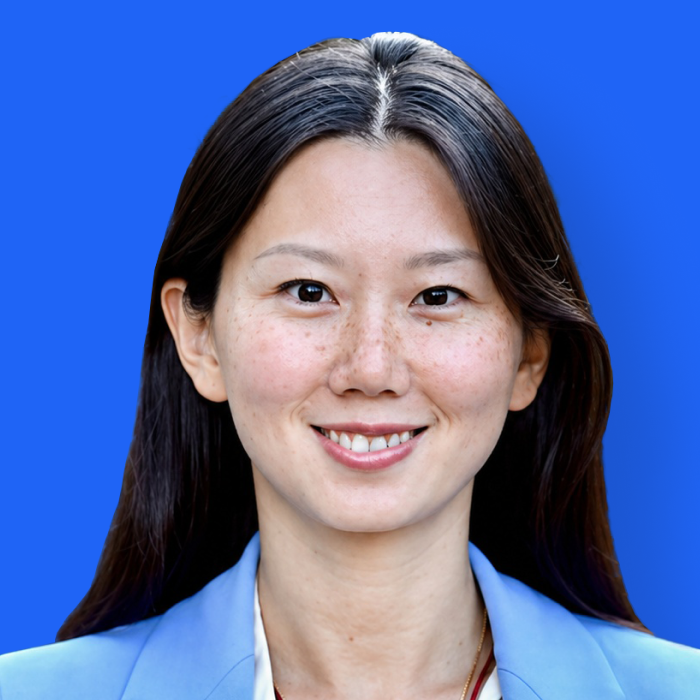
Catherine Gu has always been at the center of the shift toward the decentralization of money, a transformation that was once theoretical but is now actively reshaping global financial markets through stablecoins and on-chain infrastructure.
Inspired in part by Hayek’s vision of competing private forms of money, Catherine’s work sits at the intersection of that idea and its real-world implementation. As Head of Product for Digital Assets at the Solana Foundation, she is helping build what is increasingly viewed as the internet capital market, where speed, scale, and global access redefine how value moves. Before joining Solana, she was one of the earliest members of Visa’s crypto team, where she spent years bridging traditional finance and blockchain and leading the development of tokenized asset infrastructure designed for financial institutions.
In this conversation, Ari Redbord TRM’s Global Head of Policy and Catherine trace that journey and explore what it means for the future of financial markets. We discuss why Solana has emerged as a critical platform for stablecoin activity, what it means to embed compliance and trust into infrastructure from the outset, and how performance, liquidity, and developer resilience are shaping the next phase of institutional adoption.
This is no longer a debate about whether money will evolve. It is a conversation about how that evolution is being built in real time.
Click here to listen to the entire TRM Talks — The Decentralization of Money: Building the Internet Capital Market on Solana with Catherine Gu. Follow TRM Talks on Spotify to be the first to know about new episodes.
Ari Redbord (00:02):
I'm Ari Redbord and this is TRM Talks. I'm Global Head of Policy at TRM Labs, we provide blockchain intelligence software to support law enforcement investigations and to help financial institutions and cryptocurrency businesses mitigate financial crime risk within the emerging digital asset economy. Prior to joining TRM spent 15 years in the US federal government, first as a prosecutor at the Department of Justice, and then as a Treasury Department official where I worked to safeguard the financial system against terrorist financiers, weapons of mass destruction proliferators, drug kingpins, and other rogue actors. On TRM Talks, I sit down with business leaders, policymakers, investigators, and friends from across the crypto ecosystem who are working to build a safer financial system.
(00:52):
On today's TRM Talks, I am joined by the head of product for the Solada Foundation, Catherine Gu. But first, Inside the Lab, where I share data-driven insights from our blockchain intelligence team, we're examining cryptocurrency usage in sanctioned pressured economies, specifically in the context of Venezuela. The superseding indictment involving Maduro error corruption highlights how digital assets can function within parallel financial systems when access to traditional rails is constrained. In sanctions heavy environment, actors often turn to alternative value storage and transfer mechanisms. Crypto can serve as a bridge between isolated domestic systems and global liquidity pools. But here's the nuance. Usage in these contexts, and Venezuela is an extraordinary example, often intersects with corruption networks, intermediaries, and offshore facilitators. Financial tracing can reveal patterns of movement between politically exposed entities, shell companies, and crypto wallets. This is not theoretical. In high pressure economic environments, digital assets can become a structural component of state-adjacent financial activity.
(02:04):
Understanding these flows, whether it's the use of the Petro, the failed oil-backed stablecoin in Venezuela, or the use of stablecoins for payments around PaytaVisa, the state oil company. Understanding these flows requires both geopolitical context and financial mapping. And now, Catherine Gu. Today, I am joined by a very special guest Catherine Gu. Catherine is the head of product for digital assets at the Solana Foundation. Katherine, thank you so much for joining TRM Talks.
Catherine Gu (02:37):
Thank you so much for having me, Ari.
Ari Redbord (02:38):
Talk me through sort of how did you get interested in digital assets in Web3?
Catherine Gu (02:43):
Yeah. Many different phases in my life, I suppose. My background is in economics and finance, and when I started my career, it was at the city of London in a macro hedge fund. I really enjoyed it, and I've always loved numbers and quants. But I think around that time that we're talking about 2012, 13, that was just after the initial great financial crisis. I think there's a very clear pivot in terms of technology shift, and everyone's talking about big data, data science, and even AI to some extent. So around that time, I already thought about changing my career in a different direction to be more closer to the tech world, so to speak. So when I got the offer just starting at Stanford, I just decided to quit my career in London and move to a different city and starting a new chapter in my life.
(03:37):
So I was actually originally planning to do computational social science, and it's very much in the whole data science realm. I definitely didn't take any class in AI. I instead took many classes in crypto and blockchains, which was not planned in any sense. But I really enjoyed it because I think what drew me to this entire industry is this confluence of economics, finance, computer science, maths that I happen to have experience or really love all these different topics areas. They just suits me perfectly. And I think what shapes my personal understanding or appreciation is also I read this book called The Decentralization of Money by Hayek. It's like a very short pamphlet. I think it's only a hundred pages. It was very revolutionary even as of today, if you really read into it, because it's really talking about the fact that government should have no control of money whatsoever.
(04:34):
Instead, it should be left to competition, left to private issuers to compete to get the best products, which is much the stablecoin world that we're looking at here. So it's a very interesting kind of mindset, I suppose, to just make me rethink about what the future could look like. When I joined Visa, I think the reason why I want to be at Visa is very payments focused, of course. And what that really means is everything everyone talks about is money and it's really thinking about money from first principle, exactly what is the money and how does that money move from A to B to C. So it's kind of fascinating just to think about that entire funnel of the creation of money all the way to the trends of money. And of course, we have different form factors of it, be it traditional fiat or be it CBDC or stablecoins and there's different rails.
(05:21):
So I just kind of become a geek, I suppose, in this whole realm around digital assets.
Ari Redbord (05:27):
It's amazing to hear that story because I think it's very rare to have a true technologist, someone who's really deep in the technology, but then also sort of having that economic piece. And this new system is very much building those two things. We talk about FinTech, which is such a generic term, but that's really where you have that deep background in where the technology meets finance and financial systems. At the time, you had a really unique role at Visa. Would you just talk to me a little bit about how you ended up there and then maybe your role there? But I would love to hear your perspective on those early days. What was that like maybe compared to where it is now at a traditional financial institution?
Catherine Gu (06:06):
Yeah, 100%. I think I was employee number two or three on the Visa crypto team. So it was
(06:12):
Super tiny at the time. And initially, I was internally at Anchorage at the time, actually. And I think around that time, Visa made an investment into Anchorage. I was like, oh, that's a kind of interesting piece of news. So purely for fun. And I saw this job post on Discord from Visa Research saying, "Oh, would you like to have a job at Visa?" So I applied, they rejected me because I don't have a PhD, but then they passed my CV to the Visa crypto team, and that's how I started. And my mandate when I started was really be the thougt leader for central bank digital currencies. It's very zoomed into CBDC. And I think around that time, typically it's still very tiny, so it wasn't a main topic, but I think CBDC instead actually is much more important because as you know, Visa has a huge government engagement presence with all the central banks and government around the world, and that topic keeps coming back and this sort of existential threat, so to speak, around what does that mean in terms of disintermediation, in terms of how does the card network can coexist with respect to CBDC?
(07:13):
So in any case, I was very lucky to be probably the only one working on that very niche, I would say, unpopular subject at the time, but I think it grew in terms of importance because through many different pilots and initiative that we have been involved in, which is all very high profile, including the one with Monetary Authority of Singapore, with Brazil Central Bank, being the pilot with HKMA, it has been a really fascinating journey because I've never actually worked with central banks directly, but having that capability to directly engage with them, to directly engage with the BIS and all the others, it really shapes your mind. And you've been in these forums as well, it gives you a very different perspective, understanding how the top-down decision makers think about it. And therefore you as a technologist, you start to think differently when you're building a product, I suppose.
Ari Redbord (08:06):
It's really extraordinary. Visa is an early investor in TRM also, and I've always felt like a really close connection to what's happening there in large part because I think they're looking around the space and they're like, "Hey, who's building things that are important from an infrastructure perspective?" Obviously, Anchorage makes a lot of sense there. Before I move on to Solana, let me ask you, when you look back at your time at Visa, if you're able to do that already, how do you think of the impact that you had and maybe where we are today on this TradFi meets DeFi journey that I think that you honestly were a real pioneer in?
Catherine Gu (08:38):
I think I really especially enjoy the very beginning few years at Visa, just mainly because I feel at a time we're sort of the underdog and it's kind of a startup environment within the big organization. And again, crypto, frankly speaking, not many people care about it. They think this is a pet project or passion project, but it's not really for real, but it also therefore give us a space to really just do things. So things I really enjoyed is working very closely with the Visa research team. We published many different reports, including things like universal payment channels. But if you look even as of today, I was looking at Temple's description about payment channels, this and that, and how they're using it for different machine payment stuff. It's exactly the same concept as the payment channel we were in, except for a different use case.
(09:21):
So I just thought it's pretty cool that we were thinking about these things already like this is six years ago and things are offline payments. And we did this massive thing called gasless payments. We were looking to how you can do auto payments even through a card, but directly on chain, which was never done before. And I remember the night we released the report, my Twitter for the first time went viral and I was like, "What is going on? " And Fortune got onto a call with me trying to understand exactly what's going on. So that was all really surreal. And I think my proudest product I've built for sure is the VTAP, is Visa tokenized asset platform. It really took me a lot of time to get it out of the shop, if you will, because there was a lot of education to be done to really kind of tell the executives why this is important and why we actually need resources to allocate to support this project.
(10:16):
And it's also, there's a massive design space problem to think about the role that Visa can play in the space of tokenization. And so VTAB is essentially think about it as a B2B2C solution that could enable any banks to issue mint and transfer tokens as they will. So we provide the underlying technology infrastructure. And what's great about it is also that we won BBVA as the first client. I remember flying to Madrid, doing like two-day, three-day workshop with them, getting the deals signed. It was very satisfying, I would say. And it took three years to build it out. So I'm like, "This is my legacy."
Ari Redbord (10:52):
It's really amazing. I love the way you described the team too. It's like when we've dealt with or worked with financial institutions for years and they've had these sort of crypto native teams and they're all incredibly smart people who are creative and innovative. However, they've always sort of been pushed to the side to some extent. You guys play with your sandboxes here and we'll do our other thing here. And I think what we've seen over the last year or 18 months is finally the higher levels of these institutions being like, "All right, what are we doing on Stablecoins post-Genius? What are we doing on these issues?" And I feel like it's like this moment that folks like you, quite frankly, have been building for for years are finally here.
Catherine Gu (11:29):
Absolutely. And I actually remember that was one thing I remember talking with Esteban when I first joined Visa and chatting with you guys and he just, because I was telling him Visa moves very slowly, so be patient with us and stuff. But he just said, "Yes, it's true, but if you ever move, it's going to be causing massive waves." So every single thing matters a lot more. And I think that's really true. Even though it takes three years, when we did move, I think it did change a lot of the things. So yeah.
Ari Redbord (11:58):
It's true. If you think about what has been the biggest impact on our space over the last 18 months, in my humble opinion, it's not the regulatory environment, it's the institutional engagement, which obviously you can't really have one without the other arguably, but it's been this incredible force for waves. So you had a move to make. You made it to Solana, which I think gets you deeper, arguably even deeper into the space. Tell me why Solana?
Catherine Gu (12:25):
Yeah, I think it's at the right time, the right opportunity, right role for me. It just all works out. And frankly, I don't think there's any other places I would consider. In a sense, I want to be at the epicenter of things that happen, and this is everything to do with crypto, especially given the regulatory changes last year. I think it's just the entire industry's mindset has shifted 180 degrees. So I want to be at the epicenter. And I think institutions are following because of course they can't front run the regulatory move as much, and therefore they're still playing a lot of wait and see. Whereas I want to just build and ship things. And being at the center is really important for me. And thinking about the different places I could go, I think Solana stood out really because of its value proposition for being the internet capital market.
(13:16):
And if it's everything that I believe about crypto, about blockchain, the use cases. And it's a very lean organization as well. It's only like 80 people on the foundation. So I think the people I've met are firstly, super smart, of course, but it's just everyone's really hungry and there's no sort of baked in mode of what can be done, what cannot be done. I feel like the sky's your limit. You can do whatever you want. It's like you can work 24 hours if you want, or 10 hours, as long as you're productive. So I love that mentality, that energy, and therefore I just told myself it's the right time, and hence I jump in for this opportunity.
Ari Redbord (13:53):
It's so cool. I think a theme that runs across probably a hundred episodes of TRM Talks is really this sort of through line in a career. And I love the sort of academic pursuit of quantitative finance and then work in hedge funds and this move to Visa that's one of the largest financial institutions, traditional financial institutions in the world. But then Solana makes so much sense because it's like the place where so much of this new economy is being built. What does it mean to be head of product for the Solana Foundation in particular? What does your day-to-day look like? What are you building?
Catherine Gu (14:24):
Yeah, so I think product is actually a new concept at the foundation, mainly just because real consumer or institutional product is built by the ecosystem. So the way we think about product is really about infrastructure, right? It's like dev toolings or pieces of APIs or UI/UX that could really support the overall growth and overall adoption of the entire Solana ecosystem. So my focus area is very much still this institutional or I call it digital asset space. So that covers banks, asset managers, payments companies, fintechs, and big tech. So all these institutions, for different reasons, they now want to be on chain. And we need to figure out what kind of infrastructures that's missing that's probably not going to be a commercially viable product, but needs to be built regardless. And I think that's the key focus for the foundation to be really spending a lot of resources because by putting that layer in, you're building the public road or whatever public infrastructure analogy is.
(15:23):
And then on top of that, we can then encourage more ecosystem growth and more institutional adoption for it.
Ari Redbord (15:28):
How do you see the role of Solana as a blockchain, Solana Foundation in overall ecosystem, even compared to the developers who are building there?
Catherine Gu (15:35):
I think just thinking about Solana Foundation, it's actually very mission-driven, right? Because as I said, everyone shares this value, which is we want to be the internet capital market. And hence the goal is really trying to create the best financial market infrastructure that could serve the future six billion people for whatever financial use cases they might be thinking of. And hence, I think with that in mind, we just want to promote growth on Solana, whatever way that can be. And I think there's a huge amount of effort going to our growth BD team trying to really support all the founders and startups to build on Solana. And I think it's not an easy job because there's many different outreach and people who are giving you different signals. So how do you really support everyone and really let that entire ecosystem grow and how do you balance the priorities?
(16:24):
I think that's a constant sort of computation they have to run in their minds. And then I think in terms of, we also put a lot of effort into the developer relationship side of things, and that's huge because Solana, as the L1 chain, I think it continued to demonstrate some of the best technological pushes that you've seen across different L1s, because I think for a long time, I don't think there's massive, I would say protocol upgrades and changes happening around L1. We had that with Ethereum back in the days from proof of work to proof of state. But really since then, it's more sort of like incremental changes, if you will. So on so ona this year, we're actually going to have something equivalent to what I just said on Ethereum, and that's what we call the Open Globe Consensus Mechanism Upgrade. And what that is going to enable is to make Solana even faster than it is today.
(17:11):
So it takes about 400, 300 millisecond for the block time to finalize to confirm today. It will be reduced down to 150 milliseconds. So that's a massive change in terms of speed and latency that we are actively working on. Not just the foundation. I would say there's a lot of credit going on the lab and the rest of the ecosystem who are really hard at work with that. There's also a lot of other upgrades that I'm not the expert to talk about, but just to focus about increasing bandwidth, reducing latency is the general goal. So I think the foundation is very focused on bringing the best infrastructure, best technology to it. And as I said, through the developer relationship side of things, we're doing a lot of work with respect to just the broader developer ecosystem, which is why you're seeing, say, through electric capital reports, like Solana continues to be the number one chain that attracting new developers because we are actively maintaining that relationship and really making sure everyone's happy.
(18:09):
And if there's bugs or security misses or whatever, we really try to hard to fix it as soon as possible. And then the last piece I bring to product, which I said is a new thing. Again, I actually don't see that in other foundations that there's a dedicated product team. And to be fair, it's also fairly new for Solana, but with myself and a few others who are now part of the product org, as I said, the role is to identify the infrastructures that we can bring to the industry to really help to facilitate the growth, the further growth on the ecosystem.
Ari Redbord (18:41):
I've always thought of Solana as in terms of speed and liquidity, but obviously there were so many other pieces to it. If you're in an elevator with a developer, give me your one sentence or two sentence sort of like, why Solana?
Catherine Gu (18:52):
Well, let me start with the one sentence and we can expand It.
(18:56):
It is the best ecosystem for growth. If you are developer today and trying to build a new application, new business, Solana is the best chance you have in terms of growing that business and really bring the distribution. What I mean by that is first, as I think many people know, Solana has the best infrastructure. So if you're looking for performance, scalability, resiliency, all of that, Solana has the best of the world and has said technology keeps improving and that's great because the entire ecosystem's still active. I think second is also you already have a very rich developer ecosystem. So any new developer coming in, you can think about the composability aspect as well as synergies with respect to the rest of the existing system that can strengthen your new product offering. So I think it's really important. In fact, a lot of the times the role of foundation is connecting the dots.
(19:40):
We're not building things, but what we're doing is just pure introductions. Maybe you don't know that founder, but some kind of sparks may be worn out of just a pure conversation and it just happens all the time on the Solana ecosystem. And I think the third thing is in terms of liquidity, Solana has the deepest, the most sort of liquid volume in terms of stablecoin transactions to date as far as all the blockchains are concerned. And this is super, super important because I think a lot of the time people talk about TVL, which is fine. And it does show the ... It's kind of like a stock versus flow concept. Stock is important, but the flow is even more important because the flow shows you the activities of a given network. And Solana continue to top in that metric and the TVL continues to grow as well, of course.
Ari Redbord (20:28):
I love that answer. Thank you. I was lucky enough about three years ago, I think Amira invited me to go speak to a hacker house in Brooklyn. And it was such a unique opportunity, especially for me to come in and talk about what we do, illicit finance, mitigating risk, compliance. I mean, I don't think North Korea had ever been discussed ever in the history of a Solana hackerhouse, right? But I will tell you that I was so blown away by the developer community, which I think you were alluding to certainly, which is a whole other reason. I think you guys have really created this interesting community around Solana, which is funny for technology to also have this a tight-knit community of people who are building together in many respects. I think that is actually a value proposition for the Solana ecosystem.
Catherine Gu (21:10):
100%. I consider people leading voices in Solana. Of course, you have Tony, Lily, Dan Albert, their sort of the spiritual voices, Amert, of course, the spiritual voices in the ecosystem. And I think a lot of people really love to solidify around these things. And I think that becomes even more important during the darkest hours. And Solana has certainly has gone through. I wasn't part of it, but really through the history and I think truly is impressive. If you look at the price dropped down to $2 from something around 200 down to two after the FTX crash and then it just came back up. It takes really the entire community to have faith to keep building during the darkest hours. And in fact, I think talking to a lot of the founders and people in the industry these days, I think they're almost welcome that we're getting into another one of those dark hours again because I feel like this is the chance that people in the Solana community feel like we can truly showcase how we can outpace our competitors because we will be the ones that will keep building no matter what goes on.
(22:18):
So I really appreciate that really hardened kind of hardcore mentality, if you will.
Ari Redbord (22:23):
Yeah, no, that's awesome. It's interesting. I've always felt a real connectivity to Solana in large part because TRM in 2021, I mean, our company was really young at that time, started covering the Solana blockchain and having a real relationship with developers on chain. I feel like we've grown that even over the past few weeks with the Solana developer platform. Would you talk a little bit about that?
Catherine Gu (22:44):
For sure. And we're so happy you guys are part of it because to your point, I think we want to have enterprise in mind as we're building a lot of these things. And hence one of the product that the foundation launched, which is kind of my first product launch since the three months joining is this thing called Solana Developer Platform. And SDP is really a one-stop shop for any enterprise to start building on Solana from day one. Everything is entirely API based. We just want to make it as seamless as possible so then you don't need to worry about understanding smart contract, token program or Rust programming language. You just need to start building and we provide all the building blocks or logics for you so that you can mix and match and customize to your wishes. And the functionality is basically spread between issuance, i.e., You can tokenize a stock, you can tokenize your stablecoin, you can tokenize the deposit.
(23:36):
You can also then do payments orchestration once you have things existing in the ecosystem, so on ramping, off-ramping, et cetera. And then coming up soon, there'll be trading capability involved as well. Now, all of that, I say it's a one-stop shop, but really under the hood, this is not a product of its own because under the hood, it's actually powered by our infra partners and TRM is one of the really important partners within this. And right from the beginning, we want compliance to be embedded into the product design. It's not like an afterthought like, oh, enterprise can start building. And then maybe you add compliance of some features later because we recognize it's so important for enterprises having had the Visa experience and understand it very, very closely that especially these days, and a lot of people are looking to say Genius compliance, stablecoins, et cetera, it's really important to have that compliance module building right from the beginning and hence we're really, really excited to work with you guys to be building our STP in the future.
Ari Redbord (24:36):
And the fact that Solan has really leaned into compliance as foundational infrastructure for building for developers, I think it's absolutely critical. It's funny, I have this question, looking ahead three to five years, what does success look like from sort of a Solana capital markets perspective? It's really a ridiculous question when I look at it. Give me the three to five minutes ahead view. This space is moving so fast, but as you just look over the horizon, maybe what's on your roadmap or what are things that you're really excited about or where do you see the space headed? I assume it's continued institutional on Solana.
Catherine Gu (25:08):
Yeah, I think Solana is really well positioned. Firstly, it's one of the much longer standing R1s. It's also very well battle tested. So I think from just a pure network performance itself, I think is demonstrated extremely well what it should perform and hence it has a real shot being the future of financial market infrastructure just because I think as any financial institution, evaluating chains, performance, security, resiliency, uptime, all of these things are super important. And I think Solana through the years have really tackled each and one of them and demonstrated its best of everything. So I think that part is really exciting. And then I think also just thinking this year, for sure, everyone sees institutional adoption is happening and it will happening at scale. Solata already processes hundreds of billions of stablecoin transactions, which is fantastic. I would be hoping that we get to trillion dollars soon enough.
(26:04):
So wouldn't be too surprising just because if everything goes as right now, like we have more tokenization, bring more real world assets, I fully expect the stablecoin market sizing to expand. And I think Solana is really well positioned in a lot of these things.
Ari Redbord (26:21):
We saw about four trillion in stablecoin activity last year. I mean, that's going to continue to double and beyond. Solana is absolutely the place where so much of that activity could occur.
Catherine Gu (26:31):
Yeah. I think I forgot which metric they were looking at, but it was really surprising that Solana even overtook centralized exchange finance in terms of the stablecoin volume by the end of 2025, which is fantastic, just to think about what Solana can do. And I think going back to being the internet capital market and hence creating the best ecosystem and infrastructure for people to impact on it, think about all the different kind of assets you can trade, whether that's existing native assets, be it soil, be it E, be it Bitcoin, be it any kind of L1 tokens, the best trading venue is on Solana because you actually get the cheapest spread available on Solana, which is incredible. And then you have all these kind of institutional use cases, bring stablecoins, bring regulated assets, regulated RWAs on chain. I think that's another big bucket of focus for us.
(27:22):
And then I think the third part is more think about the yield generation prospect. So whether that's to do with existing DeFis or a lot of the treasury management products that, for example, through human finance, they're doing great job of looking at, say, structured credit structured receivables and stuff and how you can tokenize them and patch them in a different way on chain. I think those are really cool innovations to look out for.
Ari Redbord (27:45):
Amazing. This has been an awesome conversation. I'm going to leave you on this on a personal note. I always ask hobbies, interests, what are you doing when you're not building? What do you do for fun?
Catherine Gu (27:55):
I have some good hobbies and bad hobbies. I'm not a runner, not like you. We'll get you out of there. I try. I try. And I remember inviting me for some run back in the days that I kindly declined. It was not my thing. But I do like exercise a lot. I play tennis and do other exercises.
(28:14):
So getting outdoor time, spending time with my family, with my baby is always fun and just do a lot of reading just in the industry it's so hard to keep track of. But I think it's also possibly a potential bad habit because I think especially joining Solana, I definitely spend a lot more time on Twitter. You have to, just being part of the crypto space to follow everything that's going on. But I think it's good. It's good. It's just keeping my mind sharp and trying to understand all the different opinions and perspectives, but industry news moves so fast these days and both on the macro level as well as in the crypto industry is ever fascinating. So I think money never stops. We never stop working either.
Ari Redbord (28:58):
It's incredible. I want to just dig into that super briefly because I've been having this experience too. I think even my team doesn't entirely get it all the time when I'm up on every crazy Twitter war that's happening and there are quite a few of the crazier ones these days that are going on. But I think it's because I kind of love it. I don't love ... I mean, yes, the drama's kind of fun sometimes, but what I really like is when you dig in and you read the full form writing on the differentiators maybe between a blockchain right now and the moment or I've just learned so much from some of the discourse on there. And I think it's in part because I joined TRM six years ago. I was not in the middle of this space and it's like really it's just been digging in ever since.
(29:40):
And I kind of just love it. I mean, is that what you ... When you get on there, are you just down the rabbit hole just like, yeah, it's so interesting on these platforms.
Catherine Gu (29:49):
My husband sometimes say I'm obsessed, so maybe hire him a little bit, but I do love it. It's good.
Ari Redbord (29:54):
My wife has said to me things like, "I remember when you knew a lot about sports and politics, it Not anymore. Not anymore. It's just all crypto all the time. But I will ask from an advice perspective, okay, so are there people you're following that would be really good for folks to follow on Twitter? Are there things that you're reading that have really inspired you? Podcasts that you listen to other than TRM Talks, of course.
Catherine Gu (30:24):
Yes, definitely. TRM Talk is my number one. I though had to say that.
Catherine Gu (30:29):
I also listen to Empire from time to time. I really like it. I love Rob's perspective. So I tend to tune into that while I'm driving. And I would say podcast is my main form of information source these days just because I guess it's productive. Really, honestly, I wish I could do more. I think what would benefit is more just the foundational things because as I mentioned, those books like Decentralization Money was written, I don't know, a hundred years ago was
(30:58):
A long time ago, but it helps to shape a lot of the first principle thinking. So if and when I have time, I definitely would recommend whoever have the luxury of reading, definitely go for it. And in terms of people I follow in the industry, honestly, too many to name because there's so many leading voices, active voices on Twitter. I think the thing to avoid is not to just follow a few because then you start to get biased view, I think is more important always. Even if you have to be opinionated, always helpful to be kind of standing from a third party perspective and look at both sides or multiple sides of the argument and have appreciation because it will ultimately help your own personal growth and make your own argument stronger. So yeah.
Ari Redbord (31:46):
I love that. So much for me is the learning and you have to have both of those different perspectives. And quite frankly, I'm usually right down the middle on so many of these things. Catherine, thank you so much for joining TRM Talks. This was even better than I had imagined over all these years.
Catherine Gu (31:59):
It's very fun having the conversation.
Ari Redbord (32:05):
Honestly, this goes back five years, essentially me trying to get her on TRM talks. And I think in large part it was like when I looked around the space and she was at Visa, it wasn't like it is today. It's hard to remember back then, but it's like there were only a handful of people that were really building at traditional financial institutions. And Catherine was a really true leader. And Visa, quite frankly, was really early on a lot of these things. And it's fun to see how that's dramatically expanded. And that's why when she went to Solana, I just felt like it was such a cool next step in this journey of even getting deeper in the space, but really building the products that matter. I've always felt like a really deep connection to Solana. I'm surprised I didn't wear my Solana shirt today, but TRM was the first blockchain intelligence company to cover Solana.
(32:48):
And our coverage today is pretty complete on the blockchain. And that's been, I think, a really important piece of that ecosystem monitoring and keeping the Solana ecosystem safe because I do think some of the coolest building out there is happening on Solana today, and we're going to see more and more institutional building there. And these are conservative financial institutions that are going to need that sort of safety and security layer. And that's what ... Look, I think it's really telling that the first thing that Catherine did, the first product she built when she got to Solana three months ago was the Solana developer platform of which TRM is a part because you really need compliance as foundational infrastructure. So I can't wait to see where she takes product at Solana Foundation and all the building that goes on really over the next few years there.
(33:32):
On the next TRM Talks, I am joined by Sophie Bowler of Zodiac Custody. If you love the show, leave a review wherever you're listening to it, and follow us on LinkedIn to get the latest news on crypto regulation, compliance, and investigations.
TRM Labs (33:51):
TRM Talks is brought to you by TRM Labs, the leading provider of blockchain intelligence and anti-money laundering software. This episode was produced in partnership with Voltage Productions. The music for this show was provided by iKOLIKS.
Ari Redbord (34:50)
Now let's get back to building.
About the guests
Catherine Gu is the Head of Product, Digital Assets at Solana Foundation, responsible for building product infrastructure and product solutioning to grow institutional adoption on Solana. Prior to Solana, Catherine was at Visa for six years assuming a range of leadership roles. She was Visa’s Head of Institutional Client Solutions, leading product solutions and GTM for digital assets and stablecoins globally. She built and launched Visa Tokenized Asset Platform (VTAP). Before this, she was Visa's Global Head of CBDC and Tokenized Assets, building digital payment solutions for Visa with central banks, financial partners and global infrastructure technology companies. She started her career in hedge fund and banking. She earned her BA at Cambridge University and MA at Stanford University
More TRM Talks
Subscribe to TRM Talks
Subscribe to be the first to hear about new episodes, and to stay in the know about all things blockchain technology and crypto policy.