
Aug 13, 2025 - 33min
Building the Crypto-Native Banking Blueprint with Bitcoin Pioneer Joey Garcia
Can a crypto-native company become a fully licensed bank? Joey Garcia not only believes it, he has done it.
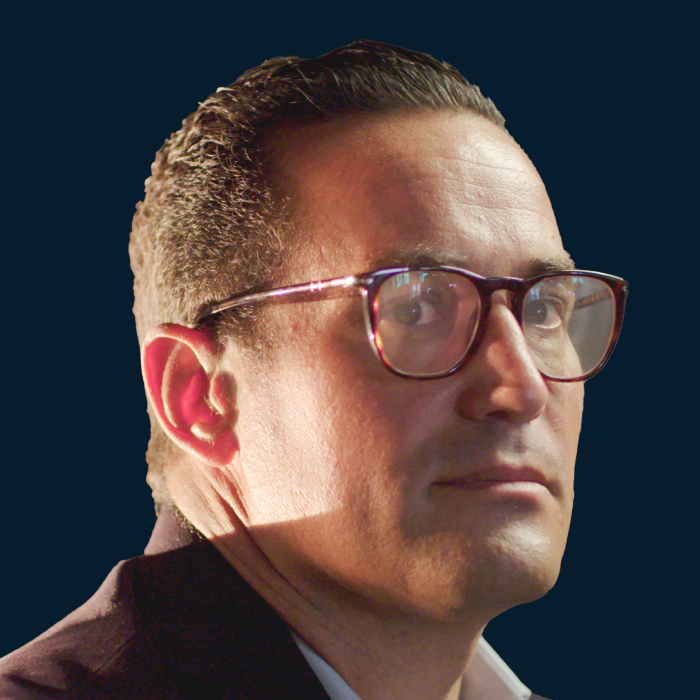
In this episode, Bitcoin pioneer and Xapo Bank’s Executive Director Joey Garcia joins Ari Redbord, TRM's Global Head of Policy, to share the story of building a crypto-native bank. From advising government in the early days of Bitcoin in Gibraltar to leading Xapo’s transformation into a regulated financial institution, Joey offers a blueprint for blending digital asset innovation within the rigor of traditional banking regulation.
They explore how Gibraltar’s principles-based approach became a model long before MiCA or US market structure bills, why FATF standards are just one piece of the compliance puzzle, and how Xapo integrates Bitcoin-native infrastructure with full bank licensing.
Joey also draws lessons from swimming 36 kilometers across open water with his teenage daughter — explaining that whether you are charting a new course for finance or crossing a choppy sea, success comes from preparation, persistence, agility, and the willingness to take bold risks.
Click here to listen to the entire TRM Talks: Building the Crypto-Native Banking Blueprint with Bitcoin Pioneer Joey Garcia. Follow TRM Talks on Spotify to be the first to know about new episodes.
Ari Redbord (00:01):
I am Ari Redbord and this is TRM Talks. I'm Global Head of policy at TRM Labs. At TRM, we provide blockchain intelligence software to support law enforcement investigations and to help financial institutions and cryptocurrency businesses mitigate financial crime risk within the emerging digital asset economy. Prior to joining TRM spent 15 years in the US federal government, first as a prosecutor at the Department of Justice, and then as a Treasury Department official where I worked to safeguard the financial system against terrorist financiers, weapons of mass destruction, proliferators, drug kingpins, and other rogue actors. On TRM Talks, I sit down with business leaders, policymakers, investigators, and friends from across the crypto ecosystem who are working to build a safer financial system.
(00:51):
On today's TRM Talks, I am joined by Joey Garcia of Xapo Bank, but first Inside the Lab where I share data-driven insights from our blockchain intelligence team. In mid-June 2025, Israel's drone and missile strikes on Iran's nuclear and military sites triggered a coordinated cyber financial escalation. On June 17th and 18th, the hacker group known as Predatory Sparrow, launched a twin cyber offensive targeting bank, CIBA and Novitex, Iran's largest crypto exchange. These strikes disrupted critical financial infrastructure and burned approximately 90 million in cryptocurrency. Transferring it into inaccessible addresses as a clear geopolitical statement, the dual assault illustrates the fusion of kinetic action with financial warfare targeting, Iran's sanctions of Asian ecosystem, TRMs in-depth report, new drones, old tactics analysis underscores that Iran relies heavily on crypto platforms like Novitex to sidestep international sanctions. These exchanges serve as dual use infrastructure, providing a lifeline for citizens grappling with inflation, while also channeling resources to proxy groups like Hezbollah, Hamas, and Yemen's. Houthis Nova Texas Strategic importance make it a precise target. TRM analysts refer to it as the central artery for moving sanctioned funds via crypto rails, a critical enabler of Iran's global financial footprint outside traditional banking channels. The timing of the hack immediately after kinetic strikes signals a new combined arms doctrine, crippling physical and financial nodes. Simultaneously, TRM continues to scan on chain activity to track residual fund flows from the burnt Novitex wallets and any rebuild from remaining reserves.
(02:48):
Now I sit down with Joey Garcia. Joey, thank you so much for joining TRM Talks. What really caused me to reach out was, it was probably almost a year ago now, which is crazy. We were together in Philadelphia at Penn, Wharton puts on sort of a really big digital assets summit or round table, and I was just really sort of impressed with your insights, particularly around MiCA and a lot of the work that was going on in Europe. I felt like you really brought that expertise to this discussion and really since then I was like, all right, we have to have him on talking about not only what's going on in Europe, but really the rest of the world and your journey to the space.
Joey Garcia (03:30):
It's a really interesting story. I mean, it was actually way, way back, and I don't think it's because I'm particularly smart. I've just been in this space for so long, I've accumulated so much information today. So it was back in 2013, 2014, this guy called Wences Casares, who anyone who's active in the Bitcoin universe knows who Wences is. He came out to see me in Gibraltar, this little tiny jurisdiction on the southern tip of Spain. He started talking to me about the Bitcoin ecosystem, what this was, technology was built to do. His story, which is also really, really interesting. And again, you speak to anyone from any of the, and Argentina is a good example. They've suffered like three currency collapses in one lifetime, and they had this concept of a unit of value that wasn't within a governmental central control system, and that was a bit of a trigger of him.
(04:19):
So he said to me back then, this is going to be the future. And he's a great very convincing guy, and he said, the biggest gap though that's going to work, if this is going to work in a really secure, tried, tested way that's going to grow, be adopted, and become more, let's just call it mainstream. The biggest gap is the rules, the regulation, the framework. So back in 2019 when the FATF made their famous recommendations, and you mentioned MiCA, and we've had wonderful GENIUS Act news the other day, that's all wonderful in 2013, 2014, it was like a totally alien concept. So I went to the small jurisdiction, the government of Gibraltar, and I said to them, you know what guys? Let's do this. Let's create a sort of working group. Let's develop an actual prudential framework and develop a secure environment for what can actually operate in this space.
(05:09):
Back then, if you try to call a working group with a group of regulatory authorities in 2013, they all thought you were absolutely crazy. I mean, there were, I think one famous meeting, there was a police officer that was asked to come to the working group meeting. So it was pretty wacky stuff, but that that's what sort of started the journey. And you mentioned war selling me, that was in 20 13, 20 14 that I met Wences and triggered the whole thing. I was part of those watering RegTech initiatives back in 2017 where again, it was like eight lawyers around the table arguing about what a security was or whatever it was, and losses happened and developed and everything since then. But that was the original kind of trigger. Let's look at a blank slate. Let's not try and take the approach of taking this new, innovative, growing, developing ecosystem and wrap it within an existing regulatory structure that's literally build out a purpose built framework for creating a secure environment. And that's what developed this whole concept of principles based approaches to regulatory standards and everything.
Ari Redbord (06:11):
What's so really extraordinary about your story, and I do think a lot of it goes back to the promise of Bitcoin for you really understanding the technology and the need for it. You used Argentina as a great example, but there weren't a lot of people having these conversations as you said in 2013, which is really the early days of Bitcoin itself. And there were no other digital assets at that point. But talk me through a little bit, what were you doing in your life and what was it about Bitcoin and this technology that really related to you? And then what did you do when you sort of went to the government, Gibraltar, you started to build out a framework? Tell me about your journey through that period.
Joey Garcia (06:44):
So I was a lawyer in practice, in financial services generally in, I post a lot of things, did a lot of work in the fund and the hedge fund space, but always sort of investment services based, and that's why my background was there. But I think when you talk about regulatory or legal legislative standards for this environment, it's that same story. I'm sure you've heard a million times. What is the right balance between supporting a standard of innovation that's going to allow a new technology to flourish, but balancing it with, let's call it the consumer protection sort of layer that my mother and my daughter and everyone else can gain access to this in a secure way. And if you think about the emergence of all new technologies, I mean whatever you like, the internet, the first adopters of new technologies are typically not the great guys.
(07:34):
So it can be the gambling industry or the illegal file sharing systems and et cetera, et cetera. I mean, listeners to the music say you'll do it on Spotify or whatever it was. Back then we only had the pirate base and we had the napsters and everything else, illegal file sharing systems. They were the early proponents of developing infrastructure. It was the rules that allowed the Spotifys and the titles and the Apple musics to develop. And that's the way that I thought about this. I mean, this is like, yes, you can hear the bad story. Oh my goodness, BTCs only used for money laundering, et cetera, et cetera. But I mean, you probably know quite a bit around on chain analytics based systems a lot more than I do. And you've got to learn and see how that actually works. You've got to understand it, and you've got to have those kind of levels of engagement with the authorities. You've got to ask them the open question, what are the risks that you think exists in this universe? And I'm going to show you how to address those risks in an innovative and new way. So you can't look at old systems and all rules. You have to have an open dialogue. You have to have that discussion. And that's where sometimes small jurisdictions move very, very, very quickly. They have the appetite, they have the desire, and they have that willingness to test and push things.
Ari Redbord (08:43):
To that end, I mean there's no better example than Gibraltar. You talk about a tiny jurisdiction that has moved relatively quickly, I think in large part due to some of the work that you've done. Talk me through a little bit about that journey for, you mentioned working groups in 2013. How did sort of that develop? And I do think it's been a bit of a model for larger jurisdictions.
Joey Garcia (09:02):
So if you think about really, really detailed like rules-based systems, and I suppose MiCA could be one of those examples. The difficulty when you are trying to regulate a very, very fast moving environment is if you develop very, very strict rules, a very, very codified set of standards, they can become outdated pretty quickly. So the idea there was to develop, let's call it principles. So the core fundamental principles that could then be applied and developed and emerge and change with the technology. So you'll always have to comply with the principles, call it risk management, protection of client assets, governance structure, system security, financial crime prevention. Those are very simple principles. No regulatory in the world is going to disagree with that, but how do you apply them to this world in a new and innovative way to satisfy the authorities and how you're going to do that?
(09:56):
So that was what developed. And obviously back then, and to an extent, it's still the case today. People want clarity, they want security. They want a future plan of five and 10 years. They don't really want to be sitting there waiting to see what's going to happen and emerge and develop. And that's why when we build that, the framework, I mean if you think about the platforms that that license, Xapo's, one of them Bitso the largest platform in Latin America and mean the bullish, everyone knows the bullish platform now that was Gibraltar license as well. Max are one of the biggest in London. The Huobi Group are one of the biggest in China. I mean, all of them came to obtain their licenses in little Gibraltar because of that.
Ari Redbord (10:36):
It's absolutely extraordinary when you think about, look, I mean, I think that we've had different licensing regimes and I think we're starting to develop consistent standards across the globe. I think US market structure will be absolutely critical to that. But we have MAS in Singapore, we now have MiCA. It's really extraordinary that tiny Gibraltar really led in many of those respects. So tell me about, obviously you mentioned Xapo as having a Gibraltar license. Tell me about your sort of journey to your current role there.
Joey Garcia (11:01):
Yeah, so this is really interesting. Everyone sees the news every day about, we heard the JP Morgan news the other day that everyone knows the BlackRock ETF numbers. I was at the Goldman Sachs event in London. The Goldman guys ran a massive event in the city of London. It was 850 asset managers or something, whatever it was. And that's all really, really great to see. Xapo is not a bank that's exploring blockchain technology and the Bitcoin ecosystem. We're the diametric opposite of that. We're a bitcoin and blockchain native business that's obtained a banking license. So starting in the old days, very, very simple wallet a provider. And that developed through to wanting to issue a card that was linked to your BTC that didn't exist at the time. We were first to do that all the way through to obtaining our principal membership of Visa, MasterCard, et cetera. But it went from the BTC into the card into E-money all the way through to the full blown banking license, which we obtained in Gibraltar, then Passported into London. But it is basically, let's just call it the convergence of those two ecosystems in one environment. But we're a bank that's Bitcoin native. We're not a bank that's exploring Bitcoin.
Ari Redbord (12:15):
It's a really important distinction, but it really is, is it two sides of the same coin? Arguably we see all of these traditional financial institutions who are now trying to figure out how to experiment with cryptocurrency, whether that means custody, whether it means issuance, but you're sort of the other side of the coin, right? This is a Bitcoin native business experimenting with what it means to be a bank. And is this the future of the ecosystem? It's both sides of that coin, essentially.
Joey Garcia (12:39):
Yeah, I mean, look, I think I find it all fascinating. So I think that the future of finance doesn't really, it's not going to sit between choosing traditional banking or digital assets. There has to be a seamless integration between the two worlds in one environment. So what we want to be an institution, look, we recognize that customers want the security, the regulatory protection of traditional banking. Very, very simple. If you want to buy a house, if you want to buy a car, if you want to pay for your flights, whatever it is, all the classic, you want to put your savings aside in USD and all the basic stuff. People want to need that in a secure trying to test environment. But we want the hybrid approach that doesn't limit us to existing only banking solutions. We want to digitally and natively allow those two ecosystems to operate together.
(13:32):
So to give you an example, yes, we can be part of SEPA for Euro payments and FPS for Sterling and Swift or whatever for ACH for USD, but we want blockchain native payments to be allowed to flow. So stablecoin payments into your bank account and out of your bank account. So blockchain native payment rails into your bank and out of your bank. Plus, as I say, we are fundamentally BTC native business. So the other day the BlackRock guys announced they believe that a 2% allocation to BTC would form or should form part of a balanced portfolio. That's great. But we've been saying that since 2013. So we've been pitching that message and we haven't gone into all the other virtual assets and we haven't done the whole objective of the businesses to protect storm, grow your wealth, and we think and have always thought that BTC should form part of that portfolio in a secure environment.
(14:27):
So I do think that that convergence is happening. It's happening more and more, I think the bridging of the two financial worlds. But as we've said, many times were, we're very different to traditional banks, but we're also very different to crypto native platforms. So crypto native platforms are, and this very well, they're exploring what regulation is. And the regulation that existed post the FAF recommendations in 2019 were largely compliance frameworks that they weren't really supervisory prudential frameworks. So then you start to have the FTX style scenarios and you have platforms that don't really understand what segregation of customer assets is, and you have a risk team that have six months experience running billions of dollars of assets trading across the world. It doesn't really make sense. So what we're seeing is the world developing away from those pure, simple compliance frameworks into more kind of traditional ones, but the crypto native businesses that are not really, they're learning, they're sort of coming to terms with a lot of that stuff and coming along the way.
(15:31):
And it is one of those, I often use the example where if you open a bank account in New York and you open another bank account in Australia and another bank account in, I don't know, Singapore, choose your destination, there are a lot of equalized standards. They're not exactly the same, but the capital, the infrastructure, the governance, there's some basic infrastructure pieces that are the same in the crypto world that doesn't exist. So in the crypto world, nobody does extensive DD on a crypto native platform before they open an account there. They tend to be more influenced by Twitter or a couple of influencers and a couple of things they've heard or seen or the quality of the website that they don't really look at that. And that makes us extremely, extremely difficult difference. We are a bank, so things like consumer protection as a standard where you talk about the requirements to have fair value and fair pricing and acting in good faith and avoiding foreseeable harm and products and services, price value, consumer understanding, all of those things apply to banks, but we apply them to crypto as well. And that is completely different to how most platforms of that space work.
Ari Redbord (16:43):
There's so much to unpack there, but let me just dig into that point a little bit. I think it's a really, really important point. You mentioned fat if several times the financial action task force, it was just really the global standard center for anti-money laundering. But I would say that so fat if is purely anti-money laundering, terrorist financing, illicit finance, and this is your point, right? You can have the anti-money laundering piece here, but really there's so much more when it comes to compliance, particularly for a financial institution. And the work that you've done for years is a financial institution. And that's why I think it's so interesting. You do wear so many hats because a lot of people I'll have on the show will be a chief compliance officer. They'll only be dealing with the anti-money laundering piece. But what you're telling me is there's just so many other parts of this, not just even consumer protection, which maybe you would argue goes into that same bucket or market abuse, but it's also these issues around co-mingling funds and stability issues and the types of things that you're supposed to do as a financial institution. That to me is really, really interesting because I feel like you uniquely understand the different layers of what is required of a bank today.
Joey Garcia (17:48):
Absolutely. So I mean the FATF when they published those recommendations in 2019, everyone knows that people maybe didn't track as much detail the follow up a year later and the year after that, and they started sort of pointing a little bit towards concepts of market integrity and transposing that, and I mentioned this to you briefly earlier, I've done a lot of consulting work for the United Nations and through the UNODC, I've trained, assessed a lot of regulatory authorities around the world.
Ari Redbord (18:19):
Well, let me stop you there. I think that's just really, really interesting work. Talk me through a little bit, how did you become connected with the UN on these issues? And then talk about specifically your role there. I think that's a really fascinating part of your journey.
Joey Garcia (18:30):
So with the UN, they were writing a manual for enforcement agencies in the Southeast Asia region. They invited me to write one chapter of that book, and I did, and I predicted a lot of things and I pretty much got all of them. So I was so right along, they came back to me and said they wanted to go into a little bit more detail. So I said, okay, look, these are the FATF recommendations. That's wonderful. Now I'm going to show you what's actually happening in the world in this space and what the activities are, what the platforms are doing, how the technology's being used. And I ran a very detailed gap analysis between this is where you think you're regulating things and this is everything that you are missing. And we did a very, very, and I did that across, I dunno, 12 or 15 countries.
(19:14):
And then the output of that is obviously going to be, well, how do we manage that risk? What do we do? And this is one of the problems when the FATF or an international body issues, a set of a piece of guidance, IOSCO have done the same FATF and a money laundering piece, IOSCO. That's a real kind of regulatory standard. But when you speak to lots of these countries, a lot of them will say, well, there's so much to do. We need to start at the base layer. Please don't talk to me about defi. I want to understand what a custodian is and how an exchange operates and who can issue a stable coin. So if we start with that, and that's the thing, jurisdictions and authorities are relatively slow moving in that context, but I started doing some assessments, then I started doing some training, then I started running very, very detailed sessions and they'd be six hours on defi and approach to, I dunno, the concept of embedded supervision or whatever it might be, exploring ways that they could address risks.
(20:11):
And that just developed and developed into lots of different areas. But that piece has been very, very fascinating. It's fascinating to see how different all of the jurisdictions are and how they operate and how do I put this? The concept of regulatory arbitrage is extremely, extremely real. And you can see that when you actually deal with some of the authorities. Some of them look at virtual assets or the definition of what a virtual asset is in a very different way. It's not all virtual assets were created equal, that they're all different pieces of technology operating in different ways. So they have to start by learning, and they all have different approaches. Then they all have different approaches to the activity that's being conducted. Some of them don't believe that there's any decentralized finance operating in their jurisdiction, and then you show them the data and they get pretty scared by that.
(21:01):
And then some people say there are no issues with compliance risk within defi, and then you show them a set of liquidity, poor risk reports, and they get a little bit scared by all of that. But the long shot is, I've had lots of different pieces of experience, let's call it the advisory and industry insights. I've been very, very directly involved with the industry in many, many different ways for many years. And you learn about different jurisdictions having different risk tolerances or regulatory philosophies. They have different implementation approaches, and you have to understand those variations if you want to deal in different markets. Then you have the regulatory perspective and the policy side of things. How do regulators make decisions on what factors influence the policy? Developments is always different.
Ari Redbord (21:49):
Let me dig into that a little bit, right, because, so if Joey Garcia is starting from scratch today with a regulatory framework, right? There are differences across jurisdictions, right? Gibraltar, MiCA, what's being built in the us, what's happening in APAC and Singapore and Korea and Japan, what would be just a few tenants that you would see as providing the legal clarity that you need, but not stifling innovation as you build in a crypto-native business, a crypto-native bank,
Joey Garcia (22:16):
I think authorities have got to, they've got multiple competing objectives. So they want to protect consumers, they want to maintain financial stability, and they want to prevent financial crime and foster innovation. And of those four, it's always going to be a focus on achieving the right balance. So if you only focus 80% on the fostering innovation and you create extremely light touch frameworks, you have a huge problem. And if you go diametrically opposite and you get so fanatical about, you basically stifle and just force migration out of the region and everything else. So there has to be a collaborative approach. There has to be an openness to having those discussions with the industry. I mean, I always call it the concept of regulatory innovation. So it's not just an innovative industry. You need an innovative regulatory industry. And if they start to think about that and conceptually start to understand, then that will absolutely help them develop things in the right way.
Ari Redbord (23:21):
Not to put you on the spot, but where do you think this has been done or is being done really well today?
Joey Garcia (23:26):
I don't think it's been done very well. I'd say with things like ika and I was part of the whole Libra DM initiative, and we dealt with a lot of the E-money token and the significant classes of assets that could be issued within the eu. I think the EU has gone way, way over the top. It's far too prescriptive. I'm not a big fan of the FSB or the financial stability boards. That's sort of very famous statement. Same risks, same rules, same regulation. It isn't the same risk. I would prefer the statement, similar risks, similar rules, and similar regulation, because you can apply the same principles, but you can't do that. I would say most tend to react in a very panic driven way to negative events. So the FTX is a big trigger. Now we have the Bybit questions of the other day, and people become obsessed with security standards and it becomes very reactive and people get very, very nervous.
(24:21):
And then when they get very nervous, they overstep to prevent that. If you want to have really effective development, policymakers and authorities have got to understand and recognize that regulatory delay. Firstly, it creates more problems than thoughtful, proactive regulations. So if you wait for perfect information and the perfect time in the perfect environment and zero risk, and you're never going to help shape an industry, you need authorities that are going to get out there and have that discussion and be open to the concept of flexible regulation. I think that the US has a real opportunity when it gets to the next stage, and I'm going to throw a guess out there, but if they do get that right, it will become very much a global hub. And I don't think that the eu, I don't think that the uk, I don't think that Singapore, I don't think that Japan are going to become the global hubs. I don't think that they've got their approaches right, and I think that's going to be a bit too, it already is painful for some of those groups, and it's going to lead to other issues.
Ari Redbord (25:27):
What I really love about this conversation is I think it uniquely understands that you need sound regulatory frameworks to allow businesses business to grow. This ecosystem has been growing at an extraordinary rate over the last few years. Obviously the price of Bitcoin is just one example, but I think really so many more. What are the things that you're most excited about, whether it's that intersection of banking and Bitcoin or cryptocurrency or sort of things that you're seeing build out there. What are the things that really, really excites you as you see the growth of this ecosystem?
Joey Garcia (25:59):
I get excited personally in that we've been professing the same message for so long, and so much of the world is now jumping on board. I do think that the convergence of the fully regulated financial services world and the developing crypto ecosystem are coming closer together, and that's very, very exciting. But I do still think that there's a lot of stuff that needs to happen that there's still too much of a fragmented approach to, I mean, I keep saying defi cross border coordination on lots of things. That's a big problem. I'd love to see a world where the two universes are even closer together. So for example, a yield generating based decentralized activity that was constructed in a way that a bank could offer to its users, let's call it permission, the access to the right networks, institutional grade custody and key management, all of these things that institutions need to see, but built out in a way that can allow a more active interaction with the developing world. That's very exciting. I think the mainstream integration piece is happening a bit, and I want to see a lot more of that, but I'm excited about the convergence future, if we want to call it that.
Ari Redbord (27:14):
I think one of the things that's really cool in speaking to you, and I know this is true, just knowing you a little bit, that I think you've really turned your career into a passion or your passion into a career. I mean, you love this stuff, right? You pretty much found perfect role for you. So we know Bitcoin, we know crypto is a passion. What are you doing when you're not thinking about crypto regulation, policy, banking. Wwhat hobbies, interests, what sort of keeps you staying in this crazy world?
Joey Garcia (27:43):
So I'll tell you a funny one. The beginning of the year, I told my daughter to set an impossible challenge and that I wanted to show her that whatever challenge she picked, we were going to make it happen. And I was hoping that she'd pick a half marathon or something. And we picked a 36 kilometer swim from Capri to Naples. It's a 10 hour fast, 10 hour crossing. Trained like an absolute animal for the year leading up to that. And we did that a couple of weeks ago. Got it done. So that's very exciting. So now it's the next challenge, Joey,
Ari Redbord (28:21):
I have asked that question to a lot of amazing guests. That may be the most amazing answer. It's crazy. I'm absolutely blown away. Tough one. How do you feel after accomplishing something like that?
Joey Garcia (28:31):
Your arms don't move. It hurts when you think everything hurts, but I've done that. So I mean, everyone knows me. Well, I'm a rugby guy by birth. That's my sport. But then I took up cycling. I took up triathlon, started doing some little short events, got into the longest staff, got into the half Ironman, got into the Ironman stuff. So I'm definitely a pusher. I'm completely the wrong construct for a long distance athlete, but I do it anyway.
Ari Redbord (28:58):
Oh my gosh, I love this so much. I've often joked that I'd be an amazing triathlete if I could bike or swim at all, but I definitely need to get you out there for a run.
(29:09):
Even obviously as someone who's really not a strong swimmer, I've always wanted to be one, even thinking about what goes into the training to do 36 K and in open water, which is a whole other dynamic in terms of the fear factor and all of that. Just walk me through that.
Joey Garcia (29:26):
Yeah, my daughter's 16, so she was just 17 if she did it. So you've got to really want it. But swimmings a funny one. If you find the comparable sports, swimming, a lot of people will say any sort of running or sort of aerobic based fitness stuff, I think it's more like tennis. I mean, the timing and the skill around the whole technique is like 80% of the battle. And then you need the crazy fitness and breathing levels and everything else.
Ari Redbord (29:54):
And are you out there? Are you next to each other? Are you out there together or it's just like, we'll see you.
Joey Garcia (29:59):
You at the 1, 1, 1, 1 1 1. So it's like a relay style thing that you split, but that's a serious challenge.
Ari Redbord (30:10):
Just extraordinary.
Joey Garcia (30:12):
But that's the thing. That's why in this world, you're in it as well. You've always got to be just take on challenges, pushing limits, and it becomes part of your culture and being
Ari Redbord (30:24):
So building in crypto is like a 36 K open water swim, right? You never know what's going to happen.
Joey Garcia (30:30):
You never know what's going to happen.
Ari Redbord (30:31):
And you're dead at the end of it.
Joey Garcia (30:31):
There could be sharks, it could be stuff, it could be anything. You just don't know. But you've got to be ready for it all, and you've got to be ready to work very, very hard.
Ari Redbord (30:40):
I am blown away. Thank you so much, Joey, for joining TRM Talks. Thank you for offering really extraordinary insights today.
Joey Garcia (30:47):
Thank you for having me.
Ari Redbord (30:53):
There are so many cool takeaways from the conversation today. I think in large part, it's interesting. We've been spending a lot of time thinking about how will traditional financial institutions engage with cryptocurrency, whether it's in the wake of the Genius Act or coming market structure in the US or really just global constructs. But what Joey brought to the conversation was arguably the other side of the same coin, and that is how are native crypto businesses becoming more and more like traditional financial institutions? Essentially, Xapo as a crypto bank has the same obligations to customers, has a lot of the same compliance controls as a traditional financial institution, but is native crypto. So I think that was one huge takeaway. And the other piece is that as a bank, as an executive, as a bank, Joey is not just thinking about financial crime compliance, and he mentioned fat F several times, but also thinking about co-mingling assets, about different customer due diligence, about compliance more broadly, and really had a unique perspective, I think, on the birth of regulation. I mean, this was clearly someone who was so passionate about Bitcoin from the earliest days and wanted to be part of both the regulatory conversation and the building. So I thought just really unique. A lot of times we'll talk to regulators on this show. We'll talk to builders, executives at banks and other folks. Joy really brings both to the table, and he brings it in a way where someone with the perspective of someone who is very, very early in the space.
(32:18):
On the next TRM Talks, I sit down with former HSI Director, Steve Francis. If you love the show, leave a review wherever you're listening to it and follow us on LinkedIn to get the latest news on crypto regulation, compliance, and investigations.
TRM Talks (32:36):
TRM Talks is brought to you by TRM Labs, the leading provider of blockchain intelligence and anti-money laundering software. This episode was produced in partnership with Voltage Productions. The music for this show was provided by iKOLIKS.
Ari Redbord (32:53):
Now let's get back to building.
About the guests
Joey Garcia is the Executive Director, Chief Strategy, Policy and Regulatory Affairs Officer at Xapo Bank. He is recognized as a top fintech lawyer globally by Chambers & Partners and has served as a specialist consultant to the United Nations, where he has significantly influenced virtual assets, DeFi, and regulatory frameworks. Additionally, he contributed to the UK Law Society's Blockchain Legal and Regulatory Guidance. He maintains active involvement in think tanks like the Wharton Reg@Tech initiative and the UK Parliamentary Roundtable on Blockchain Technologies, while advising the British Blockchain Association and the original Bitcoin L2 Rootstock Labs in a non-executive capacity. He acted as the Xapo Bank representative on the Libra/Diem Association and has engaged in multiple global initiatives since then.
More TRM Talks
Subscribe to TRM Talks
Subscribe to be the first to hear about new episodes, and to stay in the know about all things blockchain technology and crypto policy.