
Jul 29, 2026 - 36mins
Treasury’s War: Then and Now — Economic Statecraft in the Age of Technology with Juan Zarate
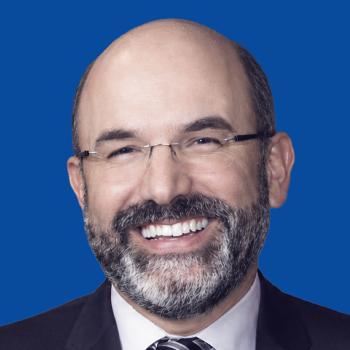
Juan Zarate joined the US Treasury just three weeks before September 11, 2001, and helped build the Office of Terrorism and Financial Intelligence (TFI), transforming Treasury into a cornerstone of American national security. He later chronicled that evolution in Treasury’s War, the definitive account of how financial intelligence, sanctions, and economic power became central tools of US statecraft.
In this episode, Juan joins Ari Redbord, TRM Labs’ Global Head of Policy, to discuss how the post-9/11 financial architecture still underpins U.S. national security—and how it must evolve for an era of cryptocurrency, AI, and emerging technologies.
Click here to listen to the full episode: Treasury’s War: Then and Now — How the US Built Economic Statecraft for the Age of Technology. Follow TRM Talks on Spotify to be the first to know about new episodes.
Ari Redbord (00:02):
I’m Ari Redbord and this is TRM Talks. I'm Global Head of Policy at TRM Labs, we provide blockchain intelligence software to support law enforcement investigations and to help financial institutions and cryptocurrency businesses mitigate financial crime risk within the emerging digital asset economy. Prior to joining TRM spent 15 years in the US federal government, first as a prosecutor at the Department of Justice, and then as a Treasury Department official where I worked to safeguard the financial system against terrorist financiers, weapons of mass destruction proliferators, drug kingpins, and other rogue actors. On TRM Talks, I sit down with business leaders, policymakers, investigators, and friends from across the crypto ecosystem who are working to build a safer financial system.
(00:52):
On today's TRM Talks, I sit down with former assistant secretary and the godfather of financial intelligence, Juan Zarate. But first, Inside the Lab where I share data-driven insights from our blockchain intelligence team. On today's Inside the Lab, we're zeroing in on sanctions evasion infrastructure. The 2026 cryptocrime report shows that sanctions-related crypto activity in 2025 was overwhelmingly driven by Russia-linked flows. The ruble pegged stablecoin A7A5 processed more than 70 billion in total volume. A wallet cluster tied to the A7 network was linked to at least 39 billion in activity last year. That's not opportunistic evasion. That's bespoke financial plumbing. That is infrastructure. When access to dollar and eurobanking rails is constrained, alternative liquidity corridors emerge. A7A5 functioned as a purpose-built settlement mechanism for sanctions constrained actors. That volume concentration shows how quickly digital rails can scale when aligned with geopolitical need. We also introduced a new framing metric.
(02:08):
Illicit entities captured approximately 2.7% of available crypto liquidity in 2025. That figure matters because it measures exposure relative to deployable capital, not just raw transaction counts. Liquidity is what enables scale. If you control access to liquid rails, you control operational capability. Sanctions enforcement is shifting from name-by-name wallet targeting to structural intervention, identifying liquidity nodes, exchange touchpoints, and financial gateways. When infrastructure scales to tens of billions, enforcement strategy must scale with it. And now, Juan Zarate. Today I have really the true honor of having my friend, former Treasury Assistant Secretary, and really a man that I consider the godfather of financial intelligence. Juan Zarate. Juan, thank you so much for joining TRM Talks.
Juan Zarate (03:05):
Ari, it's an honor to be with you and thank you for that very generous interaction.
Ari Redbord (03:10):
No, it's really extraordinary. Look, I mean, it's funny. I think I knew you before I knew you. What you may or may not know is that today, every new hire at the US Treasury Department's Office of Terrorism and Financial Intelligence reads your book, Treasury's War, which is really the telling of how we built illicit finance, anti-illicit finance, national security infrastructure at the US Treasury Department. So I mean, having been part of designing that is really just this extraordinary thing.
Juan Zarate (03:41):
Thank you, Ari. I appreciate that very much. And it's a privilege to have the book still read in that way. And frankly, it's part of the reason I wrote the book. I wanted to capture that history for those that would further the mission at the Office of Terrorism and Financial Intelligence. So I'm very happy that it's still being used in that way.
Ari Redbord (04:00):
How did you get interested in this really intersection of money laundering and national security, really stopping bad actors from taking advantage from engaging with the global financial system?
Juan Zarate (04:10):
Ari, I was always interested in national security and international relations growing up. I was fortunate to have two parents who were immigrants to the United States who believed fundamentally in not just the American dream, but in the positive role of American power around the world. And so I grew up at the feet of a Cuban mom and a Mexican father reading about world affairs, talking about it at the kitchen table, and really wanting for my career to have a role in American national security to promote it. And so I was very fortunate. I started as a young federal prosecutor at the Department of Justice in what was then called the Terrorism and Violent Crimes section. That was in the 1990s when the world was kind of beginning to grapple with the threat from Al-Qaeda and global Sunni extremism. So I got to learn at the feet of some of the great prosecutors, FBI agents, CI agents at the time who were dealing with terrorism globally.
(05:08):
And three weeks before 9/11, I moved to the Treasury Department for an opportunity to work in the then Office of Enforcement on international issues that the Treasury Department was focused on, anti-money laundering, some terrorist financing and other enforcement issues. And it was really that move to the Treasury Department and 9/11 three weeks later, which allowed me, frankly, to be a more sort of aggressive, pertinent part of US national security and thinking about how we use financial and economic power and influence to undermine the ability of America's enemies to do damage to our country, to raise and move money around the world. And so it was really at that moment in 2001 that I was able to contribute and then to move on later to the White House to take on the counter-terrorism role.
Ari Redbord (06:02):
Absolutely extraordinary. It's interesting. Anyone I've ever talked about why they serve, or at least in the last bunch of years, even I did a fireside chat recently at a TRM event with Andrea Gacke, the current director of FinCEN, and she said it was 9/11. I mean, everyone looks back at that moment and says, "This is when I wanted to serve, but particularly this is when I knew we had to stop terrorists from getting the funds they needed to commit these attacks." You were there right in the moment. I mean, bring me back 25 years to how it felt to be in that building on 9/11 and then the days immediately following.
Juan Zarate (06:33):
Well, I still remember that day vividly. I was new to the Treasury Department. I'd been in the counter-terrorism fight and it felt like a very cloistered group within the government trying to deal with terrorism of a variety of sorts from around the world, including Al-Qaeda. Treasury, I knew had a hand in dealing with terrorist financing, but it wasn't quite clear to me. It wasn't clear at all that there was a leadership role or that there was an aggressive campaign to deal with it. It was more episodic. So I was frankly a newbie at Treasury trying to figure out what was going on. And I was on the fourth floor, the main Treasury building there in the 18 acres around the White House. And I was facing south so I could see the Pentagon, I could see the Washington Monument. And I had a small TV in my office.
(07:22):
Still remember watching the images of the first plane having crashed into the World Trade Center. So I was watching my office. I made a call over to my former colleagues just three weeks prior at the Department of Justice to say, "Hey, are you watching this? " Because those of us who've been working on Al-Qaeda cases knew obviously the history of Al-Qaeda targeting the World Trade Center using planes for a variety of reasons for plans and plots. And so I was on the phone there. And then later, obviously the second plane hit and at that point everyone understood we were under attack and it wasn't just an accident. And I remember also looking south and seeing the black smoke rising from across the Potomac River. And a few minutes later we had the sirens go off within main Treasury, everyone evacuating. There was a little bit of panic, not much, but some panic, some people who were very afraid.
(08:19):
I was senior enough that I got whisked away and we basically spent the rest of the day and the evening there at Secret Service headquarters monitoring what was happening with respect to the attacks, what was happening with the protectees, what was happening over the skies of the United States. And I remember Ari, that one of the things that I was looking for and we were watching was what was happening over the skies of DC because I think we were anticipating further attacks, but the world changed that day. The role of the Treasury Department changed the next day. And I was very fortunate. I was already in the fight in many ways. I felt I was in the fight, but this gave me a new lens and a new purpose to think about how we used Treasury's information, authorities, tools to undermine Al-Qaeda, to undermine terrorist groups, and ultimately to think about how we made it harder, costlier, and riskier for America's enemies to raise and move money around the world.
(09:20):
And that's what we did strategically and that's eventually why we created the Office of Terrorism and Financial Intelligence.
Ari Redbord (09:28):
This is the story of the book. It's how Treasury built this architecture to fight financial crime, to fight terrorism, to go after bad actors all over the globe. In the weeks and months that followed, I mean, we created a new agency, the Department of Homeland Security, but obviously across Treasury, there was this really deep thinking about what this could look like. Would you just take us into that moment and really how you ended up in your role at Treasury all those years ago?
Juan Zarate (09:53):
Ari, I think there were really three episodes in that period. The first was the intensity of focus of what do we do? What strategies can we bring to bear? What authorities do we have? And that was really the first period post 9/11 where we were applying sanctions very aggressively. The first action post 9/11 was President Bush's signing of Executive Order 13224, which unleashed the Treasury Department to go after terrorist groups, their financial networks, even banks, et cetera, that were directly or indirectly associated with financing terrorism. And that was a period where the Treasury Department had not just OFAC dealing with sanctions, FinCEN administering the Bank Secrecy Act and anti-money laundering, the classic Treasury agencies like IRS and the criminal investigators there. But we also still had the Secret Service, which had been born in the Treasury Department thanks to President Lincoln to deal with counterfeit post-Civil War.
(10:53):
We had the custom service, which was from the founding of the country, a part of the Treasury Department. So we had an entire federal law enforcement capacity, 40% of federal law enforcement that was relevant to a lot of things that were happening, including securing the ports and the borders and the rest. We then had the creation of the Department of Homeland Security, which was the attempt of the government to say, let's rationalize protection of ports and borders, et cetera. What that did though was it denuded the Treasury from those very law enforcement agencies that often gave Treasury identity in the national security space. So Secret Service was moved to Department of Homeland Security. Customs as well. The Bureau of Alcohol, Tobacco, and Firearms was split up. Much of that going to the Department of Justice. We were left in that middle period, that destructive period, if you will, this fundamental question of what should Treasury be?
(11:48):
And what is its role in national security? In the minds of most, Ari, the question was they have no role. This is why we created the Department of Homeland Security. I remember being kind of the last senior official standing there having to tell very senior White House and Homeland Security officials, "You're not taking these people. Some of these core people and agencies, including OFAC and FinCEN, they're not going. And these are fundamental Treasury roles. And so that second period was really a period of re-conceptualizing what is Treasury's best and highest use in national security now that we don't have the high-end guns and badges that used to define the Treasury.
(12:34):
Out of that sort of creative destruction, we though about this new office that included the first ever intelligence and analysis function for our finance ministry, rethinking how we used aggressively the tools of economic statecraft to target where bad actors were accessing the financial system. And then the third period was, okay, now that we've got this, let's start to grow this. And these aren't just tools to deal with terrorism. These are tools to rethink how we are affecting access to the financial system, access to capital, and broadly economic statecraft and how this applies to not just Al-Qaeda, but regimes like North Korea or even conceptually near-peer competitors like Russia and China forming an office that would be able to be in essence the national security home for the Treasury Department.
Ari Redbord (13:30):
It's extraordinary and so much of it is what you and that very early team at TFI, the Office of Terrorism and Financial Intelligence built. It must be crazy for you to think of that time where people were leaving the building because I feel like it's now has the go-to tools from a national security perspective.
Juan Zarate (13:48):
It's been gratifying to watch. And I think the most important thing I think we did was not just building a capacity to deal with terrorism, because I think we collectively did a very good job of preventing terrorist groups from attacking the United States again in the way that they did 9/11. There were a wave of attacks internationally in different cities. You remember Madrid and Moscow and Bali and a whole host of problems, but we used the ability to undermine these terrorist groups, including choking off their funding to really, I think, make the world a safer place. That said, I think the great value of what we did was to create an office and a capability that was beginning to harness American asymmetric power in the financial and economic domain in many ways anticipating this moment, which is a lot of the challenges we have with China or Russia or Iran or collection of actors often happening first and foremost in the economic domain.
(14:50):
And so we have to be able to organize our capabilities in the public and the private sector to address those risks and threats. We've got to do it strategically. We've got to do it in ways that are smart in terms of preserving the relevance and the independence of American capital markets and the American economy and system and its strength, the role of the dollar, all of that. But you need to have an office and capabilities that are engaged in that fight.
Ari Redbord (15:19):
In that moment with this massive change going on, the building, TFI, were you having these conversations that, hey, we can't just build a terrorist financing apparatus. We need to build something much beyond that to really use economic statecraft to use sanctions in this way to deploy them against nation-state actors.
Juan Zarate (15:40):
We were, and frankly, we had to, Ari, because there was so much skepticism about why are you guys even there? Why are we talking about a new office? We built this whole architecture. Why are we talking about you guys now? You had the Office of Director of National Intelligence, you had the National Counterterrorism Center, you had Department of Homeland Security. So to me, it was pretty obvious where things were headed because we were trying to apply economic and financial means and pressure and the predominance of America against these non-state actors. But you could see very clearly, and we started to work on these plans with respect to Iran and North Korea. How does this apply then to other actors in the international financial system? Frankly, ones that are even more dependent on global trading and global banking and payment rails. What does this look like to deal with a whole range of behaviors?
(16:35):
All the sanctions that came forward with corruption and cyber malicious activity. We had mapped that and we'd mapped where can that be applicable? And we had to do that in part to explain why do we need an office of terrorism and financial intelligence? And as part of that area, you would appreciate this, we had debates even back then as to what the name of the office should be because the political imperative was to put terrorism in the title. The long-term strategic imperative was to call it something else because we didn't want this just to be about terrorism.
Ari Redbord (17:12):
It's such a cool point. And there's so many pieces of this that are still playing out. I mean, every administration wants to re-tackle whether Secret Service belongs in Treasury or homeland. Right now we keep hearing about One Treasury. We've had a number of different directors of IRS-CI, chiefs of IRS-CI on this show, and we're talking about one Treasury, making sure IRSCI is the law enforcement agency for the US Treasury. We need guns and badges still. And I've been a big advocate for that over the years also. Will you agree? Are you with me? We need some guns and badges back in that building.
Juan Zarate (17:39):
The reason I'm smiling is what we had to do in terms of creating the office, we had to convince ourselves that we weren't just trying to preserve our jobs and we weren't. There was a really important purpose. We had to convince internally and then we had to convince externally the White House, Capitol Hill, et cetera. But with that, we had a white paper and David Aufhauser, the general counsel of the Treasury at the time was masterful. So we worked on this and the white paper had three parts to it, which was to say we need to beef up and really enhance the policy and the strategic elements of this office. The point was, look, we need to enhance this so that we can strategically apply Treasury tools and strategy. We need an office of intelligence and analysis because we need to be able to understand what's happening in the economic system, how our enemies were misusing or trying to attack it, and then to action the information from that for designations and regulatory actions, section 311 actions.
(18:41):
The third leg of the stool, which no one wanted to bite off, but we made the argument for was we need Treasury law enforcement because you need guns and badges to investigate, to enforce, to discipline, but you need to do it from a Treasury lens. Nobody wanted to deal with that. There was already a fight between DOJ and Department of Homeland Security and all the rest. So that was left by the wayside, but we were left with the criminal investigators from IRS as our sole remaining 1811s, including, I should mention the Treasury Inspector General's agents, TICTA. Their guns and badges. They're still part of Treasury, but they're more Inspector General agents. In any event, when we had to do the Iraq asset hunt, which I led for the office and we pulled in the intelligence community and others, we pulled in IRS-CI agents to do much of the investigatory work, to go out into Baghdad, to go to Damascus, to go to the Middle East to hunt for where the assets sat in part because of their expertise, but in part is the only law enforcement assets that we had any ability to direct.
Ari Redbord (19:51):
It's an awesome point. And as I mentioned, we've had at least, I was just thinking three chiefs of IRS-CI on the show to include Jarod Koopman, who's the current chief. And if he's listening, you can see Juan and I and you are very aligned on One Treasury and really the need to have the best investigators in the world, the best financial crime investigators in the world as part of what OFAC's doing, as part of what FinCEN is doing, as part of what OIA is doing.
Juan Zarate (20:15):
And this goes to the work of TRM Labs, which is remarkable in your leadership in this. Even more so as we see the rapid evolution of the financial system, the adoption of crypto, questions as to what stablecoin regulation enforcement should look like, how the Chinese and the Russians are trying to not only circumvent sanctions, but trying to create alternate payment rails, how certain exchanges or stablecoins or tokens are being misused. That has to be thought through and enforced in a deliberate way and it can't just be case by case or agency by agency. So I think there's an even greater reason to have Treasury law enforcement, quad Treasury law enforcement operating today than even back when we wrote that white paper back in 2002.
Ari Redbord (21:09):
We're seeing bad actors really weaponize transformative technology, whether you mentioned stablecoins, blockchain, AI. Talk me through how you think about this from a broader perspective, but also as you see it through a Treasury lens.
Juan Zarate (21:22):
Fundamentally, from a Treasury in US government policy perspective, and frankly citizens perspective, you do not want bad actors getting access to capital or payment rails or financial facilities that they would otherwise not have access to via traditional financial means. And I think that's really been the challenge for the new technologies and those in the industry. And it's why the capability to do analysis, the ability to use technology and even AI moving forward. We've often gotten into a binary debate about the technology's good or it's bad. It needs to be used or not. It needs to be regulated or not. It's always a binary debate. And I think you and I and others are right in the middle, which is to say, look, the technology exists. It's going to proliferate. It's going to continue to innovate in some interesting ways on a global basis. Let's find ways to use this to our advantage to not only strengthen American economic and financial power, just generally the economy, but also to make it harder for the bad guys to access the system.
(22:30):
They're going to try to, they already are. The North Koreans are profiting to the tune of billions of dollars. Let's figure out ways to make that harder, costly, and riskier the way we've done in traditional finances.
Ari Redbord (22:43):
One of the reasons you and I have so connected really since our time in government is really around this. It's how do we really harness technology to go after bad actors, to stop them from engaging with the financial system, which really kind of speaks to, I'd say, that second act in your career, which has very much been like, how do I take my learnings from the public sector and take those to the private sector? Talk me through the last couple of years, K2, Consilience. Talk to me a little bit about what you're building there because it really does go right to that. How do we leverage technology to keep the financial system safe?
Juan Zarate (23:16):
Ari, thank you for asking that because I'm incredibly passionate not only about Consilient, but a number of the other ventures that we're a part of or that we've started. I've started with the theory of the case being that not only are technologies going to begin to affect our lives and the economy, but in many ways they're going to present the new domain and the new challenge in terms of national security. And so I've tried to, in my work, try to see the landscape of where these technologies are going and how they're impacting. With our consulting practice, we've tried to service and create a firm in K2 Integrity that focuses on financial integrity and commercial security. All the work we were trying to do at Treasury, helping the private sector, helping central banks, financial intelligence units build better systems, frankly. Off of that, we've been able to carve out businesses or invest in ways that have allowed us to do more things.
(24:12):
So there's a cybersecurity firm called Blue Voyant, which was born out of K2 as well many years ago. So that's going on its own. And then my passion play, which is Consilient, which we founded six years ago. And the reason this is important, Ari, for our discussion here is you and I have known that the regulatory system and the design of how we do anti-money laundering is no longer fit for a purpose. Put aside the challenge of new technologies, which you deal with every day. Just the blocking and tackling of what we ask banks to do. It's inefficient, it's ineffective. We're not doing a good enough job of discovering systemic risk. And so when I left government, I went frankly in search of technologies that would allow us to leapfrog the current design because we all agreed the system's broken and we need a new system that presents les friction for the private sector, lower cost, more collective risk management.
(25:13):
So how did you do that? The answer to that, because nobody was doing this, Erie, was let's build this ourselves. So I paired with Dr. Gary Schiffman who was doing a lot of work with machine learning, predictive analysis in the money laundering space. And we said, let's use federated machine learning, which allows you to move models in and through data to interrogate that data, to look for behavioral patterns, to understand where there is risk in an ecosystem. And importantly, without having to move, extract, or aggregate the data. Because what was also clear when I got out of government was the era of big data was going to be challenged by a whole host of problems, data privacy, security, data sovereignty. And in our world, if we want to collaborate, if we want to discover where risk sits in a financial system or payment chain, you've got to be able to share insights, but it's going to get harder and harder to share that data.
(26:13):
And so why not use a technology, a capacity, which now Consilient has built to exchange models, to move models, to interrogate, to look for behaviors, human trafficking, drug trafficking, fentanyl trafficking, Chinese money laundering, which we now have all models for, to run those through data sets, transactions, customer types, to then understand where risk sits. And you can do that now between institutions, across borders, and importantly, even potentially between public and private. So instead of thinking about classic data sharing, information sharing, we should be thinking about insight sharing and using the movement of models to discover where risky behavior is emerging in the system.
Ari Redbord (26:59):
I couldn't love that more. I testified, I don't know, three weeks ago, maybe before House Financial Services on BSA modernization, and that's the answer. It's like, how do we leverage transformative technology, technology that we didn't have even 12 months ago, 24 months ago? If Treasury's war was that moment that we realized that we needed to harness the power of the financial system to go after bad actors to stop terrorist attacks, what is the next chapter of financial intelligence or even just your story? Is it how do we leverage the private sector? How do we leverage data technology? Talk me through that. If you were writing the sequel, what does it look like?
Juan Zarate (27:37):
So the next version of the book, and I called it strategic suasion, trying to answer that question. How do you align technology, private capital, the private nodes of power, be they banks or exchanges or payment rails to reinforce American norms, principles and power without co-opting it? And I think it has to do with aligning interests without co-opting. And I think we're right in the middle of that debate. You have the United States now taking equity stakes and ownership interest in companies, which starts to look like 21st century version of tech industrial policy. 10% of Intel is now owned by you and me, Ari as citizens. How much more do we want market intervention or direction? How do we align influence and power? And I think we're witnessing this as we speak with the AI companies. How do you control this element of power, which is an AI model that's in the hands of the private sector, not controlled or owned or governed by the US government or any government authority?
(28:51):
How do you leverage that? How do you control for it? How do you deal with the vulnerabilities from it without co-opting it?
Ari Redbord (28:57):
Imagine if you had your role today at Treasury building this new infrastructure, but for AI, you're the AI czar. How do you think about that interplay that you're describing here? How should we think about it as a society?
Juan Zarate (29:09):
I need to be incredibly humble here in that I'm not sure I have the answer, but I think there are three core principles at play. One is we have to recognize the way we did in the financial domain, that this is a domain not just of economic competition, not just of tech innovation, but of geopolitical power and even conflict. And there's a race between China and the US in particular to master this, to have the best and strongest models to establish the norms, et cetera. But now we just have to recognize, look, this has private sector dimensions, but they're very clear tactical and strategic national security dimensions. So that's one thing. That then means public and private has to think differently about how we coordinate the way we have on cyber. We've thought differently about cyber because cyber Structure, 85% of it or more sits in the hands of the private sector.
(30:05):
So how do we protect our core systems? How do we do that proactively? How do we do this at the speed of malware? That all is still in formation in many ways, but that's been a very productive conversation between public and private. We have to begin to use those models. So that's the second part. The third is, and I take this from some of the work we've done on national economic security, I think you have to create a taxonomy or a hierarchy of the things that matter most to us. In the economic context, it's what sources and supplies are most important to our national defense and our economy. The rare earth mineral problem, the supply chain resilience issue, the question of ally shoring, all of that. But we don't have to worry about underwear being manufactured in China, but we do have to worry about all of our pharmaceuticals being manufactured in China.
(31:00):
So let's create that taxonomy and let's do that in the AI and the tech context as well. What are the features of AI development of modeling and combinations with quantum, which is coming? What are the dimensions of that that are most important to our national security and economy? And let's focus on that. Let's not try to squelch the innovation because that's not going to happen. Everyone else is racing and let's not try to co-op the private sector because that's not going to enure to our benefit either. But let's figure out how we focus on the things that matter most and then work on that collectively public and private. And the interesting thing here, Ari, when we were operating, there's a lot of patriotism in the banking community, especially post 9/11. I think there's a recognition now that, especially with China, we have to think differently about onshoring our own American economic interests and companies are having to, and you've seen this with JP Morgan all the way to Microsoft, make their decisions around how they operate in the world and how they operate as American companies.
(32:15):
I think the AI industry and AI companies are coming to grips with that as well.
Ari Redbord (32:21):
Really fabulous answer. Thank you so much for that. I could go on and on with this. When you are not trying to figure out I think the most important issues in the world on boards at K2, Consilient, what does Juan Zarate do for fun outside of work?
Juan Zarate (32:34):
One thing that I committed to when I left government was to spend more time with the family. I love spending time with the family. We love movie night on Friday nights, so we're movie buffs. We just went to watch Toy Story for Father's Day, so that was great. And our kids thankfully play sports and perform, and so we just love going to their performances. And as my wife likes to say, being entertained.
Ari Redbord (32:58):
I love it. Well, I have to have you weigh in on the toys versus tech debate then. It's very important for kids to harness the power of technology, but at the same time, what's the iPad frog looking thing.
Juan Zarate (33:11):
Yeah, the Leapfrog. I forget what it was called. Something like that. Yeah. But I think that the movie makes a really important point about not just all of us getting consumed into the screen and captured by the technology to the point of losing touch with relationships, which is a critical question for us, I think. But also what's the nature of play and what's the nature of human relations? And the need to connect personally, the need to get off your devices, the need to be imaginative with our play. And I think that's a lesson for kids as well as parents. I think we need to really make sure we're present for each other and not just notionally present while we post the next social media post or look at the next article or whatever. I'm guilty of that as much as anybody, but I think we need to be more deliberate about how we interact with each other.
(34:03):
And I do think there's going to be a future in which people that have the greatest insights and the greatest EQ are going to be those that are able to detach from the technology, not just use it.
Ari Redbord (34:14):
I love that so much and beautifully said. I think in this age of AI, personal connection, community is going to be more important than ever actually. That's the superpower. Real beautifully said. Juan, I just cannot thank you enough for joining. I will say just super heartfelt. I could never have had my career had it not been for you and that early team there. And just really grateful for you to have you on, but really for much more than that. Thank you so much.
Juan Zarate (34:38):
Thank you, Ari. I appreciate our friendship very much. I've learned so much from you and thank you for what you did at Treasury and frankly what you're doing now at TRM Labs.
Ari Redbord (34:51):
That was one of my favorite TRM Talks ever. I think in large part for just my years long admiration for Juan and really him and the team and what they built at TFI, the Office of Terrorism and Financial Intelligence. I was just so struck by his description of 9/11 and being in that building. But then really in the work, sort of the days and the weeks afterwards, building this really new infrastructure to stop bad actors from leveraging the global financial system, to using tools of economic stagecraft to go after terrorist financiers and other rogue actors. And really to have been at the building stage of that to me is just so extraordinary. But what I really love is that sort of next step. And when I asked him about the sequel to the book and the sequel to his life, it really is bad actors are always going to find ways to obfuscate to adopt new technology, but we really need to keep up with it by leveraging that technology.
(35:45):
We got into AI. I loved when I asked him, what if you were building that AI function today the way you were building financial intelligence over two decades ago? And just what a great answer. Honored, really just honored to have Juan on TRM Talks and really to dig into the historic perspective on the moment we're living in today. On the next TRM Talks, I sit down with the newly minted managing partner of Bellementis, Teresa Goodie Guillén.
(36:15):
If you love the show, leave a review wherever you're listening to it and follow us on LinkedIn to get the latest news on crypto regulation, compliance and investigations.
TRM Labs (36:26):
TRM Talks is brought to you by TRM Labs, the leading provider of blockchain intelligence and anti-money laundering software. This episode was produced in partnership with Voltage Productions. The music for this show was provided by iKOLIKS.
Ari Redbord (36:42):
Now let's get back to building.
About the guests
The Honorable Juan Zarate is the global co-managing partner and chief strategy officer for the global consulting firm, K2 Integrity. He is also the co-founder and Chair of the Board of Consilient, an innovative fintech.
Mr. Zarate is the lead independent Trustee on the board of Northwestern Mutual. He serves as treasurer on the board of the National Endowment for Democracy; the board of Guardian Space Technology Solutions; and since 2014, Mr. Zarate has served as an independent adviser to Coinbase, the largest virtual asset service provider in the United States. He is also a member oft he Smith Richardson Grants Committee.
He is the chairman and co-founder of the Center on Economic and Financial Power (CEFP) at the Foundation for Defense of Democracies; senior adviser at the Center for Strategic and International Studies (CSIS); and an advisor to the National Security Institute, the Harvard National Security Journal, FDD’s Center on Cyber & Technology Innovation, and is a life member of the Council on Foreign Relations (CFR).
He was a visiting lecturer on law at the Harvard Law School for eight years and is a published author, including his books “Treasury’s War” (2013) and “Forging Democracy” (1994).
Mr. Zarate was appointed by Pope Francis twice to sit on the board of the Vatican’s Financial Information Authority; sat on the boards of Boston Dynamics and Cambridge Quantum Computing North America; and for over a decade, he served as an independent US advisor on HSBC’s Financial System Vulnerabilities Committee and on HSBC’s Group Risk Committee. For fourteen years, he was a senior national security analyst for CBS News and later NBC News.
Mr. Zarate has served on multiple commissions, including the Council on Foreign Relations Task Force on Economic Security; CSIS Commission on Countering Violent Extremism; CSIS Commission on Strengthening America’s Health Security; the CFR’s Independent Task Force on North Korea; the Center for A New American Security’s Future of US Sanctions Task Force; and the US Department of Homeland Security Advisory Council Subcommittee on Countering Violent Extremism.
Mr. Zarate served as the Deputy Assistant to the President and Deputy National Security Adviser for combating terrorism from 2005 to 2009, the nation’s fifth “counter terrorism czar.” In that role, he was responsible for developing and implementing the US counterterrorism strategy as well as policies related to weapons of mass destruction/terrorism, transnational security threats, maritime security, international energy infrastructure protection, hostage-taking, anti-money laundering, kleptocracy, and transnational organized crime. He was responsible for conceiving and leading major initiatives in the post 9/11 period, including the establishment of the Global Initiative to Combat Nuclear Terrorism (GICNT).
He was the first ever Assistant Secretary of the Treasury for terrorist financing and financial crimes. In this role, he led the post-9/11 anti-money laundering and sanctions regime expansion in the United States; helped develop the international standards for AML/CFT and proliferation finance; supervised the Financial Crimes Enforcement Network (FinCEN), the Office of Foreign Assets Control (OFAC), and the Treasury’s Executive Office for Asset Forfeiture (TEOAF); and drove the innovative use of the Treasury’s national security–related powers. Mr. Zarate ultimately led the establishment of the Office of Terrorism and Financial Intelligence (TFI). He has also led some of the largest asset recovery ventures in history, including the return of over $3billion in Iraqi assets. He was awarded the Treasury Medal.
Mr. Zarate is a former federal terrorism prosecutor prior to 9/11, serving on the prosecution teams in the East Africa bombings and USS Cole cases, among others. He is magna cum laude graduate of Harvard College and a cum laude graduate of the Harvard Law School. At Harvard College, he won the John P. Reardon Award, as the top male student athlete. He was a Rotary Scholar at the Universidad de Salamanca in Spain. In 2002, he was inducted into Mater Dei High’s School’s Ring of Honor.
More TRM Talks
Subscribe to TRM Talks
Subscribe to be the first to hear about new episodes, and to stay in the know about all things blockchain technology and crypto policy.