
Feb 11, 2026 - 32mins
EPISODE 104
Pioneering Payments: Turning Sandboxes into Infrastructure with UOB’s Kah Kit Yip
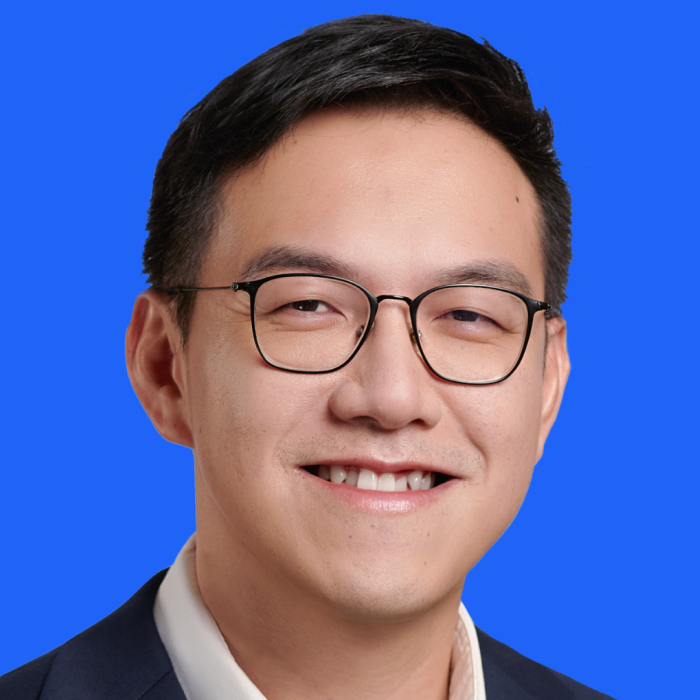
With Kah Kit Yip, and , and and
Kah Kit Yip has spent his career turning bold ideas about the future of money into working infrastructure.
After nearly two decades at Malaysia’s central bank and leading breakthrough initiatives at the Bank for International Settlements, he helped pioneer new models for instant cross-border payments, programmable compliance, and faster, safer FX settlement. Now, as Head of Blockchain and Digital Assets at UOB, he’s bringing those concepts out of policy sandboxes and into production across Southeast Asia
.In this conversation, Ari Redbord, Global Head of Policy at TRM Labs, and Kah Kit explore how interoperable payment rails, wholesale CBDCs, and tokenized assets can move value across borders in real time — while meeting the highest standards for compliance and risk management. They discuss why legal clarity and shared standards are essential for adoption, how institutions can match the speed of digital payments with equally fast safeguards, and what it takes for regulators and industry to build global financial infrastructure together.
Along the way, Kah Kit reflects on marathon running, crime novels, and the grit required to solve complex, long-horizon challenges in finance and technology.
Click here to listen to the entire TRM Talks — Pioneering Payments: Turning Sandboxes into Infrastructure with UOB’s Kah Kit. Follow TRM Talks on Spotify to be the first to know about new episodes.
Ari Redbord (00:02):
I am Ari Redbord and this is TRM Talks. I'm Global Head of Policy at TRM Labs, we provide blockchain intelligence software to support law enforcement investigations and to help financial institutions and cryptocurrency businesses mitigate financial crime risk within the emerging digital asset economy. Prior to joining TRM spent 15 years in the US federal government, first as a prosecutor at the Department of Justice, and then as a Treasury Department official where I worked to safeguard the financial system against terrorist financiers, weapons of mass destruction proliferators, drug kingpins, and other rogue actors. On TRM Talks, I sit down with business leaders, policymakers, investigators, and friends from across the crypto ecosystem who are working to build a safer financial systemOn today's TRM Talks, I sit down with the head of blockchain and digital assets at UOB, Kah Kit Yip. But first, inside the lab, where I share data-driven insights from our blockchain intelligence team.
(01:05):
On today's Inside the Lab, we'll zoom in on the DEA and federal prosecutor's recent operation seizing 5.5 million in USDT tied to an international cartel money laundering scheme with TRM Labs providing critical support. In this case, the cartel used a multi-layered laundering scheme, converting illicit cash into stablecoins, routing funds across chains, leveraging unhosted wallets, and mixing through Shell entities to obscure origins. TRM's on-chain forensics traced those flows, identified key bridges and laundering choke points, and helped build the evidentiary trail from street networks into the crypto ecosystem. Because TRM's analytics could map the path of funds, even when co-mingled or cross-chain, the investigation could attribute specific transactions to the scheme and support judicial seizure. This is a vivid example of how blockchain transparency paired with excellent law enforcement tracing and investigative skills could help interdict financial crime at scale. That's Inside the Lab for today, showing how crypto is not a hiding place, but a traceable trail when the right tools and partnerships are in play.
(02:18):
And now, Kah Kit Yip. Today I'm joined by Kah Kit Yip, the head of blockchain and digital assets at UOB. Kah kit, thank you so much for joining us today. I've really been looking forward to this conversation.
Kah Kit Yip (02:35):
Thanks, Ari, for having me.
Ari Redbord (02:36):
Would you talk a little bit about your journey? How did you end up going from being a regulator, and I would love to hear about that, to your current role as really leading the blockchain and digital assets work at UOB.
Kah Kit Yip (02:48):
So I'm always intrigued and passionate about how we can change lives through policies. There's one of the reason that I joined the Central Bank, and I joined the legal department first, and I have my fair share of setting up foundational legal frameworks that help with financial regulation. I also have a stint at a public prosecutor where I managed to help enforce some of our financial sector laws.
Ari Redbord (03:13):
That's really interesting. So did you start your career as a prosecutor and then it was to the Malaysian Central Bank?
Kah Kit Yip (03:20):
Yeah. So I joined the legal department of the Central Bank, and we are given a delegation of authority or fiat by the public prosecutor to help them prosecute some of the financial sector laws. So I have a short stint of about three years enforcing the financial services laws in Malaysia, prosecuting companies that roll out illegal investment schemes, enforcing some of our insurance laws. And I think those are really the foundational years where I get to see how the policies that we set at the Central Bank does actually make a difference in terms of promoting a safer and also a more efficient financial system. But I also feel that my role as a prosecutor is very targeted. It's always case by case. I think after six years at the legal department, I decided to shift to a policy role. And at that time, I think payments was booming.
(04:12):
Digitalization is starting, people are using cards and also electronic payments as a replacement of cash, but there are still a lot of frictions and cash and checks are relatively free. People are used to it. And hence, to migrate the population to use digital payments will require, I think, some public policy catalysts or enablers. And hence, when I was at the payment services policy department, I was responsible for coming up with pricing policies and also incentives, market incentive frameworks that would help shift the population to use digital payments. And I think one of the key infrastructure enablers that we put in place is to launch the real-time fast payment system, which is called DuitNow in Malaysia. And I think it's a game changer because of its role as a foundational digital infrastructure, it helps to link up the siloed digital wallets that are rolled out by banks and also non-banks.
(05:09):
And also it helps to create that network effects that makes it convenient for Malaysians to transact with one another. So we did it relatively well. I would say in Malaysia, I think our neighbors in Singapore and Thailand, they have their own real-time payment system as well. And so we thought of if we can deliver benefits at the domestic level, can we shift that to the cross-border space by linking our fast payment systems? I think our colleagues at MAS and Bank of Thailand, they were the first to link up fast payment system to enable real-time cross-border peer-to-peer transfers. And we then follow up to be a linkage with our colleagues at Bank of Thailand to enable real-time QR payments. So those are bilateral links. Hence, my next career shift is that I think it came quite opportunistically because the BIS Innovation Hub just set up shop in Singapore, and they were looking at how they could promote the use of more efficient cross-border payments within RCN.
(06:08):
And they are already bilateral links. They are fantastic, but they are not the most efficient. If you link up three payment system, you need three links, but 20 payment system, you need 190 links. So it's not scalable. At that time, I think the BIS Innovation Hub, they have created Project Nexus, which is a multilateral model of linking our fast payment systems. And I was fortunate to be able to join the team to see how we can take this from pilot to production. So I joined the BIS Innovation Hub for the last three years where I work closely with the team to develop the foundational building blocks. And that includes the governance structure, the scheme rule book, as well as a viable commercial model that would then help bring a multilateral model of fast payment system linkage to the real world. So the Nexus Global Payments is the entity that is established by the central banks to implement this model has been established since last year.
(07:03):
And with that job done, I recently just moved to the private sector. I see it as an opportunity for me to come full circle because I've been with the public sector for the past 18 years, and I really want to have an opportunity to get my hands dirty, to build solutions from the private side, and potentially to also shift from providing meaningful access to the public to enhancing the financial wellbeing of our clients and also customers. So UOB, the bank that I'm working in RCM Bank. So we have presence in five key asset markets namely, Singapore, Malaysia, Thailand, Indonesia, and also Vietnam. And we also have a strong base of individuals and also SMEs as well as corporates. And we really want to see how we can deliver safe, efficient, and also innovative solutions to help them with their day-to-day transactions and as well as misuse.
Ari Redbord (08:03):
I love your journey. And I think I probably relate to it a fair amount just having been a prosecutor and then a regulator and now in the private sector, getting to UOB, which is obviously new for you, you spent 18 years as a regulator and a policymaker. One thing I found certainly in joining the private sector is that there's a huge amount of impact that you could have because you're actually taking the policymaking and you're putting it into the real world essentially. You're supporting clients and customers. Talk a little bit about what you're working on as head of digital assets and blockchain at UOB. What types of initiatives, what type of focus on cryptocurrencies or blockchain technology is happening at the bank?
Kah Kit Yip (08:42):
Yeah. So I did the blockchain and digital asset team within UOB. So we are a center of excellence that helps the bank and also our clients to navigate the fast evolving blockchain and digital asset space. We know that technology moves very fast and it will redefine the way that we transact and do business in the future. And hence among the projects that we have been working on for quite a while now is to see how we can provide a faster and more efficient way for our customers to conduct cross-border payments. Invariably, we do have a lot of cross-border payment services right now. I think the benefits of leveraging a blockchain is that it will facilitate programmability so that certain rules can be encoded into the blockchain and self-execute such that I think that will bring a lot of efficiencies that we may not see in the current fiat rails.
(09:38):
Additionally, as well, I think due to the peer-to-peer nature of blockchain, it can also reduce intermediaries and also shorten just transaction chain. And I think payments is only half of the story. While we enable faster and safer payment infrastructure for our customer, we also want to see how digital assets can also be used to allow our customers to invest their surplus funds and derive a greater efficiency and potentially higher returns. We are also actively looking at how we can provide institutional great custody solution for customers so that they, in addition to having an account with us, they can also deposit and keep digital assets, be it tokenized bonds, tablecoins, or tokenize MMF with us. And we help them to then trade, buy and sell, or to pledge it as a collateral. And we provide asset servicing services that will then help them meet their investment goals, as well as to bridge any funding gaps as and when they need it.
Ari Redbord (10:37):
That's fantastic. I mean, it's taking the policy at the Bank of Malaysia and BIS and really testing it in the real world. What does it actually take to move from that proof of concept to doing it in the real world like you're doing it today?
Kah Kit Yip (10:52):
Yes. So I think technology, for instance, I think it's a backrock, the foundation, but having technology innovation alone may not be sufficient because I think for an emerging innovation of blockchain and digital asset to be introduced in a production environment to be adopted by millions of users, there's the need for other fundamental building blocks to be put in place. And I think there are three key things that I think would be needed. Firstly, would be the legal and regulatory clarity. And that is important because especially for the regulated financial industry that are used to adhering to multiple financial as well as legal regulations, having the regulated clarity of what would need to be put in place and what are the corresponding requirements, be it AML, CFT, capital requirements, or even data protection. I think that would be needed to scale the adoption of a digital asset beyond the current pilots and POC that we see today.
(11:56):
And the second thing I suppose is interoperability standards and protocols because the world is likely to be a coexistence of multiple systems and networks. There won't be a single system that will wiggle. Hence, being able to stitch up the different siloed networks or wall gardens will be critical and because that would then deliver the network effects that will make it meaningful for customers and also corporates to adopt digital asset or blockchain in a big way. And I think last but not least would be a safe sentiment asset. I think that also links back to the siloed networks that we see being churned up every day. So to reach two separate networks, and of course we can leverage on commercial bank money or private sector coins, but that may not be the most ideal situation. So we can mimic what we see in the domestic landscape where you have banks that can exchange funds with one another using central bank money as the safe settlement asset.
(13:00):
I think that would be the best model if we can adopt at a cross-border perspective as well. So while we have different tokenized ecosystem, each with their own tokenized coins or asset, having a safe settlement asset that can reach the total ecosystem will be key. And on this front, I think at UOB, we have been working with MAS to test the wholesale CBDC under Project Orchid, as well as Project Guardian. And recently at the SFF Simple Fintech Festival, we showcase a live pilot of a wholesale CBDC settlement for interbank lending between three banks in Singapore. So we have demonstrated that this can happen using real funds and we hope that this experiment can be scaled up to cover other use cases and potentially roll out in the real world. At UOB, we are also participating in the SWIFT digital ledger project. We are one of the 39 binary banks.
(13:55):
They are working alongside with SWIFT to see how we can develop the next generation settlement infrastructure across border settlement infrastructure that leverages tokenized asset as a means to securely and also efficiently settle transactions between countries.
Ari Redbord (14:11):
Amazing. How do you see the work around stablecoins and tokenized deposits really changing the mechanics of money movements for banks and customers?
Kah Kit Yip (14:21):
Yeah, so I think they are potential game changers because tokenized money, be it stablecoin or tokenized deposit, they are tokenized money on blockchain. So it allows value to be transferred in real time with finality, having that to replace the current system that maybe clears twice a day and settle at a later time, having that autonomicity and also instant settlement would definitely be key to unlock liquidity and to facilitate more use cases. I would say as well, I think the programmability is also another key benefit of stablecoin and also tokinized deposit and blockchain in general. So we often complain that regulations are important to help us mitigate risk. Having to deal with multiple requirements, which often differ between countries may add time and cost to cross-border payments. Hence, if we can leverage on programmable compliance where the compliance rules are encoded into the smart contracts so that we can auto execute the compliance processes. And if you can frontload this process at the beginning, we can potentially increase.
Ari Redbord (15:32):
What a great answer. You're working across so many different countries, languages, cultures, licensing regimes, requirements. And at UOB, you're working across those five or six different countries. I love the answer around programability to solve a lot of the cross-border nature. I'd say that there was a theme of 2025, it was really institutional adoption. I think we moved from a world where the crypto players were sort of the most important parts of the ecosystem to a world where the financial institutions were playing a really, really critical role here. Looking a little bit into the future, how do you see the role of financial institutions like UOB playing in the blockchain ecosystem?
Kah Kit Yip (16:09):
I think banks will continue to play a key role in the tokenized finance ecosystem, both as a trusted anchor, as well as as an orchestrator of payments and a bridge between the fiat, as well as the tokenized ecosystem. So over the years, we have built a wide network of connectivity, not just to market infrastructure, but also across countries, either through our subsidiaries or through our Norstro bank agents. So in a way, I think the bank will act as a breach between both the existing as well as the new ecosystem. And the second role that I think banks generally will play is to act as a compliance guardian for the financial ecosystem. Through all the workflows and processes and infrastructure that we have put in place to embed compliance into our processes and workflow, that would definitely help any customers and corporates to ensure that whatever transaction that they may be in the tokenized money or tokenized asset space, will adhere to the prevailing as well as the applicable rules and regulation.
(17:19):
And just now we talk about programmable compliance, that is also another area that I think the bank will be best positioned to implement that leveraging on the experience as well as the expertise that we have built over the years.
Ari Redbord (17:33):
Really awesome. We're seeing institutional adoption, we're seeing this ecosystem grow, we're seeing trillions ultimately of activity. What role do regulators play going forward?
Kah Kit Yip (17:44):
Yeah, I think the regulators in APAC have done a wonderful job in putting in place continucy policies to foster experimentation and also innovation in the digital asset space. While some work has been done to provide the frameworks in which tokenized assets or even topics money can be rolled out, I think a lot more can be done to make clear for not just the financial sector players, but also for individuals and corporates to be able to deal with digital asset with confidence. Beyond financial sector laws, there are also other legal frameworks that may need to be updated such that they're able to support the growth of digital asset. For instance, accounting treatment, STEM duty laws, tax treatment, those are areas where I think they're still evolving, but if this can be accelerated and be done in a coordinated way, I think it would really help to move the needle in terms of spurring and also scaling the adoption of a digital asset.
(18:48):
So legal clarity is one, but legal alignment in terms of policy outcomes will also be key because then that would then help to mitigate arbitrage by bad actors, as well as I suppose it will help to reduce costs for entities that would like to scale regionally as well as globally, which can then be translated into lower cost to end users. Standard setting, I think the regulators have also done a great job. I think at the MAS, Global Layer One has throw out some of the toolkits, including the compliance toolkit recently at the SFF that can help different players within the digital asset ecosystem to adopt technology and to ensure interoperability between them. So I think if we can also accelerate the work, not just from the perspective of interoperability protocols, but also to look at how, for instance, identity or compliance can be subject to some level of standardization in terms of the technical standards, I think that would then help to ensure a more seamless end-to-end exchange of data value between the different players.
(19:53):
And last but not least, I suppose, is the role of foundational utilities or digital infrastructure. And we have seen this done quite successfully in the Fiat world. Fast payment system helps to link up the silo networks and also the different wallets that are issued by banks and non-banks. So likewise, in the digital asset space, there is a role. I'm not saying that there should be only one system or one network, but there should be sufficient market infrastructure utility that help connect the disparate tokenized networks or ecosystem that we have today so that there is scale, there is network effects that would then help deepen the liquidity as well as the business case for individuals and businesses to deal with digital assets. And I think those three areas would be key preconditions which we think both the public as well as the private sector should jointly work together to put in place such that the digital asset ecosystem can continue to thrive moving forward.
Ari Redbord (20:52):
I love that answer. Four or five pillars there. I feel like we could turn that into a white paper and provide it to every regulator around the globe. These are the things that business really needs. You did mention illicit actors at one point in the last answer, and this wouldn't be a TRM Talks if I didn't ask you at least one question about financial crime. So from a risk perspective, as you see it, what is the single biggest challenge posed in terms of financial crime by faster cross border value transfer at the speed of the internet, blockchain technology? How do you think about risk when it comes to illicit finance in particular, and what should institutions do to mitigate?
Kah Kit Yip (21:30):
Yeah, so faster cross-border payments is a double-edged swap. So on one hand, it is super convenient, it solves a lot of pain points, but at the same time, it can also be exploited by the bad actors to drain funds out of account within seconds and disseminate it to multiple new accounts across both fiat, as well as tokenized ecosystem and eventually transfer into an unhosted wallet that can be traded. I mean, it can be traced, but you can't really locate or arrest the person because of the anonymity of the wallet holder. So essentially, I think the single bigger risk in the current digital payment landscape that we are operating in is the velocity as well as the anonymity of transactions. And we have to harness technology to fight these new threats because likely or not, the back actors are leveraging our technology as well, and not just the conventional technology, but the most up-to-date technology stack that we can have.
(22:35):
So for financial institution, I think there are potentially three areas that we can look into. The first one is to fight speed with speed, and to do that, we would need to leverage on some of the latest technology. For instance, if we can have real-time risk scoring, leveraging on the data that can be analyzed in the digital payment space and use that as a means to predict or to flag potentially fraudulent or potentially high risk transaction such that we can stock transactions before it is executed. So it's a bit like a preemptive move. We can harness technology like generative AI or machine learning and use the feedback loop, whether it's false negative, false positive, and use that to constantly improve the model. I think that could potentially be quite a powerful enabler. And when I was at the BIS Innovation Hub, we have worked on this model through Project Aurora and also Project Heritage.
(23:37):
And recently, I think my colleagues have also rolled out Project Nadim that seek to push the boundary further to look at how cross-product sharing of risk indicators can be done in a privacy enhancing way. So I talk about fighting speed with speed, leveraging on technology. I think the second key thing that we can do as a community is to foster collaborative sharing of intelligence in a privacy enhancing way because criminals operate in networks and for banks, we can't operate in silo because it's a self-defeating strategy. Having a mechanism that can allow banks to securely share data, risk indicators, even typologies in a privacy enhancing way will be a game changer. And I think at the MAS, they have roll out Cosmic, which is a platform to share AML risk indicators. And at Bank Negera of Malaysia, they've also introduced the National Fraud Portal that facilitate secure sharing of new account data and also facilitate the traceability of fraud funds.
(24:40):
And last but not least, I think we have to move beyond the financial sector because the lifecycle of a crime typically start outside of the financial sector. And hence, to have that end-to-end visibility as well as capability, we would need to foster a whole ecosystem approach that potentially bring in collaborators from the telco industry, from the social media companies to then collaborative, see how we can work together to identify as well as to predict and stop fraudulent and criminal activities before it became too large.
Ari Redbord (25:15):
That answer really, really resonates. As you know at TRM, we built the Beacon Network in large part for your two first reasons. And that is one, bad actors are now able to move faster than ever before. So regular compliance controls, you're not able to disrupt and ultimately seize back illicit proceeds. So that is exactly why we built Beacon and why we're leveraging AI today at every part of our platform. So absolutely align there. I have a fun question for you, and that is, as you've been talking, I realize that BIS has the coolest naming conventions, I think, for their projects. How does BIS come up with their naming conventions for these projects?
Kah Kit Yip (25:52):
I get asked a lot about this question, and I may not be able to speak on behalf of BIS Innovation Hub now that I've left them, but I could say that it is by design. I mean, the names are by design and it is being created or selected through, I think, a very rigorous process that involves a lot of stakeholder engagement. Amazing. I will leave the direct answer to be perhaps provided by the head of the BIS Innovation Hub. But I mean, rest assured, it is not by fluke, it is by design.
Ari Redbord (26:22):
It feels very intentional. Last question, and another fun one, you spend most of your time thinking about cross-border payments and the future of financial technology. What do you do when you are relaxing a little bit? Hobbies, interests, what do you like to do in your free time?
Kah Kit Yip (26:38):
So I like running and also reading during my free time. So for running, I find it as a good way for me to zone out, recharge, and come back with a fresh perspective. And being working in this space, I can't help but thinking of all the issues as I run. And sometimes having that space to myself helps to churn out some aha moments, which then helped me to untangle some of the issues that I face at work. So I like running so much that I started running marathons since last year and I've ran two.
Ari Redbord (27:10):
Amazing.
Kah Kit Yip (27:11):
And I find it to be quite addictive as well because once you've done it, you feel like you constantly want to do it again and achieve a better personal best. So I see that as perhaps a healthy way to constantly push myself in a non-professional perspective. I also like reading and just now we talk about my previous life as a prosecutor. So I like reading crime novels. I love the adrenaline, the mystery and the cool ways in which the mystery is solved by the investigator. So I'm a big fan of Sherlock Holmes novels. I also like James Patterson. So I think maybe at some point in my life, I may become a criminal investigator.
Ari Redbord (27:52):
I love that, or at least a novelist that writes about criminal investigators. I love the Sherrock Holmes analogy. Really, I mean, in many respects, that's what you are sort of out there trying to discover clues on how we can build technology to do financial transactions better than ever before. And the running thing obviously really hits home. I've done about 40 marathons and have that same feeling. The last six miles, you pretty much want to die, but then when you cross that finish line, you have this extraordinary feeling of accomplishment that you just want to have over and over and over again. And I love how you articulated that because it's something I have felt very deeply. I see you nodding here. Tell me about that.
Kah Kit Yip (28:30):
Yeah, so I think it's a wonderful feeling. In a way, I see it as a metaphor to a lot of the challenges that we face in life where it always seems difficult. You feel like giving up and in the two marathons I've run, I've gone through that emotional rollercoaster. You feel like you just want to create and walk away, your legs cram halfway and you feel like, why am I doing this? But by grititng your teeth and pushing forward and finally crossing the finishing line, I think that sense of accomplishment is really aesthetic. And I see that as an inspiration as well. So if I can run two marathons, perhaps I stand a better chance of solving some of the challenges that I face in my everyday life. So I think it is a great training round, if I may, for what that comes next.
Ari Redbord (29:22):
There's no better mental test than to me the last six miles, for me at least, the last five or six miles of a marathon. At that point, the training is gone, the physical nature of it is gone. It's just all mental toughness at that point. Kah Kit, thank you so much for joining TRM Talks. I look forward to spending lots of runs with you to talk more, to hear more about the amazing work you're doing. Thank you for joining TRM Talks.
Kah Kit Yip (29:45):
Thanks for having me.
Ari Redbord (29:52):
My favorite part of the conversation was really the journey, but I feel like the journey informed so much of the substance of the conversation today to start out out as a regulator at the Central Bank of Malaysia, but then also have this piece of three years as a prosecutor working on enforcement in the financial services sector, and then to BIS where you're a standard setter, where you have access to sandboxes with incredibly cool names, as we joked, but then also take all of that work, the enforcement, the central banker, the BIS experimentation, and then take that to the private sector where you're having to execute on all of these things, where you're actually putting it into the real world, working with commercial and the retail sector. So my biggest takeaway is it's so important to bring that regulatory expertise to the private sector, and that's really what we see here, but also bring that private sector expertise to regulators, which I think we're seeing more and more across the ecosystem.
(30:48):
I asked him one question at one point about digital payments, cross-border payments, and I thought to myself, as I was asking the question, I'm not sure that I could ask a better person on earth about cross-border payments in this moment, having built it as a regulator, having worked on standards, and now implementing it today.
(31:08):
On the next TRM Talks, I sit down with Matt Hogan of the Connecticut State Police and a special guest to talk about the anatomy of a cryptocurrency scam and how to investigate. If you love the show, leave a review wherever you're listening to it. Follow us on LinkedIn to subscribe to our newsletter, the Weekly Roundup, to get the latest news on crypto regulation, compliance, and investigation.
TRM Labs (31:34):
TRM Talks is brought to you by TRM Labs, the leading provider of blockchain intelligence and anti-money laundering software. This episode was produced in partnership with Voltage Productions. The music for this show was provided by iKOLIKS.
Ari Redbord (31:51):
Now, let's get back to building.
About the guests
Kah Kit is the Head of Blockchain and Digital Assets at UOB Group. He is an accomplished banking and finance professional with extensive experience across central banking and financial innovation, having held key roles at the Bank for International Settlements (BIS) andCentral Bank of Malaysia (BNM).
At the BIS Innovation Hub, Kah Kit co-led several groundbreaking initiatives, including Project Nexus, which designed a next-generation multilateral fast payment network;Project Mandala, which introduced a programmable compliance framework; and Project Rialto, which developed advanced FX settlement protocols. In addition to project leadership, he represents BISIH on the CPMI Governance and Oversight workstream, contributing insights and practical expertise to the G20 cross-border payments program.
Prior to BIS, Kah Kit spent over 18 years at BNM, where his responsibilities spanned legal advisory, financial crime prosecution, and policy development in payments, fintech, and digitalization. He played a pivotal role in Malaysia’s transition to digital payments, driving interchange fee reforms and promoting open, interoperable real-time payment systems. He also led BNM’s Digital Currency Research Hub, spearheading exploratory work on tokenization, CBDCs, and digital assets, including Project Dunbar, which tested a multi-CBDC platform involving the central banks of Australia, Malaysia, Singapore, and South Africa.
Kah Kit holds aBachelor of Lawsdegree from theLondon School of Economics and Political Science (LSE)and is admitted as a Barrister-at-Law by the Honourable Society of Lincoln’s Inn, United Kingdom.
More TRM Talks
Subscribe to TRM Talks
Subscribe to be the first to hear about new episodes, and to stay in the know about all things blockchain technology and crypto policy.