
Sep 23, 2026 - 36min
From Emerging Markets to Tokenization with Morgan Stanley’s Amy Oldenburg
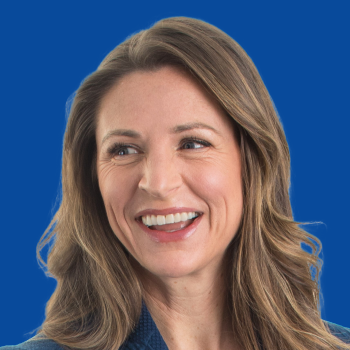
Amy Oldenburg spent 26 years at Morgan Stanley — operations, emerging-market FX, the trading desk, then the firm's global emerging-market investing business — before the bank created a Head of Digital Assets seat and asked her to do it full time. In this TRM Talks, Amy joins Ari Redbord, TRM Labs' Global Head of Policy, to talk about how she leveraged over two decades at the Morgan Stanley to accelerate the firm’s exploration into digital assets.
The conversation moves from bicycle-messenger settlements in India and currency devaluations to why so many of Amy’s former emerging-market FX colleagues ended up in crypto. Amy talks through what she is seeing across banking, equities, wealth, and asset management: what is possible today, what still depends on regulation, and what could change by 2028 and beyond. She also breaks down tokenization as financial plumbing — simpler systems, faster yields, and more efficient capital calls — and shares a lesson from having an expensive NFT phished from her wallet: transparency does not always mean safety.
Click here to listen to the full episode: From Emerging Markets to Tokenization with Morgan Stanley’s Amy Oldenburg. Follow TRM Talks on Spotify to be the first to know about new episodes.
Ari Redbord (00:01):
I'm Ari Redbord and this is TRM Talks. I'm Global Head of Policy at TRM Labs. At TRM, we provide blockchain intelligence software to support law enforcement investigations and to help financial institutions and cryptocurrency businesses mitigate financial crime risk within the emerging digital asset economy. Prior to joining TRM, I spent 15 years in the US federal government, first as a prosecutor at the Department of Justice, and then as a Treasury Department official, where I worked to safeguard the financial system against terrorist financiers, weapons of mass destruction proliferators, drug kingpins, and other rogue actors. On TRM Talks, I sit down with business leaders, policymakers, investigators, and friends from across the crypto ecosystem who are working to build a safer financial system.
(00:53):
On today's TRM Talks, I sit down with Morgan Stanley's Head of Digital Assets, Amy Oldenburg. But first, Inside the Lab, where I share data-driven insights from our blockchain intelligence team.
(01:10):
On today's Inside the Lab, we go deep on the CLARITY Act and its law enforcement provisions. The CLARITY Act, the US's attempt at crypto market structure, remains stalled by both process and politics. But its law enforcement and national security provisions are already instructive for financial crime professionals. Section 201 would require digital asset commodity exchanges to run full AML programs and file suspicious activity reports under the Bank Secrecy Act. FinCEN has essentially required this for years, but this would be the first time that it would be legislated. Section 308 would mandate blockchain analytics tools for certain DeFi intermediaries. Section 203 creates a public-private information sharing, interdiction and disruption network, much like the Beacon Network. And Section 305 allows a 30-day transaction hold, extendable to 180 days, and a safe harbor provision for those exchanges. Section 205 sets crypto ATM limits aimed at elder fraud and abuse. Section 604 preserves the criminal statute used against knowing facilitators of illicit proceeds. The bill has even grown since it got voted out of committee. A July 2022 draft adds burn and reissue authority for stablecoin issuers. While the GENIUS Act sets forth the requirement for stablecoin issuers to freeze, seize, and burn, for the first time ever the word reissue is in legislation, essentially requiring or encouraging stablecoin issuers to not just burn or freeze assets, but reissue them to victims.
(02:59):
And a white hat rewards program for vulnerability disclosure, a bounty, is also included. This is very much around the letters of marque or the privateering provisions that TRM has talked about. For firms in scope, this enforcement architecture, quite frankly whether it passes or not, matters regardless of how the market structure fight resolves, because these are going to be the key provisions that really characterize AML in the crypto space going forward. And now, Amy Oldenburg.
Ari Redbord (03:34):
Today I am joined by Amy Oldenburg, the Head of Digital Assets for Morgan Stanley. Amy, thank you so much for coming on TRM Talks.
Amy Oldenburg (03:44):
Ari, great to see you.
Ari Redbord (03:46):
I feel like you have one of the most interesting roles now in our space if you talk about that intersection of traditional financial institutions and technology. You're the Head of Digital Assets at Morgan Stanley. Talk to me a little bit about how you've ended up in this role and your career journey.
Amy Oldenburg (04:02):
Yeah, I appreciate the question, and it's funny because we were just reminiscing on this last week. A picture had shown up on my phone with a photo that I took at the Bretton Woods 2.0 five years ago, when a whole group of folks got together on digital assets to talk about what was the future of finance, and we went to New Hampshire in Bretton Woods. And that was actually the first time I got on stage and spoke on digital assets publicly, and it's amazing to think that that's been five years since that actually happened. It's been such a journey in five years. I was saying that's longer than what you spend for an undergrad college degree, and how much has happened and how much has changed even in those five years.
Yeah, I appreciate the question, and it's funny because we were just reminiscing on this last week. A picture had shown up on my phone with a photo that I took at the Bretton Woods 2.0 five years ago, when a whole group of folks got together on digital assets to talk about what was the future of finance, and we went to New Hampshire in Bretton Woods. And that was actually the first time I got on stage and spoke on digital assets publicly, and it's amazing to think that that's been five years since that actually happened. It's been such a journey in five years. I was saying that's longer than what you spend for an undergrad college degree, and how much has happened and how much has changed even in those five years. But even, how did I get here? I spent most of my career in emerging markets, and I found my way to emerging markets because I actually really wanted to start in tech. I went to school for accounting. One of the things that accounting led me to was I was not able to study abroad. I loved travel. I loved to really get out and explore, but I was restricted with this major, and they sent me to an exchange program in San Francisco in 1999. And it put me in the center of the internet boom, and I had a job at an internet consulting firm the second day that I was on the ground there.
Accounting went out the door. Tech was my life. That was going to be my career for good. I was committed. And I lived through setting up the first websites for Fortune 500 companies for about a year and a half. I lived through the entire bust of the internet bubble. I sat in a room when our CEO told us that we were pulling our S-1 because the market was a little rough and we weren't going public, and I knew exactly what that meant coming from all of my finance classes and accounting background. And at that point was really thrown into a bit of a mess. I had a real strong plan to make sure I had a job, then I threw myself into tech, and then basically was part of that whole experience of the tech bubble bursting. And it really led me to my role at Morgan Stanley. I actually took a job at Morgan Stanley, again, just more out of desperation. I was really just almost turning in a wave. I didn't know where I was going at the time. I
had already lived, as a young person, a pretty rough experience with my career so far. And I took a job in operations. I didn't even know. The only thing I remember is my finance teacher back in college told me, "Amy, you're not an investment banker." And I was so angry at him. I was like, "What does that mean? And how does he know I'm not an investment banker? That's so rude of him to say that." Which I still like to this day, I'm 26 years in Morgan Stanley, actually something must have been okay even though we kind of had that tiff in his office at one point. But I started in ops. I had no idea really what I was taking on. I accepted a job really just out of, God, I can't be the kid that is unemployed post internet bust. Thank God I got that job because 9/11 happened about three months after I got that role, and saved me even at Morgan Stanley. I don't think we hired another student out of school for about two years after that because it was such a rough time on Wall Street also.
But what it taught me is really getting into the details of the financial markets. And we were tracking down lost Venezuela oil warrants. I was responsible for, at the time, it was kind of just coming off the transition of physical delivery of stocks in India, and they used to be delivered by bicycle messenger. And sometimes if the bicycle messenger didn't make it across town to settle the stock, you were in receipt of stock, physical stock. And we had all of this stock outstanding that the bicycle messenger could have been hit by a cow or a truck or something else on the street. And we had all these outstanding trades. And so I really understood from the ground up some of the most challenging operational and complex markets and basically started in the mail room almost in understanding how some of that worked. From there I went to spend time in product development and strategy.
After that, went back to the trading desk. I was very close with the traders during some of my early years of working in that middle office role, and they had asked me to come onto the trading desk to be the junior trader. They really needed somebody to help them out, and it was a time, it was 2003, I remember very clearly. And again, I'm kind of bumbling around here because it's just been like every single year since I've graduated is like a mess, a mess, a mess in terms of the economic experience that I'm having.
Ari Redbord (09:18):
What's so interesting, the 26-year piece is just so interesting to me because I think there's very few people I've talked to who have obviously spent their entire time at one place or one particular financial institution in this moment. It's interesting. There's two threads that run through this show all the time, two major events that seem to have affected people on both sides of the conversations we have. For law enforcement and regulators, it tends to be 9/11, right? People went to the US Treasury Department. They had this sort of mission moment. And then the financial crisis for a lot of people who had this sort of crypto moment, digital assets moment to some extent, where, "Hey, maybe there is something better. Maybe we should be thinking." I mean, you've lived through Morgan Stanley from both of those events.
Amy Oldenburg (10:03):
Oh, absolutely. And look, it comes to even when I went to the trading desk. So when that time hit, emerging markets really took off. We were in a down cycle for the US, but then China had just joined the WTO, and you just had this momentum in emerging markets, which I didn't even barely see at the time when it was happening. But I started doing all the program trade and emerging market FX. And that's actually one of the ways that I first got connected to crypto because, and again, totally to connect with you on the global financial crisis point, many of the folks that I used to trade emerging market FX with back in those early days, their skill set for the crypto universe was just perfectly set.
Oh, absolutely. And look, it comes to even when I went to the trading desk. So when that time hit, emerging markets really took off. We were in a down cycle for the US, but then China had just joined the WTO, and you just had this momentum in emerging markets, which I didn't even barely see at the time when it was happening. But I started doing all the program trade and emerging market FX. And that's actually one of the ways that I first got connected to crypto because, and again, totally to connect with you on the global financial crisis point, many of the folks that I used to trade emerging market FX with back in those early days, their skill set for the crypto universe was just perfectly set. I mean, my counterparts when I traded were in Russia, in Turkey, in Johannesburg, all over Asia, all over Latin America. They knew the challenges, and I saw them firsthand with getting money out of countries, having capital controls that were put on over the weekend and trying to understand how we get the money out of the country, the challenges with devaluation. And I've sat with regulators and had to explain and walk through during more senior parts of my career how we navigated three devaluations of a currency within a single calendar year. And you could see exactly why many of these folks on the ground needed an alternative or why they would use an alternative.
Ari Redbord (11:43):
Do you think that last point is in part at least why you gravitated to digital assets?
Amy Oldenburg (11:49):
100%. It was a very clear connectivity point. And you see some similarities with the digital asset space as you did in emerging markets. We would always joke within our broader community of spending 20-plus years in emerging markets and say, "You have a lot of fun because you have a lot of really eclectic folks that tend to come to these markets." For the same reason, many people over the last decade or so would seek out the crypto space. It was unregulated. There wasn't a lot of established institutions. It was a bit of the Wild West, and that was the same experience we were dealing with in many of these companies in EM.
Ari Redbord (12:30):
That is an absolute connection. So interesting that this role was relatively recently, January, created for you, Head of Digital Assets at Morgan Stanley, a 26-year veteran of the firm. So it's obviously something you've been thinking deeply about for a while, the bank has been thinking about for a while. How did this all come together?
Amy Oldenburg (12:47):
So the last four years I was actually leading our global emerging market investing business. And while I was doing that full-time, as I said earlier, I started speaking on digital assets formally on stage about five years ago. And through that period, the EM business was growing quite substantially too. We were expanding into some new markets. We had taken on broader business in the Middle East. And I was also trying to do a second job, which was support digital assets at the firm. And at the time, there wasn't a lot of revenue we could really plug into, but I was very committed, and I knew that we had to keep this whole initiative alive in some way to continue to move forward even if we weren't in a regulatory position or a revenue position to really initiate at that point of time. Because I knew very clearly that if we totally stepped back from it, trying to move back in, we just wouldn't have the legacy knowledge. We wouldn't have that momentum to really pick it up.
So I had been doing two roles for about five years. I would say the last two or three were more substantial, where I was mentally really trying to do my best to stay focused on the EM business, which was a very significant revenue-generating business for myself and my team, but then also make sure that we were continuing to move the narrative forward any way we could. Even during that Gensler era, which everyone talked about and was very sensitive for even a GSIB to come out and talk about digital assets, we were still trying to get out there and do what we can to keep it moving forward. And I would say the end of last year, and of course 2025 was a big year for just change in terms of the regulatory environment with the new administration, it was an opportunity for us to really step out and all this work that we were doing on the back end of digital assets. And so I formally moved out of my emerging market business and now 100% focus my time on digital assets.
Ari Redbord (15:02):
I think we have been seeing this really fun moment. So tell me about when you think about the digital assets ecosystem at Morgan Stanley. What are you most focused on? What are you working on specifically today?
Amy Oldenburg (15:12):
The one thing I feel so confident about taking this role is that it was developed and determined that it needed to be within firm management, so across all three divisions. Because we have our institutional securities business where we're advising and then issuing securities. We have our asset management business where we're actually manufacturing investment products. And then we have our wealth business where we're advising and then also have a distribution platform for wealth management in a very significant way.
And that gives us a really unique lens to try to look at where the opportunities are. And so one of the things that we even started with this year was really taking an inventory of where the opportunities were, because it was something we never did in the past. When we worked on projects before, it was always, "Hey, what does DLT, blockchain do for us?" But we really went through every single business line, talking to senior leaders across the organization. What is the low-hanging fruit that we can do now with the current technology we have? If regulation continues to change and we build out some additional technology support, what else can we do going forward? And then longer term, so I would call this the 2028-plus trajectory, what does the future look like? What is the risk of disruption? What are some of the opportunities that we have longer term that we have to be prepared for?
And we went through, you name it, banking, equities, fixed income, E-Trade, wealth, every aspect of asset management. And that's been a very exciting place to start because you really have kind of the full picture of what the opportunity is within the organization.
Ari Redbord (17:02):
Extraordinary. Maybe just dig a little bit into sort of what you're doing today and maybe a little bit of that future state?
Amy Oldenburg (17:07):
So one of the things that we're doing today, we are going through, once we have this roadmap, we have to understand the workflows and how to execute on some of these initiatives that we have going forward. It's different. They're different tech stacks. It's different operational workflows than we are used to. And the one thing, and maybe going back to your theme, even 9/11 or global financial crisis. Global financial crisis for the large banks was an initiation to just find stability and try to stay stable, right?
Because we ended up in a period post that, US banks went through their stresses, then you had Europe that kind of struggled on for many years after that. And if you think about the generation even that we have working in the industry to date, they haven't seen any destabilization like we've lived through in our career. It's mostly been the stuff that we lived through and some of those things of, where is the money? Where are the shares? How does this work? What broke? And you're in crisis mode. We just haven't really... I would say the closest thing that we had to that were some of the first weeks of COVID. And you know you have like a sickness when that happens in COVID, and I'm stuck in my house at the time, and we're on calls, no joke, probably 18 hours a day trying to understand what companies have enough cash to stay liquid for long enough and not go bankrupt. And there was a moment for me of just calm. Like, I wait years for this opportunity, right? There was a peace and an excitement that just kind of rolls over you of like, ah.
Ari Redbord (19:01):
Yeah. It's the, I get this, I get this, and there's an opportunity I can help solve this, right? I think that's the piece that gives you energy.
Amy Oldenburg (19:11):
100%. And I think the thing that we are really digging into now is, how do we prepare for that future state? We know there is some element of that that may come again.
Ari Redbord (19:18):
Fantastic. Let's dive right into AI. Talk to me a little bit about maybe AI in your workflows, but even more broadly, what is your view of AI in the financial system ultimately?
Amy Oldenburg (19:33):
I think there's not enough discussion and brainstorming around what a future world looks like when we start having this convergence of agentic activity and digital assets. Because even when we go back to the early part of my career when we were building websites for Fortune 500 companies, we were literally just building digital billboards. There was very little functionality for the website itself, right? Everyone said they needed a website and you had to come to us or one of our peers to do that. But one thing that we didn't spend a lot of time even back then talking about, we didn't spend time talking about the iPhone. We didn't spend time talking about the App Store.
We didn't spend time talking about all the other value-add that came along with the future of the internet, because it didn't exist yet at that point of time. And I think that's one thing we have to keep in mind is there are components here that are not yet built to really scale and totally embrace what technology can deliver going forward. But we have to really try to at least be creative enough to think about what that could look like and make sure we're taking that into consideration. Because it's very hard, especially for financial services.
We like data. We like to confirm that the trend is already taking place. But the one thing we've also seen continuously time and time again, going back to AI, how long did it take the first 100 million consumers that were using ChatGPT when it came out? Probably one of the fastest J-curves we've ever seen of any adoption in history. And I think we need to be prepared for that speed of a J-curve that can take off as it impacts financial services. And I think that's one of the things we're really trying to prepare for. How do we just make sure that some of that core infrastructure is in place, so when this really starts taking shape and more significance, three, five, seven years down the road, that we're not in some ways limited by other things that we could have done to prepare for that future?
Ari Redbord (21:51):
Another area that I know you're working on and thinking a lot about is tokenization. Talk me through sort of how you see tokenization.
Amy Oldenburg (21:55):
So I think there are a couple of things in tokenization. One, and I will start with the least sexy, is just better operational infrastructure. There's this dream that at some point tokenization can potentially offer you the same infrastructure stack regardless of what that asset is within that wrapper. And there's something about that that just feels somewhat freeing from a management perspective, this idea that you may just have a platform where it doesn't matter what the asset is, that you can deliver it and you just don't need to bring on more vendors and more tech. We'll see if that actually comes true, but I think that's kind of one of the, the least sexy.
I would say more interesting is tokenization may also offer us the opportunity to securitize things that just were too difficult to do in the past. And I'll talk about money markets because that's a big theme right now, tokenized money markets. You can potentially offer an admin package that's able to do functions more efficiently. So as an example, money market funds, they calculate a yield that really happens overnight. But you're getting to a point where you're seeing tokenized money market funds where they're calculating yield on a 15-minute basis.
There's no reason why it couldn't be minute-by-minute basis going forward. And also settle, like settlement time of a money market fund being same day. Because one of the things that even, as an example, one of the things that happens on our platform, and I'll just use myself as an example, if I have a private investment and I have a capital call on a private investment, say we're looking at a company, now you owe us, we're calling more capital. I need to connect with my financial advisor. Let's just say we are using cash. I'm probably not going to just have cash sitting around. I probably have it invested, so we have to sell that money market fund, wait T+1. Then they need to wait until that clears, put it in a wire. Usually some sort of charge, $35, $40, $60 to send the wire, and then maybe within a couple days you meet your capital call. That is pretty inefficient if you think about it. It's not impactful, but there are just aspects of the operational movement. There is a lot of friction in the system still. And I think that friction is a good word to take forward.
It's where do we think about removing and reducing the friction in the financial system to make things more efficient for our clients? Now that being said, and I know deposits is a big topic, so maybe something to talk about. That being said, it does change business models. And this goes back to my point on creativity. Then we need to start thinking about what the new business models are because there are probably new revenue streams we have to focus on that were not the revenue streams that we captured in the past.
Ari Redbord (25:09):
What I love about this is we're thinking, okay, this is the what is possible today, or this is what we should be doing. This is the '27 version of this, the '28 version of this, et cetera. If we are looking a year, 18 months out, you're in this role six months. How do you want people to think about Morgan Stanley and digital assets?
Amy Oldenburg (25:29):
I would say two things that just are core to our principles as an organization, and I was brought up in this organization, so I would say the DNA runs pretty deep, which is we are a client-led organization. So anywhere that our clients touch Morgan Stanley, that they're getting the information they need around the future of finance and where the impact of digital assets are. And then two, that we can be leaders in that innovation and be the first at offering some of these products to the industry, and make that a positive experience for them, a trustworthy experience for them.
Ari Redbord (26:12):
If you think about that, let's think about 2021 Amy, Bretton Woods moment. You're talking about the future of finance, New Hampshire. How much has that stayed true?
Amy Oldenburg (26:26):
I would say in that moment and kind of in that late teens and early 20s era, I was really deep into understanding the real degen cryptocurrency space. I've done all sorts of crazy things. I went to Axie Infinity community gatherings in K-Town in New York. I have had an NFT collection that maybe at some point will be interesting again in the future, and I do think there's a future of NFTs that come back. But to live that experience, I had an experience of not moving a very expensive NFT. I usually would have this whole process of I would move them back to wallets that I wasn't engaging with the market.
I had a whole setup. And I didn't do that, and I clicked on an email, and I had a very expensive NFT phished out of my wallet. And to the point that I was like, "I have to report this to the FBI," because I went through the whole experience, like, "What do you do?" And I could see... The interesting thing is I went to Etherscan and I was like, "There's the transaction. I can see it." And there was no value exchanged for the transaction of that NFT. Even with the transparency, and this is where you learn, what we're not doing for clients going forward is transparency in itself is not the answer.
It's an aspect of it that is super interesting, and I love the concept of ENS and what they do with short names for wallets. I think there's really interesting stuff that we can take as lessons to integrate into the future. But going back to your point on Bretton Woods. So anyway, Bretton Woods was... We were really deep in the crypto space back then. But the one thing I remember saying on stage at that event, at the end of the day, it's the user experience that needs to improve. It's the client experience that needs to improve. And to this day that still holds true, and it's one of the things that worries me the most. In some ways we're benefiting from this because we have the old world, we have the new world, and we have the hybrid world. Why do people use crypto ETFs?
Because they're just easy. I was on stage in 2022 and I was fighting the point on the panel of I don't believe in crypto ETPs. Why do you put new technology and wrap it in old technology? And at the time, again, I could really say that with my emerging markets hat on. And again, I think TRM puts out some of these data points too on what are the largest countries of adoption of crypto? I would say 17-ish out of the top 20 are emerging markets. And would anyone in those markets buy an ETF for crypto exposure? No. They would not. They would want the physical asset, and they want the asset that is able to be self-custodied, not by a large institution.
Ari Redbord (29:35):
It's so interesting. It actually dovetails with your not-so-funny point about your NFT. And that is, and I've been thinking about it, I think a lot of us have recently. We see these major exchange hacks, North Korea stealing $1.5 billion from Bybit. Then we see cold wallet exploits at scale over the last couple of weeks. And it really says to you, you get why people, despite... You're absolutely right about ETPs, but then you think to say to yourself, well, if you want access to this asset class and you don't want... You look out there in the world and you see the crypto exchanges and you see self-custody both very vulnerable, you look to the much more traditional financial ways to access it. It's an interesting dilemma that I think almost has sharpened in the last couple of weeks with some of these exploits. All right, I'm going to leave you with one more, and that is, when you are not on the cutting edge of technology and financial services, what do you do? What do you do for fun? What are your hobbies, your interests? The people want to know.
Amy Oldenburg (30:42):
I lived a 24/7 life because of emerging markets. So my work life is... I feel like I've lived this crypto world for a very long time of 24/7 existence. But I'll give you something totally different, which is back when I was a kid analyst working in asset management, I had a portfolio manager that told me, "You need to get into the real estate market, because once you're in, you're in." And at 25 I bought my first piece of real estate, and so it's one of the things I do in my hobby. I've been a very active real estate investor. You know, buy unloved properties. I've restored lots of 1851 farmhouses and always pick a project that has a totally different theme to it. And then let someone else enjoy it when I'm done with it, and I've done that for about 20 years on the side.
Ari Redbord (31:40):
That is incredible. Forget digital assets, let's do a show. I feel like there is a reality show here.
Amy Oldenburg (31:46):
I definitely could. I definitely could. I have lots of stories. But I think it goes back to that, finding the opportunity and then also just love to get my hands dirty and love to build, and that's something that I just can't let go of. And I'm really excited to be doing an aspect of that within my day-to-day too. But when I'm not doing it my day-to-day, that's what I'm doing in a totally different asset.
Ari Redbord (32:12):
It's extraordinary. Just one or two, like any really just great stories.
Amy Oldenburg (32:18):
1851 was interesting. The house was insulated with newspaper from the 1800s.
Ari Redbord (32:26):
Oh, wow.
Amy Oldenburg (32:27):
And so we were pulling it out and reading the news of the boxing matches that happened in the center of town, which is very cool. We had a project, mid-century modern ski house that we did. We started during COVID and lived the entire experience of both supply chain chaos, and also just limitation on any sort of staffing needs during COVID. That I definitely could do a reality show. We were basically kicking people out of the house and leaving tools at the end of the driveway to be picked up at another point of time. So yeah, there's a lot of really, really fun stuff.
Ari Redbord (33:10):
Totally wild. I feel like there's got to be some analogy to what we're doing right now in terms of building.
Amy Oldenburg (33:13):
My current project had, when I purchased the property, it had a two-story totem pole that was hand-carved that went through the front of the foyer.
Ari Redbord (33:22):
That's an amazing story. I hope that was used somehow in the renovation.
Amy Oldenburg (33:30):
They asked me if I wanted it.
Ari Redbord (33:30):
Yeah.
Amy Oldenburg (33:30):
They asked me if I wanted it when I bought the property, and I don't have it. But fun fact, and I won't go down a rabbit hole, but I do have the artist, one of their other two-story carvings on the back deck that's still at the house. So I took one of the carvings.
Ari Redbord (33:46):
That is so cool. That's amazing. And just what an incredibly cool... It sounds like beyond hobby. Interest, passion, really extraordinary. Amy, I could do this forever with you. Thank you so much for joining TRM Talks.
(34:03):
There were so many cool pieces of the conversation, but I think one that really stuck with me is the fact that, look, Amy has been with Morgan Stanley for 26 years. But then when it was, "Hey, we need to build the best-in-class digital assets team," they bring Amy on as their Head of Digital Assets over the course of the last six months. And what that shows is that, look, financial institutions have been thinking about technology for a long time. They've been thinking about emerging markets and have had real leadership there. And then when they were ready to really dive in and have a role like Head of Digital Assets, they had sort of the perfect person waiting there in the wings. So I think that's sort of one really critical piece.
(34:44):
And I think building on that, we keep going back to 9/11 and the financial crisis on TRM Talks. At some point, I'm going to go and see all the interesting people that have talked about those two events as really being a huge part of their career journey and really moments, inflection points for them. But I think it's really powerful that Amy lived through both of those moments at Morgan Stanley, and now is going through this AI moment where it's, hey, how are workflows going to change? How is the financial system going to change? How are threats changing and developing? So really just such an interesting conversation about really a 26-year journey at one firm, but so many incredibly different roles and innovative roles, whether it's technology, emerging markets, just really, really cool, impactful conversation.
(35:28):
On the next TRM Talks, I'm joined by K&L Gates partner and former DOJ crypto lead, Sanjeev Bhasker. If you love the show, leave a review wherever you're listening to it and follow us on LinkedIn to get the latest news on crypto regulation, compliance, and investigations.
TRM Talks is brought to you by TRM Labs, the leading provider of blockchain intelligence and anti-money laundering software. This episode was produced in partnership with Voltage Productions. The music for this show was provided by iKOLIKS.
Ari Redbord (36:08):
Now let's get back to building.
About the guests
Amy is the Head of Digital Asset Strategy at Morgan Stanley, where she is focusing on building and connecting the Firm's digital asset capabilities, engaging with digital industry consortiums and collaborating closely with the various business units on this important strategic initiative to serve our clients. Most recently Amy was the Head of Emerging Markets Equity at Morgan Stanley Investment Management. She joined Morgan Stanley in 2001 and has over 25 years of finance experience including her pervious roles as Chief Operating Officer of Emerging Markets Equity and held roles in equity and FX trading, portfolio management support, and product development and strategy after starting her career in internet consulting. Amy received a BA in business administration with a concentration in finance from Fordham University and a MS in applied psychology from University of Southern California. She currently sits on Morgan Stanley's Firmwide Innovation Council. Outside the firm, Amy is an independent director of Abhi, a fintech company based in the UAE. She is an active contributor and speaker in the global digital asset community with specific interests in the use of digital assets in the emerging world, asset tokenization, and emerging business models.
More TRM Talks
Subscribe to TRM Talks
Subscribe to be the first to hear about new episodes, and to stay in the know about all things blockchain technology and crypto policy.