Royal Thai Police Arrest Fugitive Chinese National Behind Multi-Million Dollar Crypto Fraud Scheme

On October 29, 2025, the Royal Thai Police Metropolitan Police Bureau arrested a Chinese national in Bangkok linked to FINTOCH, a large-scale cryptocurrency investment fraud that defrauded victims around the world between 2022 and 2023. Authorities described the man as one of five FINTOCH executives charged by Chinese law enforcement for orchestrating the scheme before fleeing abroad. The suspect was taken into custody at a luxury home in Bangkok’s Chatuchak district, where police seized electronic devices, digital wallets, and property documents believed to be tied to the proceeds of the crime. Chinese authorities have requested his extradition to face charges.
TRM Labs is proud to support the Royal Thai Police in this and other investigations.
FINTOCH operated as a high-yield crypto investment platform that promised investors “1% guaranteed daily returns.” The company falsely claimed to be “Morgan DF Fintoch, an innovative blockchain financial platform built by a Silicon Valley company,” and promoted fake partnerships with a major global bank. Its marketing materials featured actors posing as Western executives, and its online campaigns targeted investors primarily in Southeast Asia, while also attracting victims in Europe and North America.
Between 2022 and 2023, investors sent cryptocurrency—primarily USDT on Binance Smart Chain—into smart contracts controlled by the FINTOCH operators. Rather than being invested as promised, the funds were diverted to unhosted wallets and then moved across multiple blockchains, including Ethereum and TRON, using cross-chain bridges designed to obscure their origin. In May 2023, the platform abruptly ceased operations, locking investors out of their accounts and rendering its token, FTC, nearly worthless.
According to TRM Labs, the FINTOCH network laundered millions of dollars in USDT through nested services on TRON before ultimately cashing out through Huione Pay, a payment service later sanctioned and designated a primary money laundering concern by the U.S. Treasury. The administrators rapidly swapped the assets across chains, funneled them through a series of bridges and DeFi platforms, and then consolidated proceeds at Huione Pay, Hawwang Guarantee, and a handful of traditional exchanges.
The movement of funds illustrates a common laundering pattern seen in large-scale fraud schemes — rapid cross-chain transfers, the use of nested intermediaries, and eventual cash-out through lightly regulated or sanctioned off-ramp services.
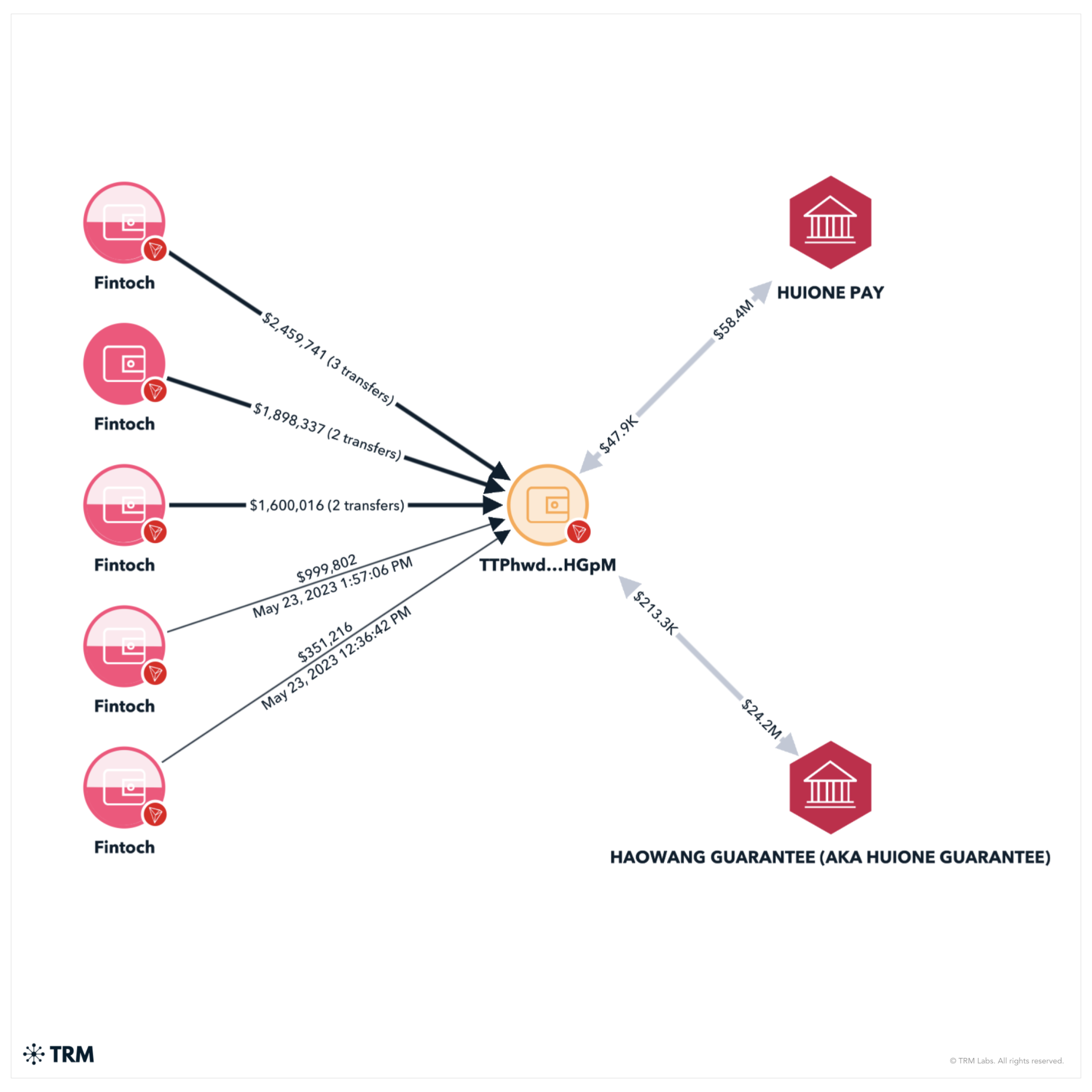
According to TRM, blockchain analysis shows USDT 31.6 million leaving FINTOCH wallets in the days surrounding the shutdown.
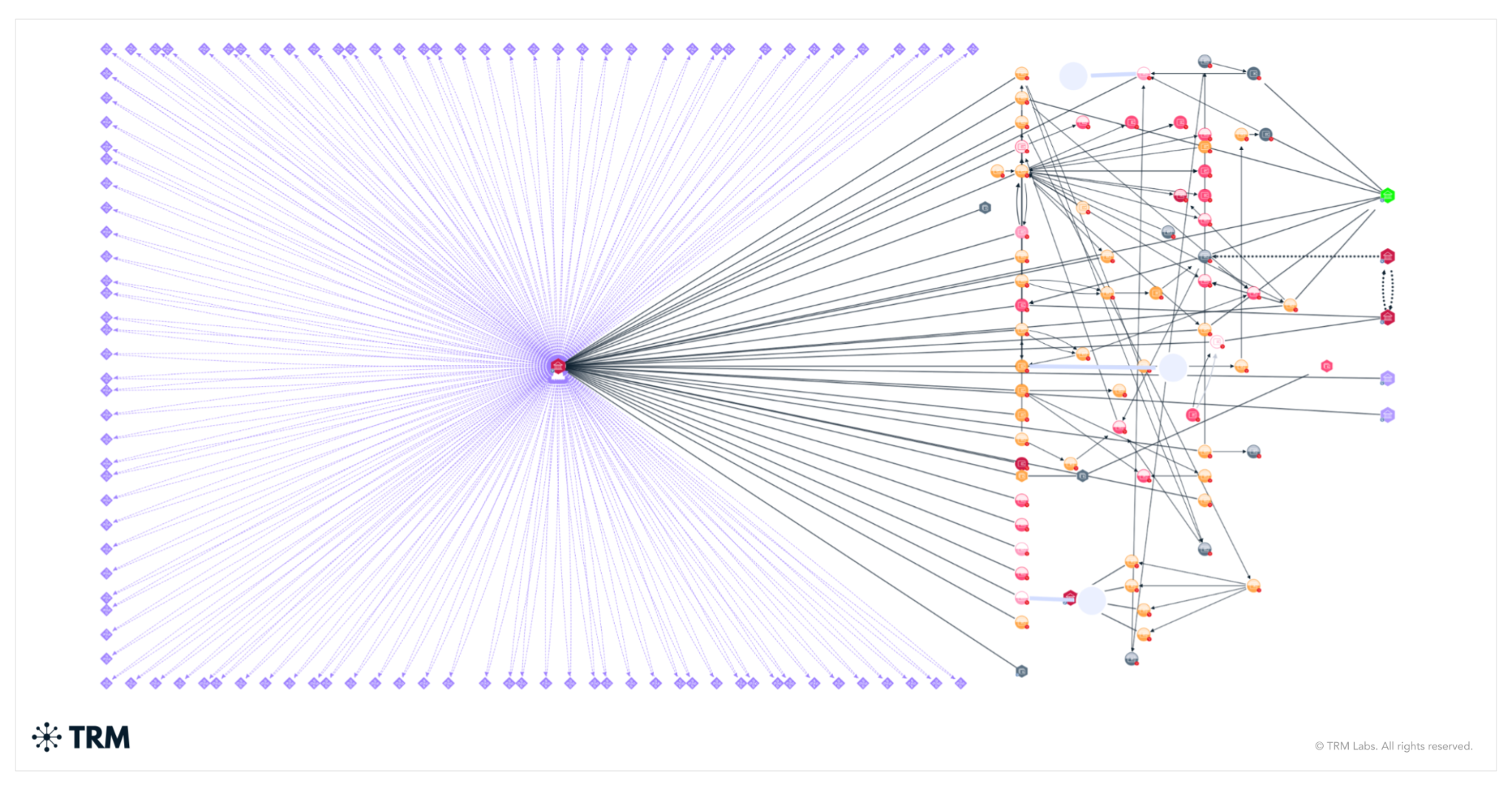
In addition, TRM identified overlapping wallet infrastructure between FINTOCH and other fraudulent projects operating in the region. The total flow of illicit funds linked to the network may exceed USD 100 million, much of which appears to have been laundered through unregistered brokers, exchanges, and high-value real estate purchases in Thailand and Cambodia.
The arrest followed a joint investigation among Thai, Chinese, and U.S. authorities, who combined on-chain analysis with traditional financial intelligence to trace transactions, asset movements, and fiat conversions tied to the suspect. Investigators believe the same network used multiple layers of corporate and digital infrastructure to hide the movement of funds across jurisdictions.
The FINTOCH case reflects an ongoing shift in enforcement strategy toward coordinated, cross-border operations against crypto-enabled fraud and laundering networks. It also demonstrates how blockchain analytics, when combined with law enforcement collaboration, can map complex money flows across multiple chains and lead to tangible arrests and asset recoveries.