The Scam Center Strike Force: A Whole-of-Government Response to Global Crypto Fraud

A Global Crime Wave Hidden in Plain Sight
On November 12, 2025, the US Attorney for the District of Columbia announced the launch of the Scam Center Strike Force, a landmark initiative designed to dismantle transnational criminal networks behind the global scourge of “pig butchering” scam compounds.
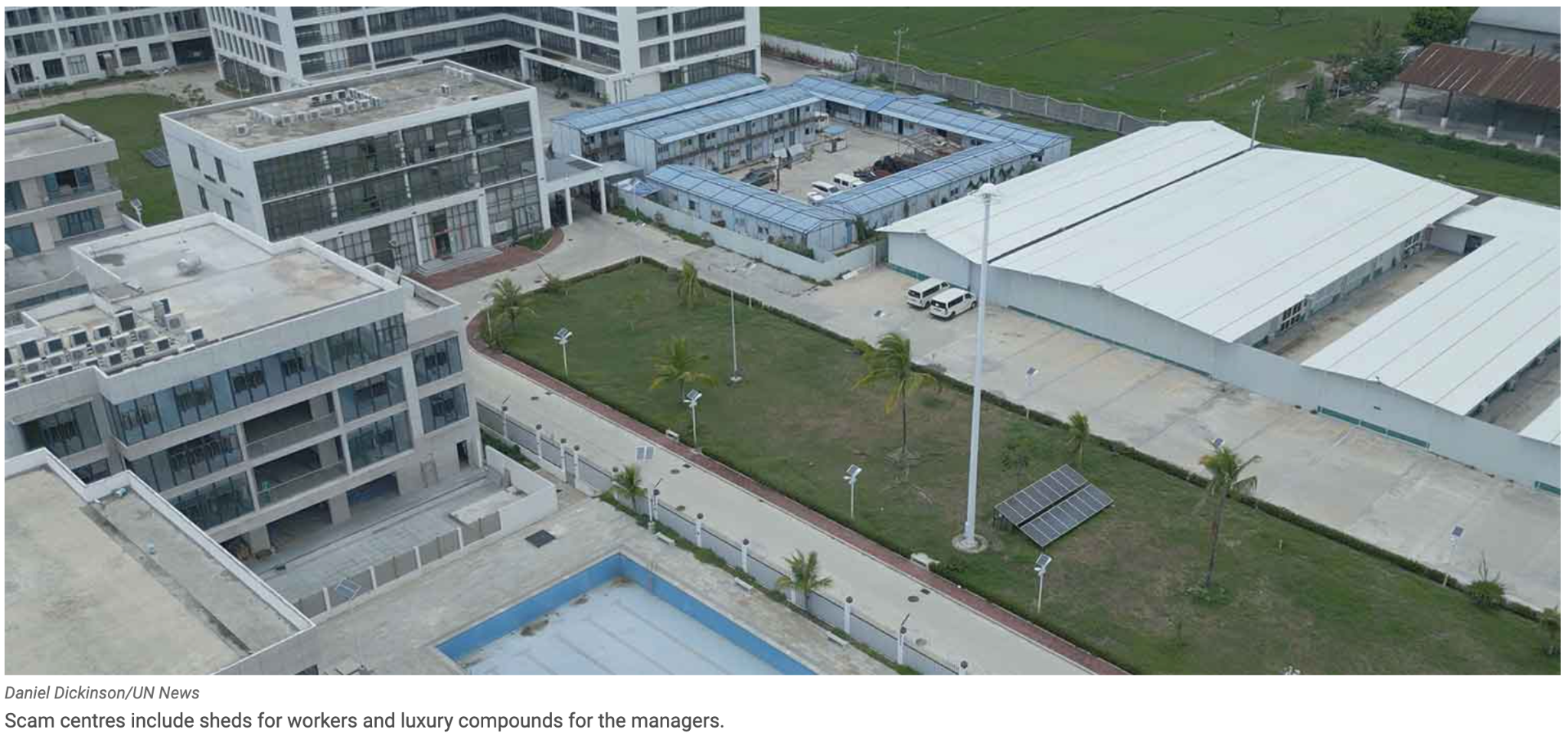
Across Southeast Asia, industrial-scale fraud compounds are stealing billions from victims every year. These operations are complex and coordinated. Recruited under false pretenses, trafficked workers — many from across Asia and Africa — are forced to run online scams around the clock. From their laptops, they target Western investors through fake trading apps, social media connections, and romantic relationships.
The scams, often called “pig-butchering” schemes, follow a simple but devastating logic: criminals build trust slowly (“fattening the pig”), convincing victims to “invest” through fake crypto platforms that appear legitimate and even show fabricated profits. When victims attempt to withdraw their funds, the platforms vanish — and the money is gone.
The scale is staggering. According to the Federal Bureau of Investigation's (FBI) 2024 Internet Crime Report, Americans lost more than USD 9 billion to online investment fraud last year. According to TRM, since 2023, more than USD 53 billion in crypto-related scams and fraud has been tracked globally — and that is almost certainly an undercount, as research suggests only 15-20% of victims ever report their losses.
What’s new is how these crimes have industrialized. The United Nations Office on Drugs and Crime (UNODC) has documented the explosion of cyber-fraud compounds in Myanmar, Cambodia, Laos, and the Philippines — many connected to organized crime syndicates with Chinese leadership. UNODC estimates that these networks generate tens of billions of dollars annually, laundered through complex pipelines that span continents. These facilities aren’t isolated call centers; they are hubs of transnational crime — combining human trafficking, financial fraud, and digital infrastructure into a single illicit ecosystem.
OFAC Sanctions Burmese Group for Involvement with Scam Compounds
In addition to announcing the creation of the Strike Force, OFAC (the Office of Foreign Assets Control) announced sanctions against the Democratic Karen Benevolent Army (DKBA), a Burmese armed group, and four of its senior leaders for running and protecting cyber scam compounds in Burma that target Americans through fraudulent investment schemes. Also designated were Trans Asia International Holding Group Thailand, Troth Star Company Limited, and Thai national Chamu Sawang, all tied to Chinese organized crime networks that fund and develop these scam centers. Treasury said that profits from the operations — where trafficked workers are forced to defraud victims — finance both organized crime and Burma’s civil conflict.
The sanctions coincide with the launch of the Scam Center Strike Force, announced by the US Attorney for the District of Columbia, the Department of Justice, the FBI, and the USSS. The Strike Force will focus on dismantling Southeast Asian scam networks operating from Burma, Cambodia, and Laos through joint criminal investigations, sanctions, and asset seizures. OFAC said the coordinated effort reflects an “all-tools” approach to protecting Americans from financial exploitation.
Since 2024, OFAC and FinCEN have sanctioned the Karen National Army and its leaders, Cambodia’s Prince Group, and Huione Group — a major financial conduit for laundering scam and North Korea-linked cybercrime proceeds — along with multiple supporting companies in Burma, Cambodia, and the Philippines. These measures have cumulatively targeted the infrastructure of scam compounds known as KK Park, Huanya, and Tai Chang, where victims of trafficking are forced to run online fraud operations.
Why a Whole-of-Government Approach Is Needed
The DOJ’s Scam Center Strike Force reflects a hard truth: no single agency can tackle this alone. Crypto-related fraud today is not confined by geography or jurisdiction. It moves at the speed of the internet, crosses regulatory boundaries, and exploits gaps between law enforcement, financial intelligence, and private sector compliance.
A “whole-of-government” model integrates the unique authorities of every US agency with jurisdiction over digital assets, crime, or finance — from prosecutors to intelligence analysts. It combines criminal indictments and forfeiture with sanctions, financial intelligence collection, national security tools, and cross-border diplomacy.
Here’s what that looks like in practice.
Department of Justice: Prosecutions, Seizures, and Forfeitures
At the core of the new Strike Force is the Department of Justice, which brings the power to investigate, indict, seize and forfeit ill-gotten gains. The DOJ’s Criminal Division — through its Computer Crime and Intellectual Property Section (CCIPS), Money Laundering and Asset Recovery Section (MLARS), and Fraud Section — leads the effort to build cases that target both the operators of scam compounds and the global money laundering networks that move their proceeds. Prosecutors at the US Attorney’s Office for the District of Columbia will investigate and bring cases, both criminal and civil, in federal court.
Prosecutors will likely use a layered strategy:
- Wire fraud and money laundering charges capture the financial infrastructure behind the scams.
- Trafficking-related charges target the forced labor component of these operations.
- Civil and criminal forfeiture actions recover assets — particularly cryptocurrency — stolen from victims at unprecedented scale.
When investigators trace illicit funds to on-chain wallets, they will work with cryptocurrency exchanges to block funds and then will seek court orders to seize or restrain those assets, ensuring they can be recovered and eventually returned to victims.
Treasury’s Role: Financial Intelligence, Sanctions, and Systemic Pressure
The Strike Force brings the full spectrum of the US Department of the Treasury into play — particularly FinCEN and OFAC, which together form the government’s financial nerve center.
FinCEN, the Financial Crimes Enforcement Network, supplies the financial intelligence backbone. It integrates Suspicious Activity Reports (SARs) filed by banks, exchanges, and money service businesses with blockchain intelligence to map the broader laundering architecture. FinCEN can also invoke Section 311 of the USA PATRIOT Act, designating entities or jurisdictions as “primary money-laundering concerns,” effectively isolating them from the US financial system.
In fact, just last month, FinCEN issued a final rule designating Cambodia-based Huione Group as a primary money laundering concern under Section 311 of the USA PATRIOT Act, effectively cutting it off from the US financial system for laundering billions in criminal proceeds tied to Southeast Asian fraud networks. FinCEN identified Huione as a central hub for moving more than USD 4 billion linked to North Korean cyberattacks, large scale “pig butchering” scams, and transnational investment fraud. According to TRM, at least USD 120 million in known scam proceeds flowed through Huione’s platforms in 2024 alone — evidence that the conglomerate has evolved from a payment processor into a core financial engine of global cybercrime.
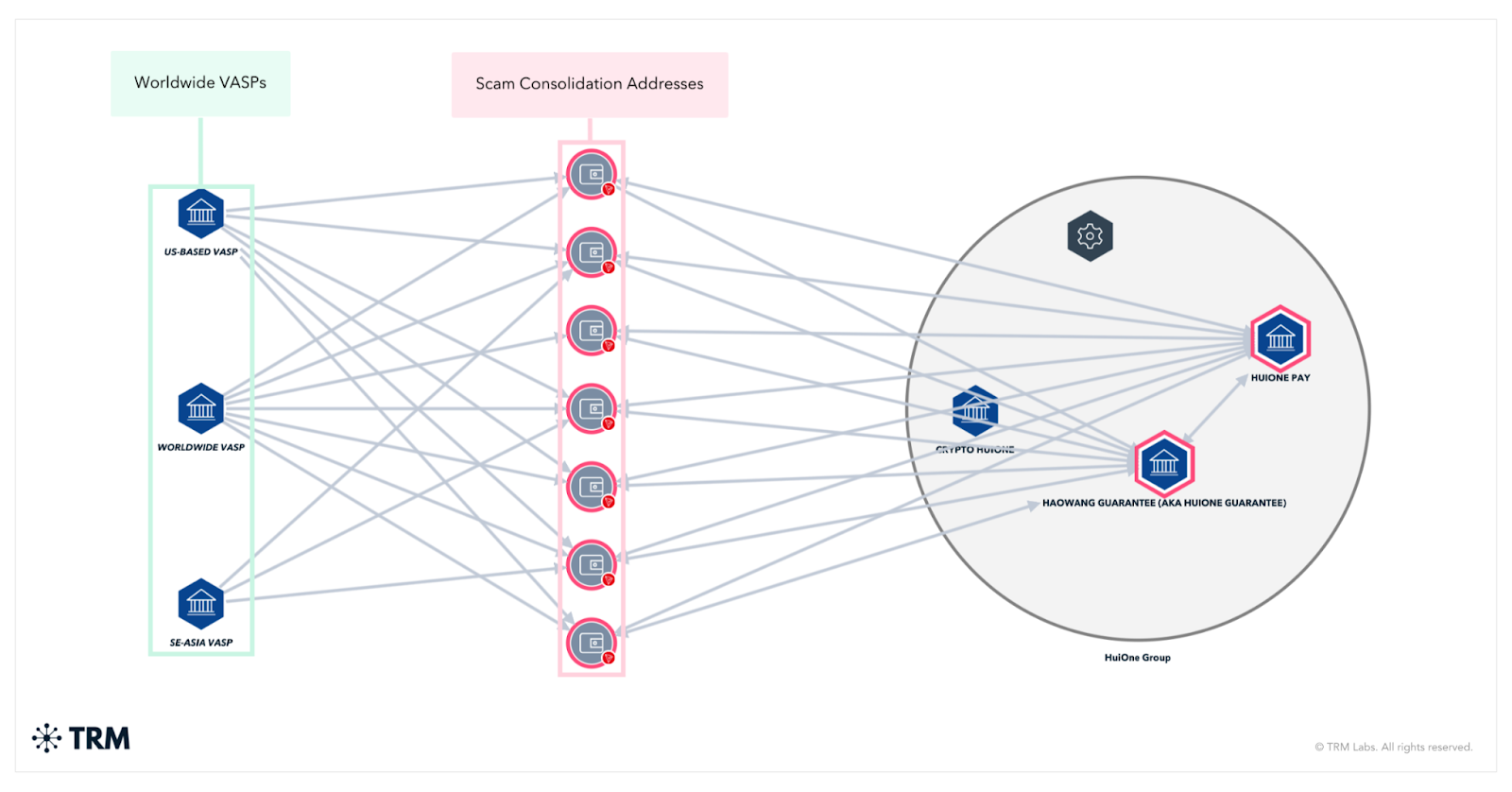
OFAC adds a global enforcement lever. Through targeted sanctions designations, OFAC can freeze assets, prohibit US persons from transacting with designated individuals or entities, and require all US-linked businesses — including crypto exchanges and stablecoin issuers — to block associated wallet addresses. Once an address is on the SDN List, it is automatically screened and frozen across the world’s exchanges, banks, and custodians.
Together, FinCEN and OFAC extend the Strike Force’s reach far beyond US borders, turning financial infrastructure into an enforcement multiplier.
FBI, Secret Service, Postal and Homeland Security Investigations: Operational Execution
The FBI, United States Postal Inspection Service, and the US Secret Service (USSS) will provide the tactical muscle. These agencies have dedicated virtual assets units with field agents embedded in international task forces.
Meanwhile, Homeland Security Investigations (HSI) brings unique expertise in transnational organized crime, human trafficking, and cybercrime. HSI agents are often first to detect the human exploitation element of scam operations, linking forced labor and cyber-fraud within the same criminal enterprise.
The State Department: Diplomacy, Pressure, and Protection
Diplomacy is central to the Strike Force’s success. The State Department’s Bureau of International Narcotics and Law Enforcement Affairs (INL) and regional embassies will coordinate with partner nations to locate scam centers, support raids, and strengthen regional enforcement capacity.
In many jurisdictions, corruption and local complicity are major obstacles. State’s diplomatic engagement — paired with visa restrictions, foreign assistance leverage, and public exposure — can help incentivize real action.
The Prince Group Case: A Blueprint for What Comes Next
The DOJ’s recent case involving the Prince Group illustrates what this model looks like in practice — and why it works.
In October 2025, the Justice Department unsealed indictments charging Chen Zhi, chairman of the Cambodia-based Prince Holding Group, with wire fraud conspiracy and money laundering conspiracy linked to vast forced labor fraud compounds across Cambodia. The case involved more than 127,000 Bitcoin — worth roughly USD 15 billion — making it the largest forfeiture in US history. In addition to criminal charges and civil forfeiture, OFAC sanctioned 146 targets linked to the Prince Group.
The Prince Group allegedly operated a network of compounds that generated up to USD 30 million per day through fake investment platforms. TRM Labs’ blockchain intelligence traced the proceeds across multiple chains, revealing a complex web of shell companies, OTC brokers, and laundering nodes stretching from Southeast Asia to the Caribbean.
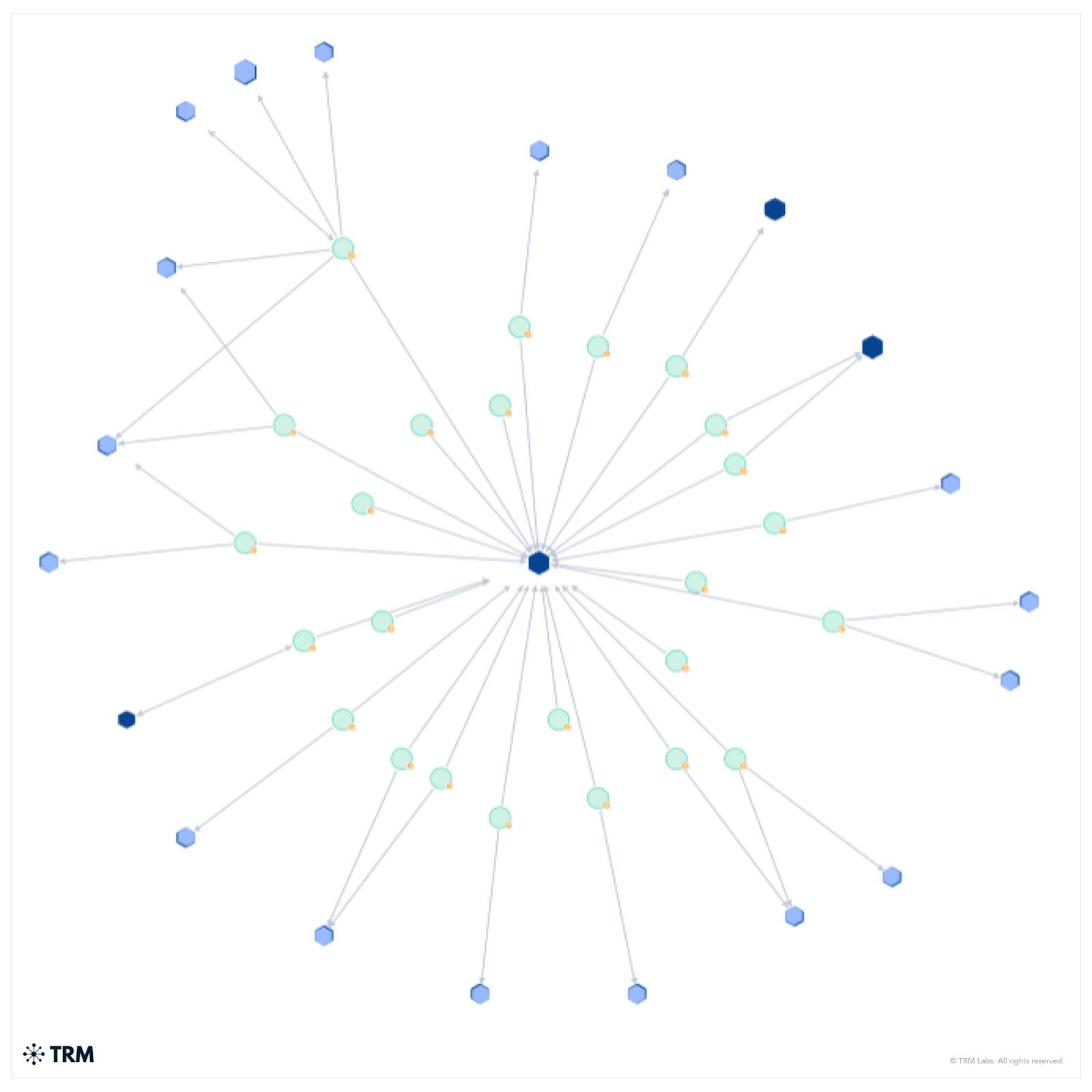
What made the case historic was how it mobilized every enforcement lever — not in sequence, but together:
- Criminal charges against the organization’s leadership established personal accountability for large scale transnational fraud.
- Civil forfeiture targeted the assets themselves, ensuring recovery even if extradition proved impossible.
- International cooperation through Mutual Legal Assistance Treaties (MLATs) enabled investigators to collect evidence and coordinate actions across multiple jurisdictions.
- Sanctions coordination cut off designated wallets, companies, and financial enablers from the global banking system, disrupting the network’s laundering pipelines.
- Victim restitution became a core focus, using seized assets to compensate victims across continents.
- OFAC sanctions were executed simultaneously against entities tied to the network’s financial infrastructure.
- FinCEN designations, including that of Huione Group as a primary money laundering concern, cut off critical channels moving billions in scam proceeds.
The Prince Group action demonstrated that a single, well-coordinated case can expose an entire criminal ecosystem — from the scam center floor to the laundering stack — and freeze billions before they vanish. It showed that when law enforcement, regulators, and intelligence agencies operate as one, the model for dismantling global cyber-enabled fraud becomes not just reactive, but proactively disruptive.
How the Strike Force Could Operate in Practice
In practical terms, a mature Scam Center Strike Force would function as an interagency fusion cell:
- Intake and triage — Victim reports, SARs, and blockchain data feed into a joint investigative database.
- Mapping and analysis — Advanced analytics using blockchain intelligence and AI identify clusters of wallets and counterparties tied to scam operations. Beacon network flags addresses and sends alerts to VASPs and DeFi services.
- Deconfliction and targeting — FBI, HSI, and USSS coordinate which entity or compound to target; DOJ attorneys draft seizure warrants and indictments.
- Rapid interdiction — OFAC issues provisional wallet designations; FinCEN alerts banks and exchanges under Section 314(a); private sector partners freeze assets in minutes.
- Infrastructure takedown — Domains, payment gateways, and telecom endpoints linked to scams are seized or blocked.
- Prosecution and forfeiture — DOJ brings criminal and civil cases against organizers and complicit facilitators, while Treasury and State coordinate sanctions and diplomatic measures.
- Restitution and education — Forfeited assets are used for victim compensation; FTC and CFPB roll out public awareness campaigns to prevent new victimization.
In effect, the Strike Force is a national security-grade financial crime operation — but aimed squarely at protecting ordinary Americans from globalized fraud.
Why This Matters
Crypto investment scams are more than online fraud. They are a geopolitical and humanitarian crisis — combining the exploitation of citizens, the trafficking of foreign workers, and the corruption of digital financial rails. They fund organized crime, undermine trust in innovation, and distort legitimate markets.
The Scam Center Strike Force is the clearest statement yet that the United States intends to fight back with the full power of the state — not in isolation, but in coordination: DOJ prosecuting, Treasury sanctioning, FBI investigating, FinCEN analyzing, State pressuring, and industry tracing, blocking and helping disrupt these networks.
The Prince Group case showed what is possible when those pieces align. The Strike Force aims to make that coordination permanent — turning episodic success into institutional capability.
Because every dollar stolen is a dollar that could have built something real. And every wallet traced, seized, and returned is a signal that the same technology criminals exploit can — and will — be used to stop them.
TRM Works With Law Enforcement Globally to Trace and Interdict Proceeds of Scams
TRM Labs works closely with law enforcement agencies around the world to turn blockchain data into actionable intelligence. Using advanced analytics, TRM helps investigators trace funds across chains, uncover laundering patterns, and identify key nodes in criminal networks like the Prince Group. Beyond tools, TRM supports collaboration through Chainabuse — a public reporting platform where victims and industry share verified scam intelligence — and the Beacon Network, which connects exchanges, fintech platforms, DeFi protocols, and law enforcement in real time to alert on threats and coordinate responses. Together, these systems create the connective tissue for modern financial crime prevention — linking the public and private sectors, amplifying visibility, and helping to ensure that the same technology used to exploit victims can be used to protect them.
Frequently Asked Questions (FAQs)
What is a scam compound?
Scam compounds are industrial scale fraud facilities, often located in Southeast Asia, where trafficked workers are forced to operate online investment scams. These facilities blend human trafficking, financial fraud, and cybercrime into a single illicit ecosystem.
What is a “pig butchering” scam?
A “pig butchering” scam is a type of investment fraud where scammers build trust over time — often via fake apps, social media, or romantic relationships — before convincing victims to invest in fraudulent platforms. Once the funds are deposited, they become inaccessible, and the scammers disappear.
How much money has been lost to pig butchering and related crypto scams?
According to TRM, over USD 53 billion in crypto-related scams and fraud has been tracked globally since 2023. This includes large scale “pig butchering” schemes and likely underrepresents the true scale, as most victims do not report their losses.
Why is the US targeting scam compounds now?
The DOJ’s creation of the Scam Center Strike Force in November 2025 reflects a coordinated US response to the growing threat of transnational scam networks. These operations exploit legal gaps, move funds via crypto infrastructure, and pose both financial and national security risks.
What role does cryptocurrency play in scam compounds?
Cryptocurrency is often used as both a lure and a laundering tool in these scams. Fraudsters use fake platforms to solicit crypto investments and then move the proceeds through a complex network of wallets, shell companies, and exchanges to obscure their origin.
Which countries are scam compounds operating in?
Scam compounds have been documented in Myanmar, Cambodia, Laos, and the Philippines. These regions are home to organized crime syndicates — often with Chinese leadership — that run or protect the operations.
What enforcement actions have the US government taken?
Recent US government actions include:
- DOJ criminal indictments and asset forfeitures
- OFAC sanctions against groups like the Democratic Karen Benevolent Army (DKBA)
- FinCEN designations of entities like Huione Group as primary money laundering concerns
These measures aim to freeze assets, block transactions, and dismantle the infrastructure of scam compounds.
How is FinCEN involved?
FinCEN supplies the financial intelligence backbone for the Strike Force. It integrates Suspicious Activity Reports (SARs) and blockchain analytics to map laundering networks. FinCEN can also impose systemic restrictions through Section 311 of the USA PATRIOT Act.
What impact have sanctions had on these networks?
Sanctions have cut off scam networks from the US financial system and disrupted laundering pipelines. Designations freeze assets, block wallet addresses, and require US-linked businesses to restrict transactions with sanctioned entities — effectively isolating them globally.
What was the Prince Group case?
In 2025, the DOJ charged Cambodia-based Prince Group with operating forced labor scam compounds that generated up to USD 30 million per day. The case involved the largest crypto forfeiture in US history — 127,000+ bitcoin — and showed how coordinated legal, financial, and diplomatic actions can dismantle scam infrastructure.
How does TRM support efforts against scam compounds?
TRM provides blockchain intelligence to trace scam proceeds across chains and jurisdictions. Through tools like TRM Graph and platforms like Chainabuse and the Beacon Network, TRM helps law enforcement identify laundering patterns, block assets, and coordinate threat alerts in real time.
What is the Scam Center Strike Force?
Launched by the DOJ, the Strike Force is an interagency team that combines the efforts of the DOJ, OFAC, FinCEN, FBI, USSS, HSI, and the State Department. It uses a full-stack enforcement approach — including sanctions, prosecutions, asset seizures, and international coordination — to disrupt scam operations.