TRM’s Ari Redbord Testifies Before New York State Senate Standing Committee on Codes on Financial Exploitation and Cyber Fraud

TRM’s Global Head of Policy, Ari Redbord, testified today before the New York State Senate Standing Committee on Codes on the topic of "Financial Exploitation and Cyber Fraud." Watch the testimony or read his full written testimony below.
Introduction: A structural threat to New Yorkers
Chair Myrie, Chair May, and Members of the Committee, thank you for the opportunity to testify today on an issue that is directly impacting families, retirees, and small businesses across New York.
My name is Ari Redbord. I am the Global Head of Policy at TRM Labs, where we work with local, state and federal law enforcement, regulators, financial institutions, and national security agencies in New York and around the globe to detect, investigate, and disrupt illicit activity in the digital asset ecosystem and beyond.
Before joining TRM, I spent more than a decade as a federal prosecutor at the United States Department of Justice and later served as a senior official at the U.S. Treasury Department’s Office of Terrorism and Financial Intelligence. In those roles, I confronted terrorist financiers, sanctions evaders, narcotics trafficking organizations, and transnational criminal enterprises operating across jurisdictions and continents.
I do not say this lightly: the industrialization of scam networks targeting New Yorkers represents the most pervasive and economically destructive financial crime threat I have encountered in my career.
New York stands at the center of global finance. It is defined by capital formation, liquidity, and technological innovation. That centrality makes it a target. What we are confronting is not simply an increase in fraud. It is a structural transformation in how financial exploitation is engineered, scaled, and executed. Organized scam enterprises now operate with the discipline of multinational corporations. They deploy engagement teams, digital platform developers, infrastructure managers, and coordinated laundering pipelines that function continuously across time zones. They refine scripts, optimize persuasion techniques, and continuously improve extraction models using operational data.
The harm is not abstract. It is immediate and personal to New Yorkers.
The scope of the problem
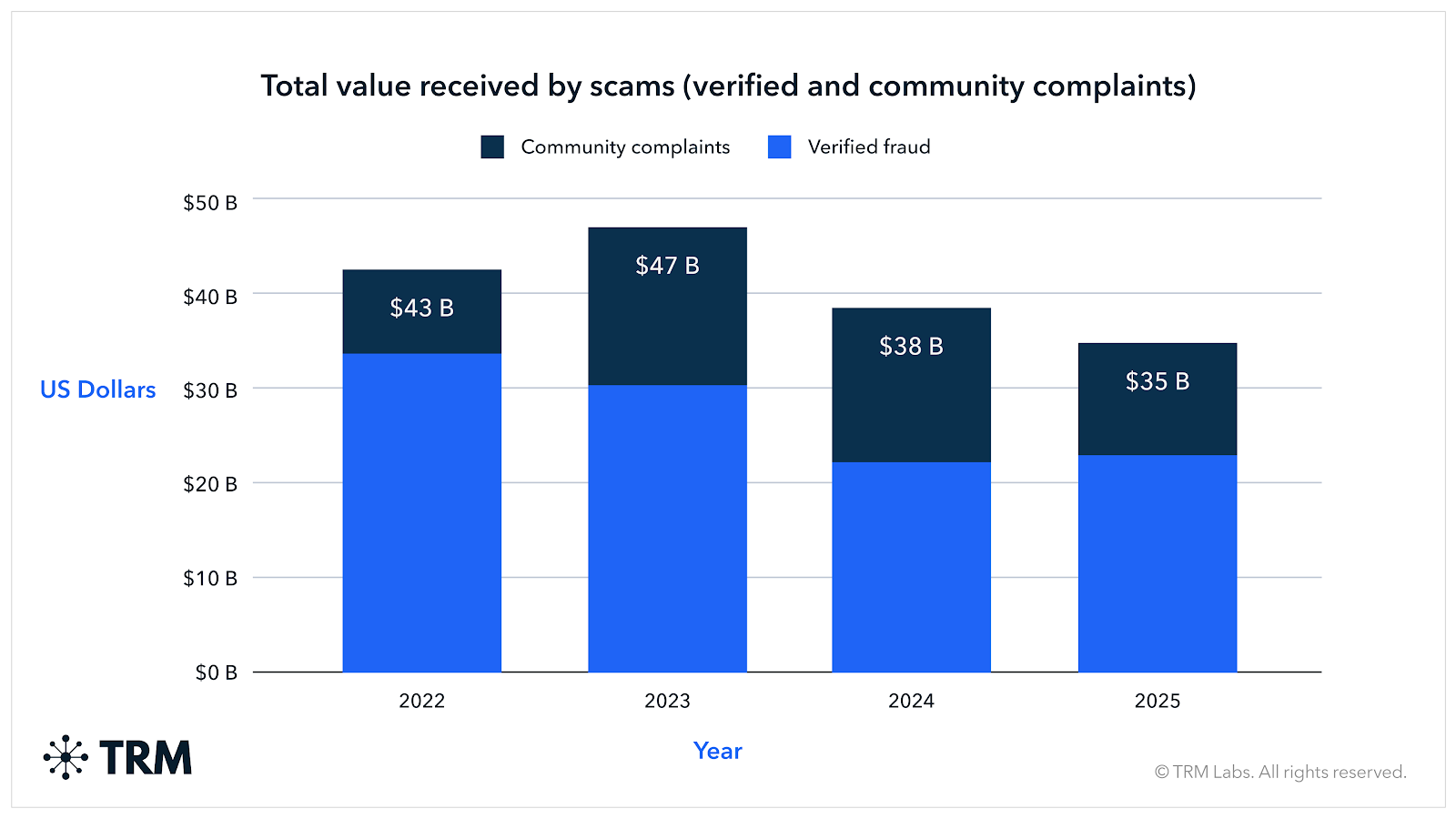
The scale of digital asset–enabled fraud demands urgency. TRM’s 2026 Crypto Crime Report estimates that approximately USD 35 billion in cryptocurrency flowed into fraud schemes in 2025. In New York alone, TRM data shows more than USD 100 million in crypto-related fraud in 2025. And those figures reflect only identified and reported activity. Because a significant share of victims never come forward — often due to embarrassment, confusion about where to report, or the mistaken belief that funds are unrecoverable — the real global impact is substantially higher. When underreporting is factored in, total annual losses likely exceed USD 200 billion worldwide.
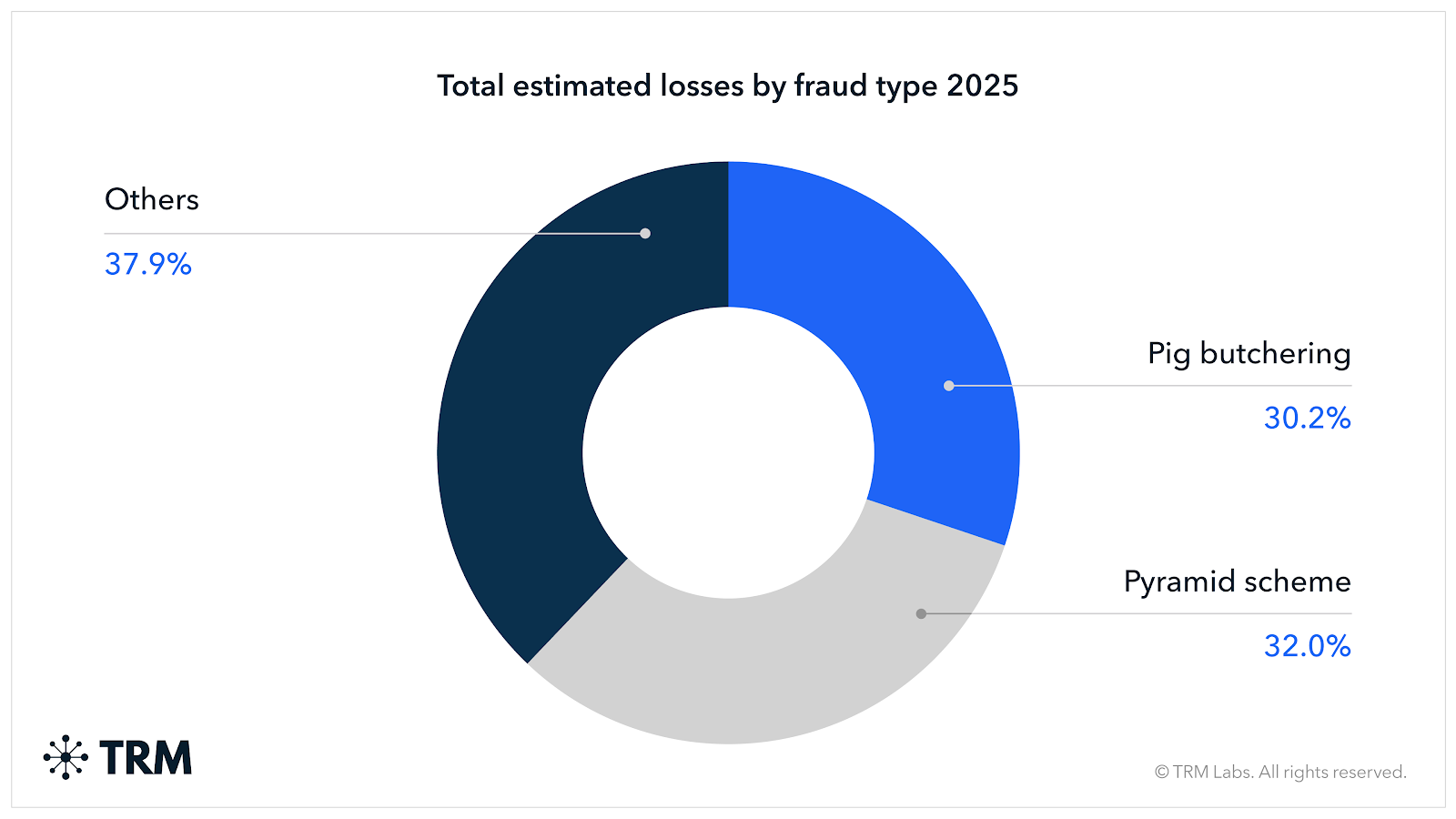
Investment scams account for a substantial share of these flows, particularly long-duration social engineering operations commonly referred to as pig butchering schemes. These are structured enterprises. They involve extended grooming, emotional manipulation, staged trading interfaces designed to mimic legitimate platforms, controlled early withdrawals to build credibility, and fabricated compliance obligations that extract additional capital. The infrastructure is reusable. The playbooks are repeatable. The laundering pathways are pre-positioned.
New York’s financial prominence ensures that its residents and businesses remain prime targets for these networks.
AI acceleration: A force multiplier for fraud
Artificial intelligence is dramatically accelerating this threat environment.
Over the last year, according to Chainabuse — TRM Labs’ open-source fraud reporting platform — we have observed a 500% increase in AI-enabled scam activity.
This surge reflects deepfake impersonations of financial professionals, AI-generated investment advisors, synthetic video endorsements, automated multilingual engagement, and adaptive scripts capable of responding dynamically to victim hesitation.

Artificial intelligence lowers the barrier to entry for deception while increasing both credibility and scale. It enables scammers to impersonate trusted figures with convincing voice and video overlays. It generates professional-grade dashboards in minutes. It automates outreach across platforms around the clock. It refines persuasion techniques based on victim response patterns.
AI’s impact is visible not just in outreach and engagement, but also in laundering tactics. AI accelerates the rotation of infrastructure, the creation of synthetic identities, and the spread of fraudulent domains and social media personas, enabling scam networks to iterate rapidly across platforms and choke off investigative visibility before responses can materialize. In practical terms, what once required teams of human actors now often requires only the right prompt engineering and an AI engine capable of consistent execution.
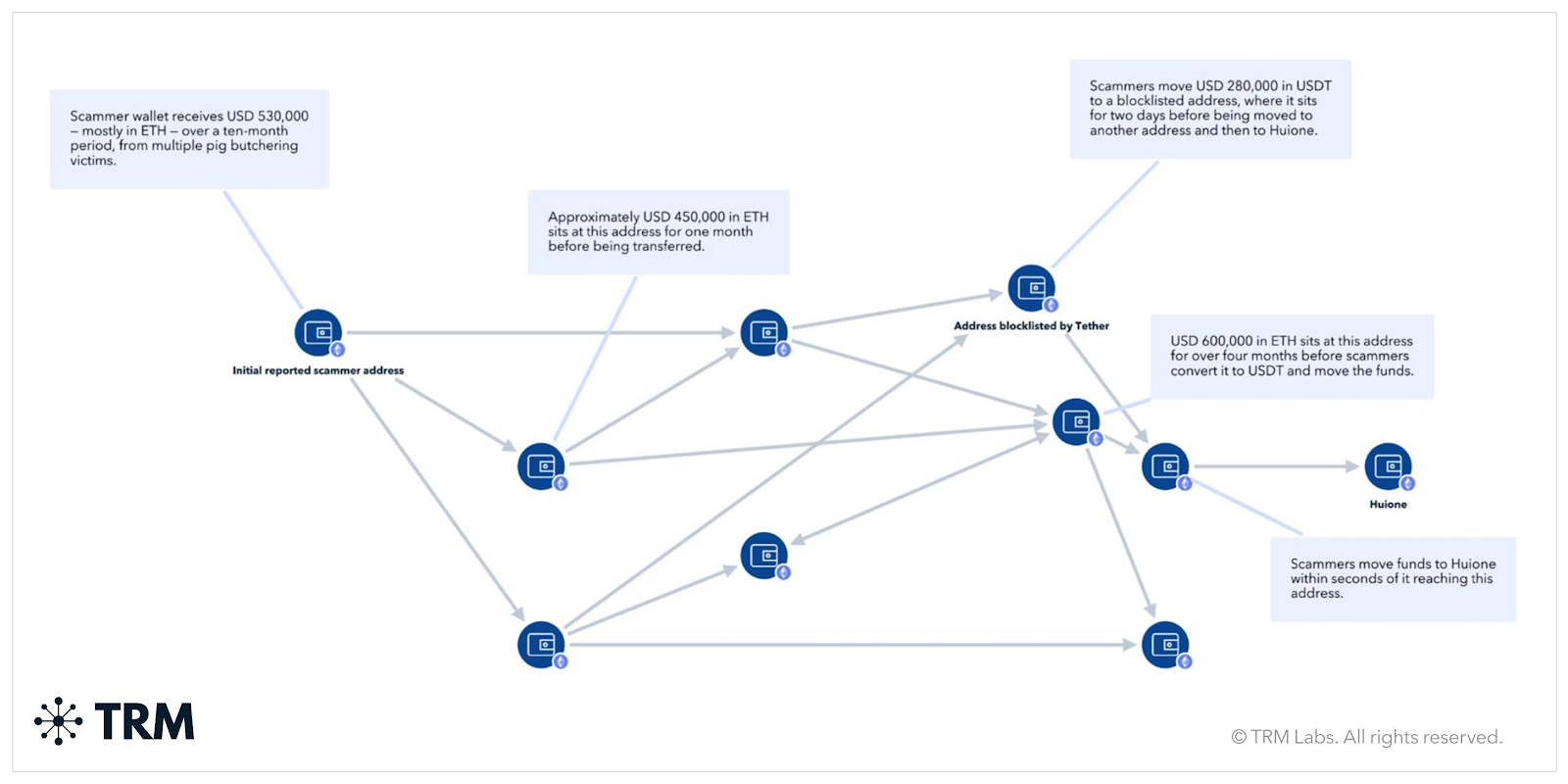
Blockchain data confirms this speed acceleration: average wallet holding periods for scam proceeds have decreased significantly. Funds now move across multiple wallets and chains within 24 to 48 hours of receipt, dramatically narrowing the window for meaningful interdiction and recovery.
Fraud, and the laundering of illicit proceeds, has evolved into a coordinated, AI-assisted industry operating at global scale.
New York’s response must reflect that reality.
Global in architecture, local in impact: It begins at the precinct
Although these networks operate across jurisdictions and continents, enforcement begins locally.
When a victim seeks help, they walk into an NYPD precinct. They present transaction confirmations transferring funds to a cryptocurrency address. They show screenshots of what appeared to be a legitimate investment dashboard. They provide messaging threads, exchange receipts, and QR codes. They attempt to reconstruct events that unfolded over days or weeks.
In that moment, the investigative clock is already running.
A wallet address is a permanent identifier on a public ledger that anchors tracing. A transaction hash is an immutable timestamp that allows reconstruction of fund movement across wallets and chains. Messaging handles and domain names often connect to infrastructure reused across multiple campaigns.
If these identifiers are not captured in structured form at intake, if officers are not trained to recognize their evidentiary significance, if digital communications are not preserved immediately, and if cases are not escalated within hours to specialized units equipped with blockchain intelligence tools, the probability of meaningful interdiction declines rapidly.
Scam proceeds routinely move across wallets, across chains, and into centralized exchanges within twenty-four to forty-eight hours. That velocity is deliberate and engineered to outpace conventional investigative timelines.
The precinct is the first defensive node in New York’s financial crime response architecture. It must be equipped with both tools and mandatory training to perform that role effectively.
We must accelerate education and place advanced investigative tools in the hands of our frontline officers and prosecutors at the same pace that bad actors are scaling their operations. As criminal networks grow faster and more technologically sophisticated, our training, capabilities, and deployment of resources must move just as quickly — if not faster.
Digital asset literacy should be embedded as mandatory training within the NYPD academy curriculum so that every new officer understands how to identify and preserve blockchain-based evidence from the outset of their career.
If every crime has a financial dimension — and digital assets are increasingly part of that trail — then every NYPD officer must be equipped with the training and tools to follow the money from the moment of intake through prosecution.
The need for frontline tools, mandatory training, and dedicated funding
Modern digital asset investigations require modern investigative infrastructure, and today that infrastructure in New York remains significantly under-resourced relative to the threat. Criminal networks are accelerating and professionalizing, integrating new technologies and laundering techniques at speed, while many public institutions are forced into a reactive posture by manpower and funding constraints.
Blockchain intelligence and AI tools must be deployed across NYPD units and district attorney offices statewide as core investigative infrastructure. These tools enable investigators to trace funds across wallet hops, identify clustering patterns that reveal common control, detect cross-chain bridge activity, and rapidly surface exposure to exchanges capable of assisting with asset restraint. A single wallet address, when analyzed properly, can expand into a network map identifying infrastructure operators, facilitators, and laundering corridors. Without AI-enabled blockchain analytics tools, law enforcement operates with partial visibility into a central component of contemporary financial crime.
Current workload realities compound the challenge. Investigative teams are overwhelmed. Manpower constraints push units toward triage rather than coordinated disruption. Staffing levels in key financial crime functions remain modest relative to the size of the department and the scale of the mission, reinforcing a reactive posture rather than a strategic one.
Training is essential, but it will not produce durable change without executive leadership buy-in. Top-down prioritization drives procurement, resource allocation, and long-term institutional follow-through. Digital asset enforcement must be treated as a core public safety priority.
Training should be mandatory and embedded from the academy forward. Patrol officers need foundational instruction in recognizing blockchain identifiers and preserving digital evidence. Detectives must be fluent in interpreting blockchain analytics outputs and AI-enabled scam typologies. Assistant district attorneys should be prepared to translate blockchain-derived evidence into clear, admissible narratives in grand jury proceedings and at trial.
These investments require dedicated funding. The Legislature should consider earmarked appropriations specifically for blockchain analytics tools, mandatory academy training, continuing professional education, and specialized digital asset investigative capacity within district attorney offices. Without targeted funding, these capabilities will remain unevenly distributed and insufficient to meet the scale of the threat.
DFS leadership and real-time operational reinforcement
The New York Department of Financial Services has deep expertise on the licensing and supervision of digital assets firms. DFS has already issued landmark guidance requiring licensed digital asset entities to incorporate blockchain analytics into their compliance and transaction monitoring frameworks. That guidance has positioned New York as a leader in supervisory clarity and technical rigor, recognizing that blockchain transparency is a defensive advantage when paired with analytics.
The next step is operational reinforcement.
DFS has already set a high standard by requiring licensed entities to incorporate blockchain analytics into their compliance frameworks. The evolution now is to ensure those analytics are treated not simply as documentation tools, but as real-time interdiction capabilities. That means licensed entities should maintain clearly documented rapid-response protocols when wallet identifiers are linked to active fraud investigations. Compliance teams should be trained to recognize AI-enabled scam typologies as they emerge, escalate suspicious activity immediately, and coordinate with law enforcement in hours, not days.
Best practice should also include participation in secure, structured, real-time information-sharing and disruption networks such as TRM’s Beacon Network.
Beacon connects vetted law enforcement agencies, exchanges, and financial institutions and represents approximately 85% of centralized cryptocurrency transaction volume. By enabling trusted partners to share scam-linked wallet identifiers and receive alerts when funds touch participating platforms, Beacon creates the operational conditions for rapid review, potential asset restraint, and coordinated recovery efforts. In a threat environment defined by speed, collaborative real-time interdiction is not an enhancement — it is essential.
Regulatory clarity combined with operational collaboration strengthens collective defense.
New York’s unique exposure — and its capacity to lead
New York’s role as a global financial center gives it both heightened exposure to modern scam networks and a unique capacity to disrupt them. Because so much legitimate financial activity flows through New York institutions, stolen funds from local scam victims often transit regulated entities on their way to offshore destinations. That exposure creates complex jurisdictional touchpoints, but it also creates opportunities for intervention when public and private sector partners coordinate effectively.
State leaders have already taken important steps. The New York Attorney General recently issued public warnings explicitly about pig butchering scams, underscoring both the severity of the threat and the importance of public awareness in preventing victimization. Those warnings are not abstract cautionary statements; they reflect patterns that law enforcement sees in real time and aim to arm residents with information they need to recognize and avoid sophisticated fraud tactics.
Prosecutors in New York have likewise shown what disruption looks like on the ground. Under Brooklyn District Attorney Eric Gonzalez, teams have built specialized capacity to follow the financial signals that scam networks leave behind and turn them into prosecutable cases. One example was the seizure of 70 internet domains used to attract and defraud members of the Russian community with cryptocurrency investment scams. That action cut off infrastructure used to target, guide, and financially harm victims — an outcome made possible by technical and investigative collaboration across agencies.
Behind these results are prosecutors, analysts, and investigators who have developed deep real-world expertise in blockchain tracing and financial crimes. Leaders such as Assistant District Attorney and Chief of the Virtual Asset Unit Alona Katz have been central to this effort, helping integrate victim narratives, messaging evidence, domain infrastructure data, and on-chain transaction analysis into cohesive investigative strategies that drive action rather than archival records.
These coordinated efforts matter because scam networks depend on fragmentation: victim reports in one silo, transaction logs in another, and exchange data somewhere else. When investigators can bring those pieces together quickly, the chances of arrest, asset recovery, and long-term disruption increase dramatically.
The RIP OFF Act: Aligning law with enterprise-scale fraud
Modern scam enterprises are layered, coordinated, and deliberately structured to fragment accountability across jurisdictions. They involve orchestrators, infrastructure developers, engagement teams, and laundering intermediaries.
The RIP OFF Act modernizes New York’s statutory framework to reflect that enterprise reality. By creating graduated scheme-to-defraud tiers tied to victim count and financial thresholds, culminating in a Class B felony for large-scale schemes, the Act recognizes the systemic harm inflicted by coordinated mass victimization. Its strengthened structuring provisions address deliberate evasion of reporting requirements. Its explicit inclusion of virtual currency within statutory definitions removes ambiguity regarding digital asset treatment under New York law.
Equally important are provisions clarifying the admissibility of electronically generated and blockchain-derived records in grand jury proceedings. Modern fraud investigations rely on cryptographically secured transaction histories and automated digital logs. Clear statutory authority to present these materials efficiently supports enterprise-level prosecutions rather than fragmented case-by-case charges.
The RIP OFF Act aligns statute with operational reality and provides prosecutors with tools proportionate to the scale of harm.
Recommendations for New York
Mandatory tools and training for first responders and prosecutors with dedicated funding
New York should allocate specifically earmarked funding for enterprise-grade blockchain intelligence tools across NYPD financial crimes units and district attorney offices statewide. Precinct intake systems should be modernized to require structured capture of digital asset identifiers, and digital asset literacy should be embedded as mandatory training within the NYPD academy and reinforced through continuing professional education. Assistant district attorneys should receive structured training in blockchain forensics and digital evidence presentation. Dedicated appropriations are essential to ensure that tools, academy training, and specialized prosecutorial capacity are institutionalized rather than dependent on ad hoc resource allocation.
Enactment and full support of the RIP OFF Act
The Legislature should enact the RIP OFF Act to modernize New York’s fraud statutes in line with enterprise-scale digital exploitation. Its tiered scheme-to-defraud provisions, strengthened structuring framework, explicit treatment of virtual currency, and grand jury clarifications are operationally necessary to confront coordinated, AI-accelerated fraud networks. Enactment would align statutory authority with the structural reality of modern financial crime.
Operational reinforcement of DFS blockchain analytics standards and real-time interdiction
DFS should continue reinforcing its best-in-class blockchain analytics guidance by encouraging licensed entities to operationalize those standards through real-time monitoring, documented rapid-response protocols, and structured participation in secure information-sharing networks designed for interdiction. Membership in permissioned, real-time collaboration frameworks such as Beacon should be viewed as a best practice that enhances collective defensive capacity. Licensed entities should maintain trained compliance teams capable of responding immediately to scam-linked wallet notifications and implementing appropriate asset restraint measures where legally permissible.
Conclusion
New Yorkers are under sustained financial attack from organized, AI-accelerated scam enterprises. The response must begin at the precinct and extend through investigative units, prosecutorial offices, regulatory frameworks, and statutory authority. With mandatory training, modern tools, dedicated funding, strong legal foundations, and coordinated real-time collaboration, New York can lead the nation in confronting industrialized digital-era financial exploitation. Thank you for the opportunity to testify. I look forward to your questions.