
Jul 16, 2025 - 33min
EPISODE 88
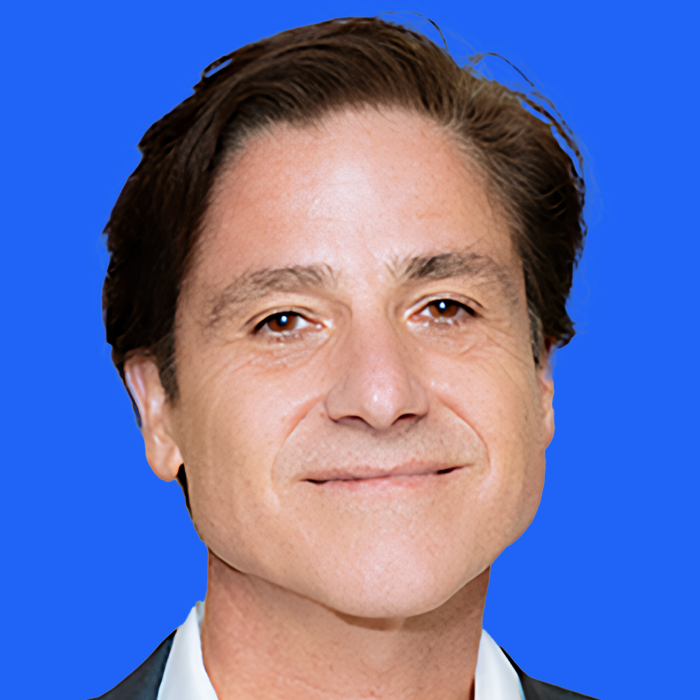
CJ Rinaldi on Building Scalable, Risk-Driven Compliance at Kraken
With CJ Rinaldi, and , and and
What happens when a veteran of traditional finance decides to help shape the future of crypto compliance? In this episode, Kraken Chief Compliance Officer CJ Rinaldi joins Ari Redbord, Global Head of Policy at TRM Labs, to discuss his journey from the the SEC to UBS and Deutsche Bank and finally to crypto compliance at Blockchain.com and now Kraken.
CJ delves into what makes a world-class compliance program in today’s fast-evolving digital asset ecosystem — from hiring top-tier talent to integrating blockchain intelligence and AI.Key highlights include:
- How Kraken builds risk-first, tech-forward compliance infrastructure
- Why AI is a game-changer for due diligence and real-time threat detection
- The convergence of TradFi and crypto—and what it means for regulation
- Navigating financial privacy while combating financial crime
- Collaborating with law enforcement to disrupt ransomware, terrorism financing, and North Korea
The conversation goes deep into the challenges of real-time monitoring, crypto-native risk vectors, and how CJ thinks about operationalizing compliance globally across new asset classes.Whether you're building in crypto, investing in infrastructure, or working in policy and compliance, CJ’s insights offer a blueprint for what next-gen crypto compliance looks like in practice.
Click here to listen to the entire TRM Talks: CJ Rinaldi on Building Scalable, Risk-Driven Compliance at Kraken. Follow TRM Talks on Spotify to be the first to know about new episodes.
Ari Redbord (00:02):
I am Ari Redbord and this is TRM Talks. I'm Global head of Policy at TRM Labs. At TRM we provide blockchain intelligence software to support law enforcement investigations and to help financial institutions and cryptocurrency businesses mitigate financial crime risk within the emerging digital asset economy. Prior to joining TRM spent 15 years in the US federal government, first as a prosecutor at the Department of Justice, and then as a Treasury Department official where I worked to safeguard the financial system against terrorist financiers, weapons of mass destruction, proliferators, drug kingpins, and other rogue actors. On TRM Talks, I sit down with business leaders, policymakers, investigators, and friends from across the crypto ecosystem who are working to build a safer financial system. On today's TRM Talks, I sit down with Krakens Chief Compliance Officer, CJ Rinaldi, but first Inside the Lab where I share data-driven insights from our blockchain intelligence lab's.
(01:07):
Latest research shows that cartels, including the Sinaloa and CJNG, are increasingly using cryptocurrency not just to launder profits, but to finance logistics. In the fentanyl supply chain, between 2022 and 2023 identified over $26 million in crypto sent to Chinese chemical suppliers. A 600% increase year over year. These payments are used to purchase precursor chemicals, which are then shipped to Mexico, processed into fentanyl and trafficked across US borders. Why does this matter? This is no longer just about laundering proceeds after the fact. Crypto is becoming embedded at the front end of the supply chain, making it easier for cartels to fund production in a way that bypasses traditional banking controls. This also points to a convergence. Chinese money laundering networks, dark net actors and cartel logistics hubs increasingly intersect. One US-based actor moved millions in Bitcoin to China-based suppliers, often using OTC brokers and mixers to obscure the trail for law enforcement and policy makers. The takeaway is clear. Following the money means following the crypto. Disrupting fentanyl production now requires blockchain intelligence alongside traditional drug interdiction. For much more on how cartels and their money laundering networks use crypto, go to trmlabs.com/resources.
(02:26):
And now I sit down with friend and Kraken's Chief Compliance officer, CJ Rinaldi. CJ, I've been wanting to do this with you for a while.
CJ Rinaldi (02:38):
RIE, it's so great to be here. Thanks very much for the invitation. I appreciate it.
Ari Redbord (02:41):
So kicking things off, let's talk a little bit about your journey.
CJ Rinaldi (02:43):
Certainly, I started my career a long time ago at the Securities and Exchange Commission in the division of enforcement, and that gave me a very firm grounding relative to the US securities laws, but more important in this US securities laws and regulations, how the capital markets work from a regulatory perspective. What are the norms, what do issuers need to do? How does capital raising and capital formation occur both domestically as well as internationally private and public placements? And what I ended up doing at the SEC was got that grounding and very quickly realized that litigation and civil enforcement was not my cup of tea. I ended up taking a leave of absence. I worked for a wonderful, very supportive manager and he let me go to the Argentine Securities and Exchange Commission for three months. I came back speaking fluent Spanish both in the professional as well as in the personal context, and that gave me a pivot point to jump into a law firm at the time, a lady named Sarah Hanks, very influential securities lawyer who actually was involved in drafting regulation as and Rule 144 a way back when was looking for support, someone who understood Latin American markets, capital markets and the SEC.
(04:00):
So it actually worked out really well. I ended up transforming from an enforcement lawyer into a deal lawyer and I remained a deal lawyer. I love transactions, I love helping companies raise money. I like seeing people liquidate and diversify their assets. And so it really hit a lot of what I would describe as my passion, which I still have to this day. So for eight years I did transactions both at a law firm called Clifford Chance Rogers and Wells, and then I transitioned over to UBS Investments Bank for about three years. After that, I had an opportunity to transition out of doing deals into compliance and I looked at it and I said, well, this is a really good opportunity to bridge the trifecta of where law and reg meets business meets operations, and if you could do it really, really well, and I've come to see that if you do it superbly well, you can be very transformative both for your company and your clients and it becomes a true competitive advantage.
(04:56):
So I ended up heading up equities compliance in Europe for the investment bank. I took on a bunch of risk roles that at UBS at the time, and then during the financial crisis when things were really going south and there was a lot of stress, I realized that I probably needed to come back home and I ended up spending a little over two years at Bridgewater Associates where I went to the buy side. It was a really transformative experience in terms of just understanding how to run a program like a machine and also being very comfortable with what you don't know and embracing that ambiguity and also dropping your ego to get to ground truth. So that was transformative and fun. I got a call back from UBS to say, look, we'd actually like someone to join the relationship management team whereby someone who can understand how clients work operations work long reg and help out on all things client infrastructure.
(05:46):
And that's where I started to get my first real taste for financial crimes compliance because we had to start doing a lot of work with the sanctions team and structuring some of our relationships in a way that satisfied our buy-side clients requirements as well as UBS's requirements. Deutsche called and I spent a wonderful eight years at Deutsche and when I got there they were implementing their AML policies and so that was then where I started jumping into fincrime compliance, lock, stock and barrel. And that was really fun because we had to implement things. I hadn't even at that point heard about like a client risk rating methodology, risk appetite statements, what do those look like? How do you shape them, how do you put in place sanctions controls? What does a risk assessment, what I'm described as like ABC is a fincrime program management.
(06:38):
Four years into that journey, I got a call to actually leave the front office and go into the second line of defense and I joined the anti-financianal crimes compliance as the global head of business line supporting the investment bank, and I was very blessed to work with a lady named Rachel Sloan who is the head of a AML now over at Citibank, really a deep subject matter expert and an amazing human being. And she gave me another opportunity and so I took the opportunity, I took another risk and I changed my stripes again. And so I joined business line AFC as global head. Did that for four years and two years into that journey, I was invited to wear my capital market stripes again. And so at the time, Jan Ford, who was the head of compliance in the Americas for Deutsche Bank and Mark Boldin who was the head of markets compliance at Deutsche Bank, invited me to head up as chief compliance officer of the operations for the US broker-dealer.
(07:37):
So I put on the CCO hat, the formal CCO hat actually for the very first time in my career, something I had inspired to for years and I also headed up as global chief compliance officer, the swap dealer operations. And so it was a great run. I did that for two years working with Joe Salama of all things who's now over at Coinbase. And so it's just really funny how things kind of converge over time and over time I realized that Deutsche, several years into it, I saw blockchain technology emerging. I saw crypto, I saw stable coins. I said, this is the future of finance. And I see crypto is definitely another asset class, but at the same time, the rails and the ability to effectively move money faster, cheaper, and cross border in a way that is more seamless. And also it has I think great promise to provide what I would describe as democratization of finance to a lot of people who can use their phones to really to bank transfer money both on chain as well as leveraging fiat and other rails.
(08:42):
And so I saw that and I said, that's where I want to go. And while I was at Deutsche, I was looking around and exploring opportunities and I ended up going to blockchain.com and my first global CCO role was super exciting to work with Lindsay Haswell and Peter Smith. I did that for a little over a year and built out a relatively small team. And then I had a conversation with a recruiter to join Kraken, which is a very different enterprise. At the time, Kraken was really focused on strengths which was operating in exchange. Now what's happened is what I thought was going to happen, which is convergence, meaning that we're seeing tradify and crypto converge very quickly. And sure enough at Kraken it's happening very quickly. You've probably seen that we've recently announced that we're going into other asset classes, and so we stood up an equities broker dealer.
(09:31):
We have acquired a futures commission merchant based in Chicago. We've also gone into other areas where we're looking now to provide payment services. And so now I'm seeing the true convergence, what I knew was going to happen over time happening in my own company and as a compliance officer and heading up the whole shop. The challenge for me area is to try to figure out how do I actually pull it all together so that we have, regardless of the clients and the geo and the asset class, how do we build up effectively a streamlined, scalable program that not only protects our clients and Krakenites, but also advances the broader crypto mission.
Ari Redbord (10:11):
How has your time as a CCO in traditional finance sort of differed than your time in crypto at blockchain and now at Kraken?
CJ Rinaldi (10:18):
It's funny. In some respects it differs a lot. In other respects it doesn't at all. So I always say same and different, not same but different. Sure. What I mean by that is that in TradFi you're looking at multiple asset classes. And so for instance, a broker dealer will transact in derivatives, securities, cash instruments. It'll also provide custodial as well as prime services and a bunch of other services wrapped up under one legal entity or maybe a couple, but really under one type of business. In crypto, it's somewhat similar. You're providing a variety of services, custody treating, you're providing liquidity, and you're also providing lending and other services, including issuance tokens are being issued and then they're being listed on the exchange. And so this, what I would describe as similar but different rules in the United States at least, and this happens in other jurisdictions as well.
(11:10):
You have the SEC, which has requirements with respect to consumer protection as well as with respect to disclosure, which is really important so that investors understand the risks that they're entering if they were to purchase or sell a security. In crypto, you don't have all of that, but what you do have is white papers and the white papers have to describe what the risks are, what's the technology behind the asset, what are the rights of the holders even? What are the environmental and energy impacts? And these all will be folded into a consensus mechanism will be overlaid by a consensus mechanism. And so you don't have consensus mechanisms in tradify, but you have equity owners who can basically vote either with their shoes, either they want to hold the asset or not, or then they can also vote, they can deliver a proxy. And so there is kind of like I would describe as governance, which is somewhat more parallel with what you see in crypto.
(12:06):
And you also see in crypto, you have these white paper obligations in Mika market, crypto asset regulation, which has gone live in Europe is really clear about that, that these requirements have to be set forth. And if they're not, the asset can't be listed in the EU in compliance with MiCas, likewise market integrity in tradify. It's really important to make sure that there's not market manipulation. There's very clear rules around that. There are rules, but there's also case law in crypto. We don't have so much of the case law yet, but there are market integrity requirements, no manipulation, no wash trading, no insider dealing. And that's where it gets kind of really interesting because just like in the United States, you have by and large insider trading rules, which have been developed by case law in Europe. You actually have now me ccar, which prohibits insider trading. And so you say, well, what does that mean in the crypto context? The answer is it depends upon your business model. So for instance, if you're going to be issuing an asset on an exchange or you're going to be de-listing an asset on an exchange, that can have a direct impact on the market price of that crypto. Like I said, it's different, but it's the same.
Ari Redbord (13:17):
Yeah, I usually argue that it is more similar than people understanding. When you built at blockchain.com and now at Kraken, how did you think about the speed of the movement of funds cross border, the global nature of crypto? How does that speed impact the way you think about building out compliance controls today?
CJ Rinaldi (13:35):
If you work in an investment bank and you're doing deals on 24/7 because the deal activity may happen over the weekend or after market trading hours, but the reality is that's a relatively small niche area markets compliance. However, the New York Stock Exchange, for instance, is open like nine 30 to 4:00 PM and are there markets that behave before and after? Without a doubt, the institutional markets does take place, but from a compliance perspective, you're wearing what I would describe as more of a time box lens, whereas with crypto, as you said, because it's 24/7 and the assets move very quickly, you have to implement what I describe as a follow the sun model, meaning that you have people who are available literally 24/7, who can monitor what activity is occurring and also raise red flags and get people on the phone fairly quickly. So you have to have in place that follow the sun model, which would require effectively incident management channels and really ongoing proactive dialogue and communication.
(14:35):
So that be it Sunday at two in the morning or Friday at 2:00 PM you have a team that is ready, willing and able to not just react, but they can proactively dig in where necessary. We've also seen that it's really important to have in place the proper blockchain monitoring analytics tools. And that's where companies like TRM are mission critical for us because what they'll do is they will flag real time risk where they're seeing effectively transactions occurring based upon either sanctions exposure or dark net market exposure, exposure to terrorist financing. And if we get flags like that, what we've done is we've integrated by APIs, a lot of the alerting mechanisms so that we can real time stop the transaction from settling or being credited to the client's account. And so that's where gets really interesting. And as a CCO, you have to think ahead into how do you build out a program to get ahead of be actors so that you're not on the back foot?
Ari Redbord (15:36):
That's awesome. And I think Kraken has built out really a best in class compliance program, and it's still pretty early for crypto compliance, but there are more and more sophisticated threat actors who are attacking this ecosystem as it grows and develops. What are those sort of threats that keep you up at night in terms of sophisticated actors that you have concerns about out there?
CJ Rinaldi (15:58):
One of the many things that I'm worried about is that our platform is used in a way which would advance the effectively terrorist activity would advance, particularly given what's going on right now. Just literally today we're seeing bombs flying. So I'm always concerned that would our platform be used via subterfuge I, someone taking false information, false private identify PII personally identifying information, getting false IDs via the Darknet because you can go into the Darknet and buy whatever you want and unless you have really good technology where you can look at the data that you're getting, including the IDs and figure out whether you have information that is false or misleading, and if you're using really strong vendors, you should be able to do that, verify that area is Ari based upon the information Ari's given us or our vendors have given us regarding ari. And if we get all that right, we should be able to stop that actor from getting onto our platform and misusing it. But that's an area that definitely keeps me up at night. And also, or being used for our platform, being used for ransomware activities is something which definitely keeps me concerned, which is why we also have a team that's trying to tackle this head on.
Ari Redbord (17:15):
You have really built an extraordinary team. I've been lucky enough to spend a lot of time with a lot of folks on your team. How did you think about when you got to Kraken about what is the right team to sort of do this job in this moment in crypto at a best in class compliance program that you want not just to be for Kraken, but to show the world, Hey, this is, we can do compliance in the crypto space.
CJ Rinaldi (17:34):
So it really comes down to, and I know this is going to sound trite, but it's how I think it's a data-driven machine run by best in class people and the best in class technology. So starting with the people, which is the first pillar of how I think I try to hire the best and the brightest that I can with really a mix of what I describe as talent, people who come from the business who understand how a business is run, how a p and l is generated. So I'm not looking at just people who are looking at the cost side of the equation, but people who are looking at you at the profit side and the customer side, people who understand what clients want, what a good user experience is. And so I'm looking for people who are also crypto savvy, who are comfortable getting into transactions which are on chain using self custody wallets as well as other technology.
(18:25):
Also people who are very comfortable moving assets globally. So I'm looking at people who really understand what I would describe as the client experience, who we're a compliance hat. I'm also looking for technologists. And so when I recruit particularly people who lead up my functions, I'm actually looking to hire engineers and people who understand product and who are comfortable actually writing code or understanding working with products. They can speak the language of a product or an engineer person. That's super critical. We're a FinTech that has to behave like a FinTech, and it's really important from a compliance perspective to get that right. So that's kind of on the people side. And I also try to find leads for the various risks that we run. So for instance, we hired Crystal Noe who is a sanctions, a recognized sanctions expert. So I try to hire the best that I can who have real mind share in the space and can help us to grow out our program on the basis of a strong footing.
Ari Redbord (19:21):
No, I love that. What I'm hearing from you, it's really the technology married with great people can really build something. You talked a little bit about partnerships with blockchain intelligence providers like TRM. Let's expand a little bit that sort of partnership piece. You joined us for our digital Assets summit. You spoke on a panel with the CCO of Binance and your predecessor blockchain.com, Kate Eyerman. What I was really struck by in the conversation was that certainly amongst CCOs and compliance, the nature of crypto means people have to work together in the industry, the funds are moving at the speed of the internet. You need compliance teams to some extent, at least work together. Is that right? From an ecosystem perspective?
CJ Rinaldi (19:59):
Without a doubt. So if you think about it in stratify the top CCOs talk, and they should, and this has nothing whatsoever to do about anti-competition, it has nothing to do with antitrust. Sometimes people really cautious lawyers will say, oh, you're going to get into the antitrust base, and I say, be quiet
(20:17):
We're not going to get anywhere near antitrust pace. This isn't about competition based upon boxing industry people out of the industry or whatever. This is about trying to figure out how do we make sure that our programs and the market is protecting our clients because that's the most important thing here. And how we also being smart about keeping bad actors out of the space. We do have conversations, I'd say at the CCO O level in many areas. What we're also doing areas, and I think you're aware of is we're doing a lot of work with law enforcement. And so Kraken participate is one of the founding members in the Elicit Virtual Asset Notification forum. And we just met in Virginia just last week for the second annual meeting on that. That's really exciting because what we're trying to figure out is how do we as an industry crypto share information real time with law enforcement so that they could do their job more effectively?
(21:08):
And again, going back to the mission, which is expanding global adoption of cryptocurrency in a way that protects our clients, there are a lot of really incentivized teams there to try to make this all work, both in law enforcement as well as crypto. So there's a lot of private public partnership that I think are starting to slowly expand. We're seeing, for instance, we've attended Euro poll conversations over the past few years, and I expect that that's going to expand as well, and that's going to help us really be smarter in terms of moving around intelligence in a way again, that prevents, for instance, North Korea, another bad actress from infiltrating not only our companies, but also taking advantage of our clients who we're seeing in Pig butchering.
Ari Redbord (21:47):
I love your point about the importance of collaboration with law enforcement. Even when I was a prosecutor, I think crypto firms were in large part faster, would engage even more with law enforcement. I think that we're seeing that even more today. It's great that that's a focus for Kraken. You mentioned North Korea in particular. Kraken put out a really excellent blog post talking about North Korean IT workers that were trying to infiltrate your platform. I thought it was really cool on so many levels. The blog post itself, and I would encourage everyone to read it, was really instructive for any company in the world, non crypto, any tech company where you're having this issue, HR professionals, other people who are able to monitor these things, who put rules in place. But we just talk a little bit about that and how you work to mitigate that risk.
CJ Rinaldi (22:29):
Certainly. So Kraken is fortunate. It has some of, I think some of the best execs, at least that I've worked with and certainly and some of the best execs in crypto bar none. Nick Percoco is a living legend. So he helped to build out our security team, and Kraken is built on the foundation of strong security as well as strong regulatory compliance and customer service. And what Nick has done is he's put in place a program whereby we're constantly asking each other, do we have the right security in place to protect Kraken as well as our clients? It's foundational here, and we have a value that's called productive paranoia. And so we operate with that in mind constantly. And what Nick did was, and I definitely would encourage people to look at it, the video clip, but it's somewhat humorous, but it's also quite scary. There was a threat actor from North Korea trying to effectively become a Kraken Knight, so a Kraken employee, and he got interviewed by Nick and another person in security, and what they quickly did was they doxed him and they realized based upon the answers to the questions that they were getting, that he was not authentic and he had other motives in mind. It just shows that really basic due diligence on people as well goes a long way.
Ari Redbord (23:42):
It feels to me like these types of issues Kraken dealt with and that the industry's dealing with entirely, whether it's phishing scams or these types of IT workers is going to be supercharged by ai. But I know you've also thought a lot, we've talked a lot about how compliance professionals can leverage AI in their workflows. Would you just talk about how a little bit, how you're thinking about AI today? It feels to me very much like the next frontier from the threat landscape, but also from the threat mitigation landscape for compliance professionals.
CJ Rinaldi (24:11):
We're using AI substantially, and it's great. This goes back to what I said at the beginning in terms of if you have the right partnership, product and engineering, you could really do great things here. And so on the AI side, we're using it for generative purposes as well as increasingly for agentic purposes, which is very exciting. So on the generative side, what we're doing is we're stripping down workflows and we're automating them and not necessarily automating 'em to the extent that the decisions are coming out the backend based upon a model, but rather the information is being summarized in a way and pulled together in a way that we can make decisions on the back of a very good summary, A summary which artificial intelligence can pull together for us in a way that a human could do as well, but just they would take the human a lot more time and the ability to actually analyze so much metadata and other information to come up with a summary.
(25:09):
It's just generally a machine could do it a lot better. And so what we've done is in the enhanced due diligence space and increasingly in the FIU space and other areas, putting law enforcement, we're pulling together information in a much more seamless, scalable, and smart way leveraging ai. And it's giving us increased not only just efficiency, but it's also giving us an output that we can rely upon, which is more accurate. So that's actually very powerful for us. And so we're also leveraging AI and what I would describe as other kind of more mundane ways too, which is for instance, we're getting RSS feeds from governmental sources, and then we're summarizing effectively the RSS feeds, and we're trying to determine do we need to take action on the back of this? Is this a no law and rig? And then we pipe that to our regional compliance officers who then very quickly without having to scour the internet, they were able to effectively get a prompt saying, new rule, here's what you need to do. Decision required. Yes, no. And so it also builds in if done statements into the end of the logics. And so this, we're doing all in the back of ai. I can go on and on, Ari, we are doing it in so many different ways.
Ari Redbord (26:22):
I think this is so cool, and also speaks to why your role at Kraken in particular is so cool today in that you can in large part reinvent how financial institutions are thinking about compliance.
CJ Rinaldi (26:33):
The other thing we probably should talk about is privacy. So I often get queried about financial privacy, which is so important against another keystone from a values perspective of kraken, also for crypto as well. Decentralization,
Ari Redbord (26:45):
Absolutely.
CJ Rinaldi (26:46):
Financial privacy is just so important. And there's always this tension in crypto between privacy and compliance. And so one of the things that we try to figure out is where do we strike the balance? Look, going back kind of full circle like commonality, tradify and crypto, we're all subject to the same financial crime. Compliance constraints and requirements. IE in the United States, if you're a money service business or you're a financial institution, you are subject to the bank Secrecy act quite similar in the United Kingdom. If you operate in the United Kingdom, you're subject to the money loan and regulations, et cetera. So I guess the point I'm trying to say is that there's always this tension, but you can marry the tension in some respects. And if you know your clients and their transactional activity and you have that transactional activity being monitored, subject to blockchain monitoring, also transaction monitoring, so rules-based behavioral based monitoring, and then you also have transaction surveillance overlay tools that are on top of that, you'll be able to know what your clients are doing.
(27:46):
I would also point out to a lot of people, people say, oh, how is it that? What do you think about privacy coins? Without a doubt, privacy coins like any technology could be used for bad purposes, no doubt about that. But also privacy coins have very legitimate uses, and I'd point out to colleagues who come from tradify, but in tradify it's really important to have anonymity with respect to your trading as well. Like traders don't want their strategies and their positions to be known, which is why, for instance, in Tradify, you could see that dark pools are used. So dark pools are private exchanges where large institutional investors trade anonymously, prime brokerages use so that they offer a variety of services to hedge funds, including facilitating, trading and clearing. This also provides effectively the ability to mask effectively where those sources of liquidity are coming and going from. And so I guess what I would just remind people is that privacy coins aren't necessarily a bad thing, and if you have the right controls in place, you can make sure that they're not being used for nefarious purposes.
Ari Redbord (28:49):
I think that is so well said and so important that you of all people said it. And that is when we talk to regulators about this, and I actually think this is the most interesting issue in crypto, how do you thread the needle between privacy and secure? How do you allow lawful actors to transact in a secure and private way and yet ensure that bad actors are not leveraging that same technology mixers, privacy coins. So yeah, no, I think it's an incredibly important and interesting topic and cool that at a big centralized exchange with a huge compliance function, that Kraken is as focused on privacy as it clearly is. One more question before I get you out of here, and that is when you are not building the next generation compliance team and compliance program at Kraken, what do you do to relax? What do you do to have fun? Hobbies, interests?
CJ Rinaldi (29:35):
I'm blessed with important things, which is my family and a lovely wife. And so I breed friends and I have a family, and I'm very fortunate. My parents are still alive, so I really thank the Lord for so much and I'm just grateful. And you could tell I'm a very religious person. So in my outside time, I certainly meditate and pray, but I also play guitar, a big music enthusiast my whole life. And I picked up guitar very late in life. I won't tell you what year of my life I picked it up, but it taught myself take risks and be comfortable, not just not knowing, but figuring shit out and being very comfortable doing what you want to do. So I play a lot of guitar and you, you're going to laugh, but I speak Spanish fluently. And one of the ways that I keep up my Spanish proficiency is I watch Latin Tele novellas on Netflix.
Ari Redbord (30:30):
That is awesome.
CJ Rinaldi (30:31):
And so it's a fun way to keep up with it, right? As well as getting to some saucy soap drums.
Ari Redbord (30:36):
I love it. Cj, thank you so much for joining TRM Talks. This was an absolutely awesome conversation and really excited to see you keep building at Kraken and support the great work you're doing.
CJ Rinaldi (30:44):
Sounds great, Gary. Great to see you as well. And thanks again for the invite. I appreciate it.
Ari Redbord (30:52):
We are on sort of a winning streak right now at TRMTtalks with compliance professionals. We had Brandy Reynolds, we had Kate Ironman, we had Noah Perlman. And now hearing from CJ Rinaldi at Kraken was just so cool. And I think the part I love about it is when a chief compliance officer or a compliance professional really leans into the nuts and bolts, like, how did you build this? And when CJ started talking about the combo of tech and team, I just really related to that, you need the best technology available. And it sounds like the Kraken leadership team is really behind compliance and allowing them to have tools like TRM and others that they can leverage. But then also how do you go out and create the best team? And that's something obviously I've been focused on for so long at TRM, how do you go get the master crafts person the very best?
(31:38):
Crystal Noe is such a great example of going out and getting the very best sanctions person. So I love that CJ really, really leans into that focus on tech and team. And then the other piece is his background is really cool. You combine a litigator with a financial institution sort of business owner and put them into a compliance role, you're going to see really, really thoughtful dynamic leadership. And that's really what we heard today. So really, really cool conversation and even more excited to see what Kraken and CJ build when you talk about AI and the tools that are sort of coming next. On the next TRM Talks, I sit down with Predicate, CEO, Nikhil Avira. If you love the show, leave a review wherever you're listening to it and follow us on LinkedIn to get the latest news on crypto regulation, compliance, and investigations.
TRM Labs (32:31):
TRM Talks is brought to you by TRM Labs, the leading provider of blockchain intelligence and anti-money laundering software. This episode was produced in partnership with Voltage Productions. The music for this show was provided by iKOLIKS.
Ari Redbord (32:48):
Now let's get back to building.
About the guests
CJ is the Chief Compliance Officer at Kraken, where he oversees all aspects of global compliance. Throughout his distinguished career, he has held numerous high-profile roles. Before joining Kraken, CJ served as Chief Compliance Officer at Blockchain.com, where he led the development of global compliance frameworks and worked to mitigate compliance risks.His previous experience includes several key positions at Deutsche Bank, such as Head of Business Line Anti-Financial Crime for the Investment Bank, and Chief Compliance Officer for both its swap dealer and U.S. broker-dealer divisions. Additionally, CJ held multiple roles at UBS Investment Bank, notably as Global Head of Client Infrastructure. Earlier in his career, he served as Manager of Counterparty Relations at Bridgewater Associates and as Senior Counsel in the Enforcement Division of the U.S. Securities and Exchange Commission.
More TRM Talks
Subscribe to TRM Talks
Subscribe to be the first to hear about new episodes, and to stay in the know about all things blockchain technology and crypto policy.