
Nov 5, 2025 - 33mins
EPISODE 97
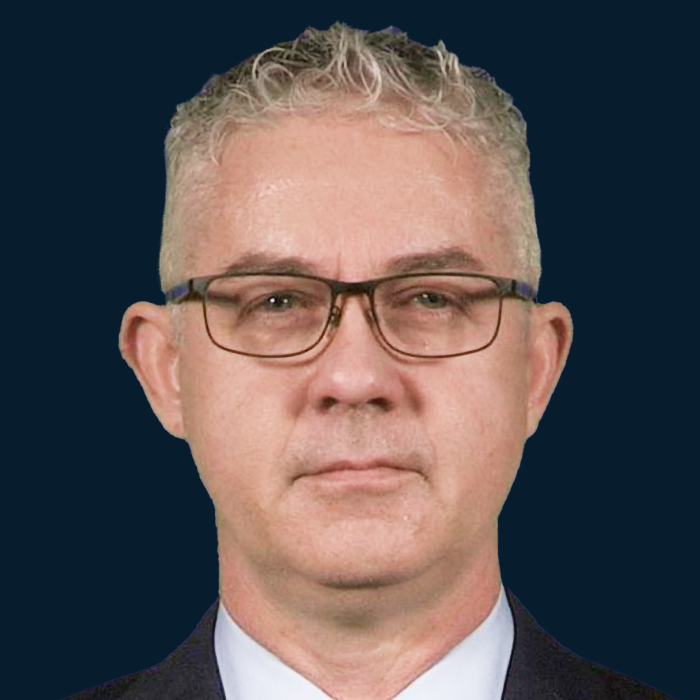
Fighting Fraud on the Frontlines with Toronto Police Det. David Coffey
With David Coffey, and , and and
Detective David Coffey has spent more than 25 years with the Toronto Police Service, tackling everything from violent street crime to complex financial fraud. In this episode, he joins Ari Redbord, TRM's Global Head of Policy, to unpack the evolving nature of fraud in Canada — and how crypto is changing the game.
Now assigned to the Financial Crimes Unit, Det. Coffey reflects on his journey from divisional beat cop to leading major fraud investigations. From account takeovers to human trafficking links, he shares firsthand how organized crime has adapted its playbook — and why cryptocurrency is increasingly the payment method of choice.
But more than tracing funds, Det. Coffey's mission is about public education. With scams like pig butchering and sextortion on the rise, he makes a compelling case that fraud prevention must start with awareness. Det. Coffey and Ari cover:
- How Canada is responding to cross-border crypto crime
- What the Toronto Fraud Intake Office is revealing about scam trends
- The critical role of exchanges in asset recovery
- Why better data and collaboration are essential to solving financial crimes
Det. Coffey's message is clear: Crypto can be traced, but we need stronger tools, smarter partnerships, and an informed public to truly turn the tide.
Click here to listen to the entire TRM Talks: Fighting Fraud on the Frontlines with Toronto Police Det. David Coffey. Follow TRM Talks on Spotify to be the first to know about new episodes.
Ari Redbord (00:02):
I am Ari Redbord and this is TRM Talks. I'm Global Head of Policy at TRM Labs, we provide blockchain intelligence software to support law enforcement investigations and to help financial institutions and cryptocurrency businesses mitigate financial crime risk within the emerging digital asset economy. Prior to joining TRM spent 15 years in the US federal government, first as a prosecutor at the Department of Justice, and then as a Treasury Department official where I worked to safeguard the financial system against terrorist financiers, weapons of mass destruction, proliferators, drug kingpins, and other rogue actors. On TRM Talks, I sit down with business leaders, policymakers, investigators, and friends from across the crypto ecosystem who are working to build a safer financial system On today's TRM Talks, I sit down with Detective Dave Coffey of the Toronto Police, but first iIside the Lab where I share data-driven insights From our blockchain intelligence team.
(01:05):
On today's Inside the Lab, we're spotlighting the Beacon Network, TRM's new real-time crypto crime Response Network, and the founding members driving it forward. Beacon's goal is simple. When elicit funds move onchain, the network helps prevent them from cashing out. Founding members include Coinbase, Binance, PayPal, Robinhood Stripe, Kraken Ripple Crypto.com, Zodia Custody, Blockchain.com, Anchorage Digital Bitfinex, HTX, Poloniex, OKX, and many others working alongside law enforcement agencies. Here's how it works. Verified investigators from both the public and private sector flagged suspicious addresses. Beacon propagates those labels across related wallets, and when flagged funds hit a participating platform. One of those exchanges I mentioned earlier, instant alerts trigger interventions before funds can be withdrawn. Beacon flips the script moving from post-mortem tracing to proactive defense. It's real time collaborative and built to shield the crypto ecosystem before damage is done. For more on the Beacon Network, check out trmlabs.com/resources. And now I sit down with Detective Dave Coffey of the Toronto Police. Today I am really excited to welcome special guest, detective Dave Coffey of the Toronto Police Department. Dave, it is awesome to see you. I'm particularly excited. I don't like to date TRM talks, but I'm going to go ahead and do it tomorrow is game 1 of the World Series and you are rocking your Blue Jays jersey. Tell me what it's like in Toronto right now, and honestly as a lifelong Blue Jay fan, how you're feeling about this moment.
Det. David Coffey (02:57):
Yeah, it's incredible In Toronto right now, it is really incredible. Toronto, we're long suffering sports fans for the most part. I mean, the Blue Jays 92, 93 were our glory days, and I was 22 and 23 years old when they won the first two times. It feels like it's an absolute dream season, but nobody expected this. We were last place last year and it's essentially the same team this year. So it's just that everybody's, you go in the streets, you go on the subway, everybody's rocking Blue Jay, I was out at a show last night in a theater. People are rocking Blue Jays leather jackets. They brought out their best Blue Jays garb. It's just an incredible atmosphere. And of course, being Canadian, we're all obsessed with what America thinks of us. So I'm loving watching the US networks, talking about Toronto and stuff like that, and the MLB Network, I've watched it more this week than I've ever watched it before and they're all talking about, oh, is it cold up there? What do we, oh, we have to get to the airport early. It's international and it's all this kind of stuff. So it's absolutely fascinating. It's awesome.
Ari Redbord (04:10):
That's awesome. I was lucky enough to watch one of the Yankees games, the Yankees series with you a couple weeks ago, and what really struck me was this was away game. The game was in New York. We were out at a sports bar type environment, but every restaurant downtown, the streets were packed and this was an away game. And I feel like the energy around what's happening with the Blue Jays in this run right now is pretty exciting. I mean, one thing about baseball that's so cool is you play that first round series and you have no expectation of going to the next round and then all of a sudden you do, and that momentum and excitement really just builds, and I feel like Toronto is having that moment right now. Alright. I've often thought maybe I should do a secondary podcast just on baseball and maybe some little college basketball stuff, but we do have, this is TRM Talks. We're going to talk enforcement, we're going to talk compliance. But Dave, before we really dig in there, you have a really, really cool and unique journey really rising through the ranks of the Toronto Police Service. Take us back to those kind of early days as a constable all the way through your role today, really kind of leading a critical financial crime component of the service.
Det. David Coffey (05:14):
Well, that makes me go back a lot of years because it's decades. It's 26 years. Last July was my 26th anniversary, and so when I go back to the earliest days, I think, I mean my first week of police college, I got married that same week. So I literally got married on the Friday night and left for police college on the Monday. So there was no honeymoon or anything like that. So right from the get-go family and policing went hand-in-hand. But I will admit, I was a bit of a knucklehead in my early twenties. I was in university, I went to the University of Western Ontario in London, which was right down the street from my house. I was not the best of students. I was more inclined to be out late at night and sleep through most of my classes during the day.
(06:02):
I think part of the reason was I had no purpose for being there. I went to university, it was the next step. You go to high school, what do you do next? You go to university. Okay, what do I take in university? Take a basic social sciences. My best mark in first year was a history, so now I'm a history major. So I mean, university was a struggle only because I didn't have a goal or a focus, but policing was always an option and I always feel best, honestly. It sounds cheesy and it sounds cliche, but it's somewhat selfish, but I always feel best helping people. It's crazy. I feel very empathetic towards people and the pain that they're feeling. I want them to feel better. I want to be there. And it's like I said, it's selfish because it makes me feel good to help them.
Ari Redbord (06:49):
It's interesting. I mean, I think that's really is the very best of what sort of policing and law enforcement is, right? You're there to protect and serve the community, and I think oftentimes in all of the crazy and all of the complex cases and investigations, sometimes we lose focus on the victims and the community that were there to support. In those kind of early days, what were the types of cases you were investigating?
Det. David Coffey (07:10):
Right. So I got hired by the Toronto Police out of London, Ontario, two hours away from Toronto, a good size city, but 350, 400,000 people came to Toronto, didn't really know. They asked you a questions in college, what division do you want to work in? They give you a top three. I'm like, I have no idea. I live in the West End. I want to live in the west end of Toronto. And they're like, okay, we're going to give you 12 Division, 12 Division. When I found out from all my fellow cadets and everything like that, when I told them I was going to 12 Division, they all went, oh God, you're in trouble now. Blah, blah, blah. I mean, it's a beautiful division. It's full of, the majority of the people are wonderful, but it's a rougher part of town. It's an impoverished part of town.
(07:51):
It has an issue with crime, has an issue with drugs, has an issue with gangs, and I loved it. I absolutely loved it. That was where I wanted to be. I wanted to be where there was a lot of that type of police work to be done. So I mean, for the first couple of years when you're a uniformed officer, that's what you're doing. You're answering radio calls, you're going lights and sirens every chance you get to shootings and stabbings and violent calls. So it was a tough place to learn, but it was an awesome place to learn and I loved it.
Ari Redbord (08:24):
One of the reasons I think that maybe we've related to each other over the years, I think we talked a little bit about this when I was in Toronto a few weeks ago, is people don't realize, but the US Attorney's office for the District of Columbia, which is part of the United States Department of Justice, is the only federal prosecutor's office in America that also prosecutes the local crime. So I really spent sort of much of my career as an AUSA as a federal prosecutor working on those cases that you just described, violent street crime, robbery, homicide, sex offense. And I think to your point about there's something really gratifying is a hard word, but really gratifying about being able to help victims in those really horrible cases. But you also really cut your teeth on investigations that way. I mean, everything is urgent, everything is exigent.
(09:07):
You're making the most with the least amount of support evidence. So yeah, I think that's really extraordinary. Was there a moment when you said to yourself, Hey, I want to take what I've learned in the more violent crime world and take those learnings to more financial crime or following the money?
Det. David Coffey (09:26):
I laugh because here comes another confession. So five years into my policing career, I wanted to do drugs. I wanted to do the major crime. I wanted to do the guns and gangs. My eldest daughter was that just born. I was coming out of a training program where you basically go back to the road or you go back to specialty units or something like that. And a good friend of mine who I worked with came to me and said, Hey Dave, there's going to be an opening in the fraud office here. You and I can be partners in the fraud office. Every division in Toronto Police has a divisional fraud office, and they're the grunts of the fraud world in the financial crime fighting world. They get the stacks of reports, and I won't say the exact words that I sai,d in reply to him because it would have to be bleeped, but it was basically, no thank you, not interested.
(10:15):
And then he convinced me though, he said, listen, Monday to Friday day shift, no more night shifts, no more evening shifts, home every night with your beautiful daughter. Your wife weekends off and you get to work with me. And I said, okay, that's a good argument. And that was really the first initial reason why I went into a fraud office. I did it for three years in a divisional level in these things. It was certainly an awakening, not so much as it has been in the last five years because it's still very ground level. It's one report after another. It's paper intensive. But I still to this day, the highlight of those three years was the personal connections to the victims and fostering confidential informants, and major investigations that resulted. It's always been those personal connectioDs that I remember the most, and that was my initial foray into the world of financial crime. But it seems like an entirely different world. That was 20 years ago. The things have changed so drastically and so dramatically. It's almost like it was a different job.
Ari Redbord (11:21):
It is extraordinary. So let's walk through a little bit about what you're doing now and talk about what financial crime looks like through that lens and the types of cases you're leading and investigating.
Det. David Coffey (11:31):
So I came to Financial Crimes in 2020 and I came as an investigator and I have to make mention of my supervisor who brought me in, Detective Sergeant Andrew Stinson, and Detective Sergeant Stinson's, not your typical fraud manager. He's a holdup guy. He's a kicking the door, arrest him today kind of guy, and he just happened to land of financial crimes. So he understood the operations of financial crimes, but he still had that holdup mentality. So he called me up one day and he said, okay, Dave, we got a spot here. I want you to come in, but I don't want you to sit at a desk all day and just type out production orders and things like that. I want you to do investigations, kick in doors, get the bad guys. I'm like, okay, that's cool.
(12:17):
So I came to Financial Crimes in 2020 and right away I was thrust into an investigation involving basically gangs, doing account takeovers in banks where they were fostering almost at the beginning too. It did have an element of human trafficking because what it involved was them bringing runners into the banks with their fake IDs and then taking people's accounts over with the fake ID and asking for new bank cards and things like that. Historically, what would happen is those runners get arrested every day. The one going in, sticking their neck on the line, the people handling them, the managers, the leaders are on their cars in a parking lot or they're in their nice little fancy condominium. So what I was told was, okay, when we get one of these runners, I don't want him to be, he'll be eventually charged, but he's not the target. The target is the people driving him there. So that resulted in trackers being put on cars, trackers being put on phones, the location, the discovery of lock boxes in public parks where on a daily basis people were showing up, and we knew this because we had a camera in the park put up. We're watching fraudsters, and then we had the ID maker dropping off the ID every day. So it was a fun investigation. I had mobile surveillance, I had all the resources I needed, and at the end of the day it was called Project Hydra. We arrested everybody. We got the ID maker, we got every level of the organization. So it was fascinating, but that took two years. That was investigation and in the courts and everything like that.
Ari Redbord (13:54):
That is one of the significant differences between financial crime investigations and violent crime is that you're weeding through piles and piles of evidence and documents and wire transfers. You mentioned technology a bunch of times actually in that description of your case to include cell phones and tracking devices and that type of thing. Did there come a time that you started to see cryptocurrency in some of your investigations, or do you recall sort of a moment there where you started to focus more on sort of the movement of crypto.
Det. David Coffey (14:22):
So that would've been after I moved to in 2023. It was really, really an important development within financial crimes unit here. The way we investigated financial crimes .Prior to May of 2023, just for a little bit of history, if you were a victim of a fraud in Toronto, anywhere in the city of Toronto, you made a fraud report. Your fraud report went to one of those, whatever division you lived in. So if you lived in 12 Division, it went to those divisional fraud. It didn't come to us. The financial crimes unit we're in headquarters, we're the hub of financial crime investigators, but they never came to us, so we never had a big picture of how much fraud there was. COVID changed that because of course during COVID fraud started exploding questions, being asked, complaints being made, the high ranking supervisors coming onto the floor and saying, Hey, I know somebody who's just victimized by the grandparents scam.
(15:20):
How much of that are we seeing? We couldn't answer the question. We had no idea because they weren't weren't coming to us. They weren't big enough for us. We had major multi-jurisdictional, multimillion dollar projects. That's what we worked on. So we didn't have a picture of the overall fraud. May of 2023., that changed when we created the central fraud intake office. Now, all fraud reports come to us first. They're cataloged, they're counted, they're added up in terms of damages victims, and what that resulted in was a need because those numbers were so mind boggling. They blew everyone's mind. They were far bigger than anyone expected. What they needed was somebody to tell the public about it. They needed public to be alerted to trends. They needed someone to talk to the media. They needed someone to go to conferences and talk to professionals about, and we didn't have anybody like that. And for whatever reason, my boss came to me and said, okay, hey, would you like to do this, Dave? To which I agreed, it wasn't until we started actually counting the fraud and reading the reports, because every day those reports come out directly outside my office here. My officers here every day. They're triaged, they're read, the complainants are called back, so we know what's happening and we see the numbers.
Ari Redbord (16:37):
It's extraordinary, and you've done an amazing job, hence sort of really wanting you on to talk on the show today. I've often said that we're not going to trace, we're not going to investigate ourselves out of this problem. It is going to come down to educating the public, and I'm really excited to dig into a little bit about how you think about that and the things you've been doing. You mentioned typologies. Maybe go through a little bit about the types of cases you're seeing in Toronto. I have to believe they're probably pretty familiar to what we're seeing across the United States and Europe and elsewhere.
Det. David Coffey (17:07):
Yeah, I mean, we, like you said, we're very consistent with what the rest of the world is seeing. We released a top five after 2024 and the rest of the world, our number one was investment scams, and even at that time, I think we differentiated between romance and investment. Of course, now we know that they are one in the same. Oftentimes pig butchering being the result of that. So it's number one, and it was huge. It was huge because while it might not have been the same quantitatively, so lesser numbers, the end result, the damages accrued by the bad actors, transnational criminal organizations was just mind blowing. Like 70% of all our fraud damages we're going to investment frauds. There's been recent connections to sextortion scams coming out of these same camp compounds. So with cryptocurrency, it was inevitable because cryptocurrency has become the primary means for which the fraudsters get their money, whether it be the victim sending it to them directly through crypto, it's becoming prominent, and so the end result of that was a frustration on our part because more often than not, when we would get these massive investment scams, these investment scams where somebody would lose 2, 3, 4, 5 million, we were too often saying to them, I'm sorry. There's nothing we can do. There's nothing police officers hate more than saying, yeah, sorry about your luck. There's nothing we can do about it.
Ari Redbord (18:37):
It is the most frustrating thing. I get DMs every day, our team does. We're very forward-leaning about not doing recovery services because we've been victims in cases where they'll be impersonating me or one of my colleagues or TRM. So we're really careful about those things. Let me ask you this. We talk a lot on the show about this paradox around cryptocurrency, right? You described the ability to move funds faster really in larger amounts than ever before. That's why crypto is sort of the go-to means of value transfer, but we can also track it and trace it in ways that we never could before. I was struck having dinner with your team a couple of weeks ago, how really well-versed and super sharp they are on this topic in particular. Talk a little bit about how your team, or even how more broadly Toronto Police is investigating cases involving cryptocurrency.
Det. David Coffey (19:26):
Yeah, well, thank you for that and that's why I brought them, because they were the best. Detective Rubel-o in particular, that is his forte right now. He has made it his primary mission to push the roadblocks further away. In all honesty, we still have more roadblocks than we have freeways. There are still more challenges than there are answers right now, but it's like you said, crypto, I always push back. I would read in the newspaper, see on the news, once it's gone sent in crypto, it's gone. It can't be traced. I'm like, no. It's the ultimate. We know exactly where it goes, and I even push back on this anti-crypto thinking because it's like being angry at money. When money is transferred, when Fiat currency is lost in a fraud, we don't get mad at the money yet. We still have this blame on crypto.
(20:19):
Crypto is just a means in which they're enriching themselves and taking it from us, but crypto is ultimately traceable. The issues with crypto that we come up with, it's not the tracing, it's not knowing where it went. It's really the jurisdictional limitations that we have because fraud is not local. I always say if they're local, if they're in the GTA, greater Toronto area, even if they're in Ontario, even if they're in Canada, we can reach them. No, we can reach out to Vancouver. We can reach out to the RCMP, we can reach out to the OPP Ontario Provincial Police. But once that tracing shows it going to Myanmar, Cambodia, China, Russia, those are the jurisdictions which we have not yet been able to overcome. So it's through the exchanges that that has to happen clearly, and that's where Detective Rubelllo, that's his forte right now, reaching out to those exchanges and trying to come up with means to recover that money for victims.
Ari Redbord (21:22):
Fantastic. You mentioned sort of your public outreach and some of the work you do there as a result of that. We were independently in a CBC series on cryptocurrency ATMs and their use for illicit activity. Canada per capita has the largest ATM ecosystem in the world. That was interesting to me sort of going in as we provided some data to CBC for this. Would you talk a little bit about that experience, but really sort of what you've seen from ATM activity and why it's an important topic?
Det. David Coffey (21:49):
Yeah. I thought it was a really well done piece put together by the CBC. I've done interviews before. I did one for a newspaper even a year ago, and I've always had this, most police do because we don't really see the positives to crypto ATMs. We just see the negatives. We see the fraudsters manipulating the victims into going there and the elderly and things like that. So we see the negative. So I was happy to be on the side of the majority claiming that something needs to be changed. I know in that piece, I actually said, yeah, I'd like to see them banned. However, we don't need to ban them, and I am not always in the favor of just banning technology. Firs, it's impossible. But regulations can change. That would put them out of business essentially by making the operators pay for the victim's losses, things like that that has actually been done else places in the world.
Ari Redbord (22:44):
Talk me through from your investigations or your involvement in the documentary series, what is it about ATMs that make them so more likely to be involved in illicit activity than the rest of the overall ecosystem?
Det. David Coffey (22:56):
Primarily, it's based on the ignorance of the victim, and that's not a negative pejorative I want to put on the victims, but that's literally what it is. That's why we have victims primarily that are elderly. People who don't understand cryptocurrency, they don't know what it is. So when most of our crypto ATM frauds are ground level, there are things like popups on laptops or telephone calls from fraudulent financial investigators, financial institution investigators, and it's the same playbook. These fraudsters use psychological manipulation to terrorize their victims and to make them fear that their money is going to be stolen from the bank and that the only way to protect it is to put it into this magical machine called a crypto ATM, which they don't understand. They don't understand when they're putting in their a thousand dollars or $900 to get it under the regulations. It's going to the bad guys. It's not going into this nice safe wallet where they can get it back later and things like that. So that's the vulnerability. That's how victims are being manipulated by the fraudsters, and I think that's where I always fall back to education and awareness. We just need people to know.
Ari Redbord (24:09):
To that end, what else should we be doing? Right? I mean, I know you're super focused here and like I said, we're not going to trace or investigate our way out of this. What are other things that we could be doing or that are being done in Canada that maybe are great examples or best practices?
Det. David Coffey (24:21):
Well, I feel like we're riding a really positive wave right now in Canada. In September, we announced, are we
Ari Redbord (24:28):
Talking about baseball again?
Det. David Coffey (24:29):
No, about baseball. That's all part of it. That's why we're all feeling really good right now. But no, September it was announced the Canadian Anti-Scam Coalition. It's modeled after the Australian model where they unified, where they collaborate between financial institutions, telecoms, social media, all the means through which fraud is being perpetrated, financial crime is being perpetrated, and basically it's an awareness campaign. It's knowledge and awareness. It's the banks talking to people, it's the telecoms, and hopefully though there's more. It's not just advertisements and awareness and things like that. Hopefully they can really work together and share information and shut down websites that fraudulent pop-up websites, fraudulent investment websites that really needs to happen. So that was positive. The news this week about the Prince Group in Cambodia, that really gets me excited because that's an example that I want to see where it's essentially the US Department of Justice reaching out past its borders and getting their hands on these people. That excites me to no end because in this world of fraud, of pig butchering, of billions, of trillions of dollars being lost, borders are irrelevant.
Ari Redbord (25:45):
Let's talk about that. That is a perfect segue to what was going to be my next question regardless, and yeah, I also was really excited to see that action. Look, the Prince action is probably the best example of not only whole of government in the United States, but also multinational. How do you think about working with RCMP, working with other law enforcement agencies, but then even more broadly, globally, working, whether with the US government, European allies, Australia? How do you think of this type of collaboration?
Det. David Coffey (26:12):
It's absolutely thrilling because as I said, we come up against jurisdiction every single day. We will get occurrences for millions of dollars, and once jurisdiction raises, it's an ugly head. We don't have somewhere to go. We don't have the Department of Justice to report to cross border collaboration. I mean, it's a no brainer. It's absolutely essential because literally the fraudsters don't worry about borders. I do a presentation at conferences, and my one slide is I'll have a closeup of Toronto and then I'll have it blown up until it's the entire planet, and I'll say, this is the playground of the fraudsters. This week was really another reason for optimism that we had was the announcement just this week by our federal government for the creation of a national anti-fraud strategy, and this was hopefully it's going to be the start of something really, really meaningful. It's something that we all know is essential,
Ari Redbord (27:10):
And moving very quickly towards this, which I saw something around the Spring of 2026, which means obviously huge government priority,
Det. David Coffey (27:17):
And I don't know if it's going to be quick or not because it was initially introduced in 2022, and here we are in 2025 introducing essentially the same thing, but I think there's no excuse for the government not to act. They have to act. There was a poll last week that Canadian businesses reported 7.2% of their overall gross is lost to fraud. It was over $111 billion. I love results like that because when is the businesses getting hit and their shout is a lot louder than mine, so the government's going to listen to that.
Ari Redbord (27:51):
To that end. One thing I think is really cool about your journey, obviously you have the sort of the violent crime, street crime aspect in the early days, but obviously you spent a lot of time on financial crime. How have those investigations changed? Yeah, we're investigating cases on blockchains as opposed to sort of paper trails, but is it the same type of investigation that you've been doing all these years still today, or is it truly different?
Det. David Coffey (28:13):
So the investigations themselves haven't changed too much, yet, because we're not yet able to see an end site for investigations involving crypto. So here at Financial Crimes Unit, we have what's called major frauds. We're still doing ground level investigations that we have access to the bad guys, we have access to the money. We haven't evolved far enough yet, and that's where Mark is at. We haven't evolved far enough yet to really conduct a fulsome crypto investigation. We're still bogged down with legal. We're in touch with our crown attorneys. We're in touch with the courts. All of them are very nervous about negative case law, so they don't want us rushing out seizing Bitcoin ATMs. They don't want us calling up exchanges and threatening them to give the victim back their money. Those type of things, those things are happening in certain places. They're not happening here because we're being very careful of creating a foundation from which we can go forward. I mean, there's no other way around it. I envision those investigations will take place in the very near future. We're still working on processes, unfortunately.
Ari Redbord (29:33):
It's understandable when I think through these issues as a lawyer, I look around the world and I say, wow. We're literally creating precedent of as we speak, and that's true across the world, whether it's in the US, Canada, the UK, elsewhere. I mean, every court case is new precedent in this really, really nascent space. Last question. I'm going to let you go on this. Look, we talked about the Blue Jays. What are the other things, look, you've had a really intense job. I mean from violence, street crime to the most critical financial crime investigations in Toronto. What are the other things you do to relax? What are your hobbies, interests? Other stuff?
Det. David Coffey (30:07):
My wife would tell you, I relax far too often, to be honest, probably I like
Ari Redbord (30:11):
We have not gotten,
Det. David Coffey (30:12):
I like my tv. I like my streaming. I like my movies. I read a lot. I can't go to sleep without reading at night. My youngest now plays hockey. It has been a balance and was, I often joke with them. I say, you guys ruined my career because you made me want to be home all the time. And you can't do that as a major crime detective. You can't do that as a guns and gangs or a drug squad. But really, I am in the best place I've ever been with what I am doing now. Trying to get out the word to the public has really been the most gratifying thing that I've ever done. And if there is a silver bullet to financial crimes and there isn't, but if there was one, it would be knowledge and awareness,
Ari Redbord (30:55):
And that's where the education comes in. And you have done such an excellent job there and really grateful to have you doing that. Thank you so much for joining TRM Talks, go Jays, which is not something that I have ever said before, but I am excited for you guys. I'm excited for the city of Toronto.
Det. David Coffey (31:10):
Thank you very much. It's an honor.
Ari Redbord (31:16):
I love the conversation with Dave, and I mentioned having had dinner with him and spending some time and I left with the same feeling. And that is, look, the scams fraud, pig butchering type activity is happening everywhere. And what we're seeing is financial crime investigators in places like the Toronto Police just inundated with these types of cases, and it's absolutely critical. And I think what he uniquely understands, and this is why I think I've really gravitated towards him in the work he's doing, is that you're going to have to educate the public in order to avoid these scams, right? Once we're tracing and tracking crypto funds, it's oftentimes too late. What we have to do is educate victims or potential victims before they ultimately have their funds stolen, are scammed. And I think Dave really, really uniquely understands this. And I think it's so cool that someone who's risen through the ranks from being essentially a beat cop up until running a financial crime organization and a major police department is now seeing crypto in so many of his cases.
(32:14):
I think what we've often said here is that eventually crypto is going to be in every case, right? Because it's just the means of value transfer in the world. Blockchains are payment rails and bad actors make payments on blockchains and good actors make payments on blockchains. And I think Dave is a great example of someone who's starting to see that. And we're going to see state, local, federal police in every country in the world deal with the types of cases that Dave is dealing with today. On the next TRM Talks, I sit down with the Vice President of international policy at Coinbase, Tom Duff Gordon. If you love the show, leave a review wherever you're listening to it and follow us on LinkedIn to get the latest news on crypto regulation, compliance, and investigations.
TRM Labs (32:58):
TRM Talks is brought to you by TRM Labs, the leading provider of blockchain intelligence and anti-money laundering software. This episode was produced in partnership with Voltage Productions. The music for this show was provided by iKOLIKS.
Ari Redbord (33:15):
Now let's get back to building.
About the guests
David Coffey is a Detective for Toronto Police Service, and has been assigned to the Financial Crimes Unit since 2020. While at the FCU, Detective Coffey has been the Lead Investigator of a number of major fraud investigations including Project “Hydra”, an investigation into multiple occurrences of identity fraud and bank account takeovers, which resulted in multiple arrests and the 2021 Investigative Partnership Award from the International Association of Financial Crimes Investigators (IAFCI).
Detective Coffey joined the TPS in 1999 and since then has spent the majority of his career in investigative units including divisional Criminal Investigative Units, Fraud offices and the Intelligence Unit. Before transferring to the FCU, Detective Coffey was responsible for and managed the Youth Services Bureau, as well as, the Fraud Unit at 14 Division, one of the city’s biggest and busiest divisions, located in downtown Toronto.
Detective Coffey has received extensive training in investigations involving Financial Crimes, Domestic Violence, Sexual Assault, Child Abuse and Firearms, amongst others. He is experienced and trained in the production of Search Warrants and Production Orders, the use of Confidential Informants and in Advanced Interviewing techniques.
Detective Coffey is a fervent believer in the value of educating the public to make them aware of potential threats from fraudsters and providing best techniques on how not to be victimized. He feels strongly that the most impactful weapon in the war against fraud is knowledge and awareness.
More TRM Talks
Subscribe to TRM Talks
Subscribe to be the first to hear about new episodes, and to stay in the know about all things blockchain technology and crypto policy.