
Oct 22, 2025 - 37mins
EPISODE 96
From Policy to Payments: Building the Future of Money in APAC with Circle’s Yam Ki Chan
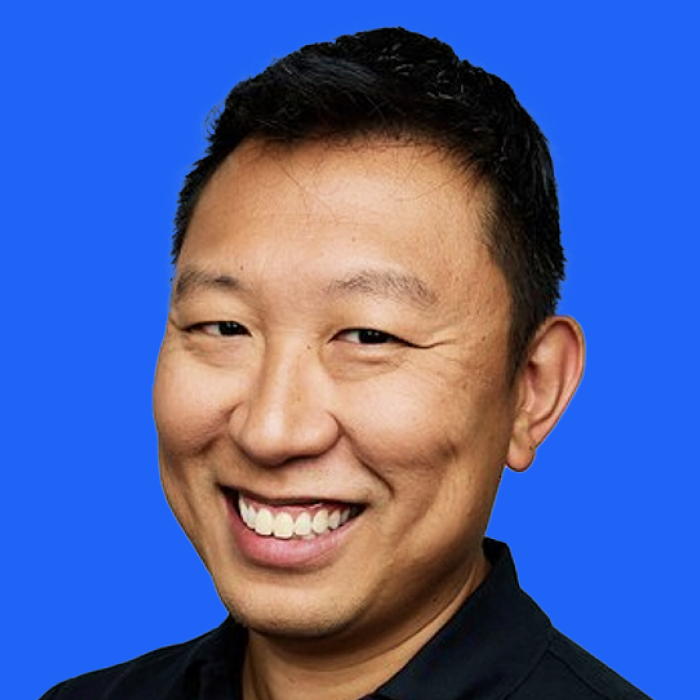
With Yam Ki Chan, and , and and
Stablecoins are transforming how money moves — and nowhere is that shift more dynamic than in Asia. In this episode of TRM Talks, Ari Redbord, TRM’s Global Head of Policy, sits down with Yam Ki Chan, Vice President for Asia Pacific at Circle, to explore how stablecoins are powering the next chapter of cross-border payments, trade finance, and digital money innovation.
From his early days tinkering with school computers in Chicago to his tenure at the US Department of the Treasury negotiating policy with China’s top leaders, Yam Ki brings a rare blend of policy depth and business execution to the stablecoin conversation.
Together they dig into:
- Why stablecoins are an upgrade to traditional money rails
- How Asia’s fragmented regulatory landscape creates both challenge and opportunity
- Real-world use cases for USDC across remittances, commerce, and trade
- The leadership roles of Japan, Singapore, and Korea in shaping global standards
- Why the US “Genius Act” marks a global inflection point for digital assets
The discussion also touches on how AI is fueling new fraud tactics — and how blockchain intelligence platforms like TRM are helping regulators and businesses fight back. Don’t miss this deep dive into the APAC stablecoin playbook and the future of financial infrastructure.
Click here to listen to the entire TRM Talks: From Policy to Payments — Building the Future of Money in APAC with Circle’s Yam Ki Chan. Follow TRM Talks on Spotify to be the first to know about new episodes.
Ari Redbord (00:02):
I am Ari Redbord and this is TRM Talks. I'm Global Head of Policy at TRM Labs, we provide blockchain intelligence software to support law enforcement investigations and to help financial institutions and cryptocurrency businesses mitigate financial crime risk within the emerging digital asset economy. Prior to joining TRM spent 15 years in the US federal government, first as a prosecutor at the Department of Justice, and then as a Treasury Department official where I worked to safeguard the financial system against terrorist financiers, weapons of mass destruction, proliferators, drug kingpins, and other rogue actors. On TRM Talks, I sit down with business leaders, policymakers, investigators, and friends from across the crypto ecosystem who are working to build a safer financial system
(00:51):
On today's TRM Talks, I sit down with Circle's, Head of APAC, Yam Ki Chan, but first Inside the Lab where I share data-driven insights from our blockchain intelligence team.
(01:06):
In late May, 2025, OFAC designated Funnull Technology Inc. Technology Inc. a Philippine based tech firm and its administrator Liu Lizhi as especially designated nationals for supporting crypto investment fraud, specifically pig butchering schemes infecting over 400,000 scam websites globally and causing more than 200 million in US victim losses. The move marks a pivotal shift enforcement targeting not only scammers but the technical infrastructure that enables them. Funnull's operation was a classic example of infrastructure laundering. It purchased IP addresses in bulk from legitimate cloud providers, then resold them to fraud operators. The company also generated fake domain names via algorithmic tools and provided web templates to impersonate trusted platforms. Some of its infrastructure was even used to redirect legitimate websites, visitors to scam and gambling sites facilitating Chinese linked money laundering operations connected to North Korea. OFAC included two cryptocurrency addresses in the designation, one on Ethereum and one on Tron, which have totaled over four million in transactions to date. Those funds show both direct ties to we one pay a FinCEN designated money laundering concern and indirect exposure to known pig butchering groups and forced scam compounds. US Deputy Treasury Secretary Michael Faulkender emphasized that disrupting infrastructure providers like Funnull is essential to dismantling the broader ecosystem of crypto enabled investment fraud. The US' government is pivoting from targeting individuals to also undermining the operational backbone of large scale schemes. For much more read TRM's in-depth report on our blog and now I sit down with Yam Ki Chan.
(03:06):
Yam Ki, thank you so much for joining me. I have really been excited to talk to you on TRM talks.
Yam Ki Chan (03:11):
Thank you so much for inviting me. It is truly an honor to be on this platform and to do it with you specifically because I think you're one of the few people in this industry that's similar to me, can bring a lot of different experiences together.
Ari Redbord (03:24):
As we dig in here and we're going to go pretty deep on a couple topics, just talk a little bit about your journey. It is really extraordinary, really unique. Talk a little bit about sort of how did you get into crypto? How did you end up really leading the team in Singapore for Circle?
Yam Ki Chan (03:39):
Well, it's a great question and it's funny that my earlier part of career is me seeking advice and I now know that I'm old when people come to me for advice and they're usually starting with this sort of question and the honest truth is that I fell into it as backwards. This industry didn't exist 20, 30 years ago. It kind of came to be really from the Bitcoin days, but in this current iteration, the last, especially stablecoin the last five or six years, thankfully for me, I had a number of things in my life that brought it together where I got to work at the intersection of finance, technology, policy and international kind of all come together. Maybe a way to start on this is I'm an immigrant kid to the United States. I was born in Hong Kong. My family applied to the us. It took them, I don't know, eight, nine years to get approval because it was through family immigration and we landed in Chicago with not a whole lot and me plug it into public school in inner city Chicago and trying to navigate how to learn English and how to think of this new world that we're in.
(04:46):
During that period of time, it was the early nineties was the beginning of the internet in the United States. One of the things I gravitated towards for some reason was the computers and technology and I found myself working in different organizations as a kid, just helping people to fix computers. Eventually at school I helped my high school build their email system and DNS servers and web servers. This was built on Netscape back when Netscape was really popular and that was a part of who I was as a kid. Then eventually as I went through high school and college, I ended up getting into economics and studying abroad, and my first job off the college was actually investment banking in the Bay Area in Silicon Valley, in semiconductors in particular in the heart of Silicon Valley, which at the time semiconductors wasn't hot, it was enterprise software. It was the days of Google going public.
(05:37):
But I learned a lot about technology and how that works and how to enable businesses not just in the valley but elsewhere to build. And I ended up leaving banking, worked in China for a couple of years through a program called Princeton in Asia that sent fellows to different companies and organizations, worked with a CEO there to build that business and we went to graduate school focused on international finance policy and I've always been thinking through how I'm living in between these worlds between US and Asia. There's so much that's happening and we misunderstand one another. Where do I go to improve that? And of course in graduate school happened to be an international finance policy and coming out of it got an offer to work at the US Treasury Department and I fell into the policy work. Yes, I wrote my essay going into grad school focusing on policy. I didn't think that I would actually get there, but sometimes you manifested and then next thing you know, I'm now briefing the Treasury secretary on different things and
Ari Redbord (06:39):
It's absolutely awesome. And obviously the finance piece and the business and the technology combined and then you take that to treasury from a policy perspective, what was your role? What were you doing at Treasury when you were there?
Yam Ki Chan (06:52):
So there's this group called International Affairs, which is essentially the financial diplomats of the United States. This is the group that looks at how economies are operating, how are they functioning, are they working well? What's the balance of payments, the risks to them from a macro perspective, exchange rate issues, IMF programs, World Bank programs. It also is the group that leads on a lot of the economic negotiations with the rest of the world. And I started as an international economist focusing on Central America, and then I moved to a group called the Committee on Foreign Investment in the United States. That was probably my first exposure to really deep national security work and thinking about the intersection of economic policy and investments together with national security and how to bring an interagency together to come to an agreement on certain things. Then I was tapped to work on the US China Strategic and Economic Dialogue, the SNED, which was the highest level cabinet conversation between US and China, and I started under Secretary Geitner at the tail end of his tenure and then helped support Secretary Li in his establishment of relationship with the Chinese policymakers, folks like Han Wang Yang, the vice premiers, and then of course setting up meetings for him with President Xi Jinping and others in the Chinese government and working through all of that negotiations.
Ari Redbord (08:14):
What an extraordinary experience and just so much relevant perspective to what's happening in the world today. I imagine as you sort of see geopolitics unfolding everywhere,
Yam Ki Chan (08:22):
I feel really lucky. It was not something that I planned for. It wasn't like I was 12 and I said, I'm going to go work in the government. To be honest, I was an immigrant kid trying to figure out how to learn English and how to get my family through all of the bureaucracy of signing up for school lunches and stuff like that, but it's not lost on me. You have to treasury or rather, as part of my treasury experience, one of my mentors happened to then join the White House National Security Council and pulled me over to help support their work on all of the Asia economic work. And I remember just thinking really thoughtfully about this, that what an unusual world that they have a kid who was born in Hong Kong that became a naturalized American citizen that are negotiating with the Chinese government on behalf of the United States, what country would allow for this. So extraordinary privilege.
Ari Redbord (09:14):
So you spent some time at the National Security Council, which I imagine also really sort of built those national security, global competitiveness, these chops. Right.
Yam Ki Chan (09:23):
Well, what's interesting about the group that I was at, it's called Intercon International Economics, and it was something that was created under the Clinton administration, and if I remember my history correctly, Larry Summers, Ruben and others are the one who created this group and it was coming out of the Cold War, the United States thought about how do we marry the economic might of the United States and the national security part. So this group, it's part of National Security Council, but it's also a part of National Economic Council, so I report it into both on the econ side I reported into Jeff Zients who eventually became the Chief of Staff for President Biden and then on the security side to Susan Rice and I literally just go back and forth between the two groups explaining guns to people who sell butter and people who sell butter, what guns are and how to balance that power of the United States to shape the world and influence it in a way that is for global prosperity.
Ari Redbord (10:21):
It's really extraordinary. Interestingly, when I was at treasury, this crazy project called Libra launched and the US Treasury Department and US policymakers on Capitol Hill went absolutely crazy, but really what it started was this conversation about what a stable asset that moves on blockchains backed by fiat currency could ultimately mean to the world. Was there a moment for you when you saw this and said, Hey, this is the type of thing or this is the type of company when we're talking about Circle that married your passion for computers and technology with this international policy passion.
Yam Ki Chan (10:59):
So this is going to probably be sacrilege for especially your audience, but I was hugely skeptical of digital assets back then with crypto right when it first starts because I imagine sitting in the Treasury Department and eventually at the National Security Council, someone just created these new things like fiat, literally fiat money I guess in this instance and who kind of backs it? It was really hard to wrap my mind around and immediately I was thinking none of the central banks would go for this, or at least very few that I can think of because they lose monetary sovereignty, the ability to control money, supply interest rates, one of the key drivers of economic growth and business cycles. This is going to be really, really difficult. So it's a bit of an irony that I find myself now at Circle.
Ari Redbord (11:46):
How did that happen?
Yam Ki Chan (11:47):
So after the Treasury and the White House, I left US government and joined Google and actually first joined Google in Hong Kong and then in Singapore, and that was really cool. I mean as someone who back in the younger days worked in Silicon Valley and watched the Google IPO, it's a great opportunity to be in the depths of a large technology company and more importantly, even when I was in government during the last few years of the Obama Administration technology competition was becoming a major theme and topic in the economic conversation. The issues around China that had this thing called secure and controllable, there was a meeting in China 2025 program, all these things were shaping the economic policy and some of the national security policy and in the White House we had to bring in experts to help educate us on how to think about this, what is the timeline, what is really the competitive advantage?
(12:44):
How hard is that to do certain things? So when an opportunity came that I could actually in one of the largest technology companies and soak that up, I took that opportunity and after about five, six years at Google, Circle was reaching out, they needed someone to work on policy and I got a call with Dante and I said, this is a terrific guy and I understood better what stablecoins are and how they really can change the way money movement works and what it means for creating economic prosperity and then therefore it was an easy decision. It wasn't that hard at all and really glad to be a part of this company story.
Ari Redbord (13:23):
I love that. Talk me through stablecoin a little bit. What is it about this ability to now transfer value cross border to reach really the unbanked corners of the world potentially, but how do you see sort of the mission at circle and what you're able to build from a business perspective?
Yam Ki Chan (13:37):
I think first and foremost is to situate what stablecoins are and what it isn't, and there's a lot of misconceptions around it, and not all stablecoin are created equal. So first and foremost, stablecoin is just an evolution of money that have been going through the process, being digitized over time from the very beginning of money of shells and hard metals eventually to paper forms and other things, and then digitally sitting at your bank account or in your Venmo app if you're in the United States. This is just an evolution of that to be on a database that is now more accessible globally and more efficient than closed loop networks that are sitting in these different bank accounts that doesn't interact with one another, right? Even though you are on Venmo and I'm on PayPal, for me to send you money isn't that easy. We have to wait a couple of days for that to happen, and that's within the same company.
(14:31):
It's kind of odd. It shouldn't really work that way. So there are these friction that's embedded in the way digital money is and what blockchain brings as well as with stablecoin is a way to upgrade digital money to a better form that's more efficient. So that's one thing. The other piece is this form of digital money is only good as in trusted and safe. If it is truly backed one-to-one that there's no funny money that's being created. And circle's approach to this was number one, to go through and work with the regulators. That was really important for the firm and it's important for me as a former government official. The second piece is there are reserves that you can see that are attested by third parties of where it is what's there, and it's on a regular basis that you can trust it. So when you have all of these things in place, what it now does is that businesses and network firms can now think of how do I move value in ways that I couldn't before?
(15:30):
That is number one, allowing me to touch more users than previously because the user acquisition costs in the past in the technology world was really high and the two-sided network is the merchant acquisition part that's also really high, and now you can actually lower that cost because now we're operating on one network as opposed to different separated networks and designed to be separate. The other piece is that for businesses in Asia in particular, some interesting stats, 75% of trade invoicing in Asia is denominated in the dollar. This is according to the Federal Reserve, and that includes all of the trade in Asia, including trade from China, some of which are denominated in REM B. So when you remove that, the number's probably higher that if you walk into any firm in Asia and you open up their virtual cabinet and pull an invoice is denominated in US dollar.
(16:18):
So these are firms that needs to have access to dollars to be able to buy supplies and be able to collect dollars so that they can get revenue in a quick and fast way. And they've been sitting around working with various institutions that takes two or three or four days to get money to them or to pay out. And what that means is that this is money that sits as working capital on their balance sheet or a bank account that they can use to deploy on buying inventory, paying payrolls, investment in CapEx and other things. So you're unlocking that for these businesses. On the user side, let's take remittances. The World Bank estimates that to move $200 into the Asia region, on average the cost is just around 6%. That's $12 to move 200 bucks into Asia, and this is usually the most vulnerable in the population that needs to be sending these remittances at the low amounts and they're spending a high percentage of their costs and waiting sometimes days to get that money.
(17:18):
Stablecoins is a way to address that, to shrink that time and have quicker conversions on trade trade financing. The Asia Development Bank estimates that the trade findings and gap in Asia is around 510 billion dollars. That means that there's certain firms that are ready to produce and sell to the world economic activity that doesn't happen because they can't get credit, especially in dollar forms quick enough in order to invest in inventory in a machinery to do that trade. So it was just so obvious when you think bringing all of that together, the economic activity and the creation of wealth and revenue for the region was significant.
Ari Redbord (17:57):
One thing that you guys I think do really well and need to is really tell the story, and those were awesome examples. I remember being in your booth at the Singapore FinTech Festival last year and you actually had these sort of, it was storytelling. The booth was created with walls that each had sort of stories or examples of how USDC is being used in the world. What jumps out at you as just really cool sort of case studies and things that you guys are working on or partnerships that you have to use USTC?
Yam Ki Chan (18:23):
So one of those partnerships is Tunes. Tunes is a company based in Asia, but they're global and they do money movement for a number of different companies around the world and for merchants and individuals through these partners. So MoneyGram, Remitly, Western Union are the type of customers, and essentially what they do is when these firms send them dollars, they will be able to pay out in local currency near instant around the world. But what was happening is that they were pre-funding all of this in different bank accounts and they were eating that cost and then they have to wait for the money to arrive at the bank account in the US or Europe and then send that money back out to the region when they can.
(19:08):
So what they're doing is they're using USDC as a way to move those funds more quickly and to be able to pay out to different partners around the region in USDC, one of those areas is their partners in parts of Africa, they used to have to spend five days or seven days of pre-funding because the banking rails going into Africa were unpredictable, that even though the SWIFT confirmation has happened, the money hasn't arrived yet. So you have to call around to figure out, well, where did it get stuck? Which correspondent bank are you using? Maybe it's someone who just didn't hit approve in some computer system for it to be released and now they can send USDC to their partners on the ground and it settles t-zero as opposed to t-five. Huge economic unlock for them in terms of timing and then for their users to be able to get funds more quickly.
Ari Redbord (19:55):
Really extraordinary. It's interesting. One thing I think we're seeing in the space or certainly I'm seeing is that business leaders, CEOs, CROs are becoming policy experts because we're literally building the regulatory frameworks globally for the crypto ecosystem. I mean, it's happening before our eyes. The US is really just the latest example, but you've gone through this with a s and Singapore, we've seen it in Japan, Korea, in Dubai and elsewhere. You are slightly different in that you are bringing policy expertise to a business role at Circle. You have so many different remits in terms of what you're working on. But I think what's also so interesting about APAC and Angela Ang, my colleague hammers this home to me all the time, is that it's a region with a lot of different countries, with a lot of different cultures, with a lot of different regulatory frameworks. How do you think about navigating that both from sort of a regulatory perspective and also that business perspective as you're building?
Yam Ki Chan (20:51):
Well, first for every executive out there, it is a must to have policy and business in your head. The days of just purely being a business person and let someone else deal with the policy, it's gone out the window. It's not possible in the world that we live in. Conversely, if you're a policymaker or someone who focused on policymaking within the company, without the business mindset, without what it means for the economy, that doesn't work either.
Ari Redbord (21:17):
I could not agree with you more on all these points.
Yam Ki Chan (21:20):
Yeah, hence you have people that are citizens around the world that have discontent with the policies because they're saying, look, your policies are not helping me drive my growth and support my family and create opportunities for my children, and therefore there is these upheavals in different parts of society. They're saying the policies are not working. I want to change it all. And therefore, I think it's really important for leaders to understand that you have to understand it all and you have to be able to bring it together and be conversant in the risks and the upsides of these dimensions. Now, I think specific to what I do, how I think about this part of the world and the nuances is that in Asia in particular, we mentioned the fragmentation. Asia is 30, some countries it's 30 plus different currencies. Every single country has a different regulatory structure, different three letter, four letter or five letter regulator that has a combination of central banking or banking, regulation, insurance, et cetera.
(22:24):
The US has a lot, but then most companies spend a lot of time in the us, but then when they look at the world, I think a lot of us companies forget that this fragmentation, this challenge makes it hard to kind of navigate and it's easy to clump through together a large set of countries and say, oh, this is the Asia market. But really to be able to be successful in these markets require some local context and customization herein lies tension in Silicon Valley, in US companies, the natural instinct is to build something once and scale it globally. I've seen this at Google, I've seen it at other large companies. It's like we've got the best answer because we've built the most efficient model and the most efficient path, and it works great and everyone should use it. They're not completely wrong. The challenge is that when you get to the other side of the world, the user behavior is a little different.
(23:20):
What you are seeing now is that as countries in Asia, also in other parts of the world move from being lower income or lower middle income into middle income and upper middle income, they now have the talent and the companies to really innovate. And what they're saying is, look, Google. Yes, you know, search, but our user behaviors here are different. People don't have fancy phones to load YouTube or load Google photos. They have two gigabyte hard drives on their phone or two gigabyte storage as opposed to 256. The whole mechanism of how they operate, the constraints force them to build differently. And the thing that these companies based in Asia are doing, and when you see it in Grab, you see it in CACAO, you see it in ANS, is that they specialize in these local markets and they really craft that experience and they can dominate in that market and they create a moat around them that it makes it really hard for someone who's trying to take something generic. Yes, it's global, but into the local market, there's going to be some disconnect and these companies are bringing together these different parts and then bringing it all together on the backend to create connectivity.
Ari Redbord (24:32):
It's amazing, and we thought about this from day one at TRM in terms of where we want to build, and I think what compounds this issue is the nature of crypto, which is cross-border value transfer, the speed of the internet, it is international, global by nature, it has to be everywhere or it's nowhere. And I feel like that almost adds this other issue on top of technology where you feel like you really want to make sure that you're everywhere really from the beginning. How have you dealt with that challenge when it comes to building Circle in particular in Asia?
Yam Ki Chan (25:03):
Well, I think a lot about where do I want to be in the stack and how do we work with partners that have that distribution at the local level that knows the local market. So all the companies that we work with, they are specialists in their own market, knowing their merchants, their users, their particular use case. What we try to do is allow USDC and the infrastructure that we have to be that background plumbing for them. So they build that experience, they interact with the user. They're the one that understand how a user moves through an app and how to go from A to B to C, the movement of value. They can just use USDC on the backend to do, but we don't have to be at the front foot of that. These are the companies that know how trade financing flow actually works on the ground.
(25:50):
We want to understand it, but we want to figure out, okay, what are the pain points for them and for their end users, and how do we create partnerships and programs to support and address that pain point using USDC or Circle Wallet, some of our technologies, Circle Payments Network to address the pain that they have. So we're a little more behind the scenes in this context of the differences in cultures and markets. You have to know where the competitive advantages are, and there are going to be other companies that do this better than you. So how do you work with those as opposed to try to create your own?
Ari Redbord (26:22):
You mentioned the last question, sort of the nuance around the different jurisdictions in APAC, and this is going to be a hard question for someone who runs all across the region, are there a couple jurisdictions, one or two or three jurisdictions that get you really excited right now, whether it's about adoption, is it regulation? Where are you having the coolest conversations or you're seeing the most interesting at the moment in region?
Yam Ki Chan (26:45):
Well, first of all, I would say that for Circle globally, the passage of the GENIUS Act and companies going public again just created an enormous set of inbound for us all around the world. Every publicly listed company that has a really good board is asking their management team, what is your stablecoin strategy? What are you doing in this area? Whether you're a bank, e-commerce site, big tech enterprise, oil and gas company, everyone is asking, how do you leverage this? And these are companies that I think we're dabbling on the edges, but now with that clarity in the US happening are jumping with both feet and trying to figure something out here in the region. We are of course structured in first and foremost in Singapore, we're licensed here, and there are lots of money movement companies as well as asset managers and OTC desks that are based here that are working with us, not just in the region, but also globally, lots of activities.
(27:46):
What's happening though is that the other countries are also developing rules on stablecoin. Japan is the first country in the world to actually pass a law on stablecoin and USDC so far is the only approved stablecoin to be used in Japan by the FSA. And we spent quite a bit of time to work with the regulators to enable that,i t's a fascinating place is the fourth largest economy in the world, the enormous amount of trade and FX and a close US ally. So a lot of trade happens in dollars. We're working with Japanese companies looking at in Japan, but also their operations outside of Japan because they are buying and selling goods in parts of Africa, in Middle East, in Europe and Latin America. These are huge businesses thinking through how do we make our company more efficient? Hong Kong passed this law, really critical market because Hong Kong remains the gateway in and out of China, mainland China, and it is also one of the largest, if not the largest capital market that's open in Asia.
(28:46):
It's also the only city with same day dollar clearing in Asia. No other city has that. When you pay somebody in dollars in Hong Kong through a bank, it settles on the same day as opposed to waiting two days or longer. So it gives Hong Kong a pretty unique advantage. And there are tons of companies within Hong Kong that are building using USDC to support their treasury for their global business. So this could be a company somewhere in Asia, but they want to be based in Hong Kong for the treasury management for either tax reasons or the dollar rails. And they're collecting money in Europe and in the US and they want to move it and shift it to Hong Kong, and then they pay for vendors out in Southeast Asia and Latin America and Africa, and they do that in dollars. So that's really fascinating. There are tons of payments processors sitting in Hong Kong that are doing work, and a lot of companies are sitting in Hong Kong, but they actually do work in the rest of the world, but their bank accounts are just structure in Hong Kong because of the banking rail advantages and a lot of banks being available there.
(29:45):
Then you have Korea that had a presidential election and it was 180 degree turn with the new presidency, and now they have not won, but two competing bills on stablecoins. And the rumor on the street is that there will be at least one or two more moving in the legislature, so they will have a stablecoin law in place fairly soon. And the interest in Korea are pretty significant around digital assets and stablecoins. So I'm hopeful that as this regulatory clarity happens, more and more enterprises in particular and banks comes into this space and it creates actually an interesting shift in the market because it's not a surprise to you, but the dominant uses of blockchain finance had largely been on the crypto trading side in the past. And what we're seeing, especially in Asia, is that utility use of stablecoin and that's picking up significantly, and that's what I'm excited to build out here.
Ari Redbord (30:42):
That's the most exciting part of the space. I've said this for years, it's payments, and obviously you guys are right in the middle of that. At the beginning of this, you sort of mentioned genius, and I just want to spend a minute on it. We've talked about it a lot on here, but I thought you had an interesting comment, and I imagine your background is a US regulator and policymaker, and now in your role regulators and business leaders must look to you and say, Hey, can you walk us through a little bit of what's happening in the United States? How interested are regulators, business leaders across Asia on what's happening in the United States right now in terms of this just acceleration of crypto legislation, of crypto policymaking of conversations around crypto? How much does genius come up in the conversation that you're having in Asia, whether it's with policymakers or business leaders all the time.
Yam Ki Chan (31:30):
Wow. One thing that we have the privilege of seeing either living and working overseas or having been in the US government is the extraordinary privilege that we have as the United States to shape much of the rules around the world and in particular rules on financial services. And you can debate whether the United States deserve it, but it is a reflection of what it is today. And because of that, many countries look to the US as a guidepost of what is permitted or not permitted. And while stablecoin and use of stablecoin has been pretty prolific in Asia and emerging markets, some of the tier one regulators as well as the biggest firms in the region had always had a little bit of hesitancy until the US can get the clarity it needs in place around stable point, and now we have it. So this has really shifted conversation, especially at the board level who have been hearing about it and thinking about it, and now the risk committees of the boards of management teams can take a more informed look at what this really is and what's a regulated stablecoin and which companies to work with. So that's a huge part of my conversation.
Ari Redbord (32:46):
I heard Dante say something I think around Genius essentially codifies our business model. It's cool to see just a great product married with the right mission and the right team, and it's been so much fun for me to watch the last really five plus years as you guys have grown. I'm going to end with this. I think that folks mostly know you as a policy expert, business leader, a stablecoin evangelist, but you're also a really fun guy. We have party together. We have hosted many dinners all over the world together. What do you do when you're not, I think you're probably 24 7 circle these days, but what do you do to relax a little bit to have a good time?
Yam Ki Chan (33:23):
Yeah, the blockchain never sleeps well. I have two young kids, so I try to spend as much time as I can with my family and the kids, whether it's cycling around, getting out there, exploring different parts of either Singapore or the region. That's one of the perks of living in Asia is you're never, I mean, Singapore is a small city, so a half an hour flight will get you to a different country with a different currency, with a different language. So try to do that with my family and kids. The other piece is now trying to stay fit. And I know you, Ari, you do this not only when you're in the us but when you're out and about in all the conference circuit. Running
Ari Redbord (34:00):
Singapore is the all time greatest TRM run club.
Yam Ki Chan (34:03):
And then the other part is, it's part of who I am is I enjoy, I really do enjoy the dinners with friends and not because it's just dinners. I learned so much from talking to people. The one thing I've learned in my life is we all come from different experiences and different walks of life. What you see at that very moment is the latest snapshot of who that person is, whether they are head of policy for a blockchain analysis company, or they may be a crypto whale or they may be head of a CEO, but really they've lived through some really unique experiences and there's so much of the world that I don't understand. And talking to these friends really helps me learn and think about, oh, what are the interesting problems to solve and where the gaps are, and how can I be helpful in solving those problems? So I
Ari Redbord (34:53):
Love that so much. It's an extraordinary answer, and I'll tell you, funny enough, it's the thing I love by far the most about TRM talks. So yeah, thank you so much for joining TRM talks. I look forward to doing this again soon.
Yam Ki Chan (35:05):
It's been a real pleasure and I can't wait to see you out here in the region again.
Ari Redbord (35:13):
It's interesting. I've known Yam Ki for a long time and through a number of different really critical roles, and we talk a lot about careers and the trajectory of careers on TRM Talks, and I think his was one of the most interesting, right from Treasury to ultimately circle in a really critical policy role as we saw the growth of stablecoins throughout APAC. But then to really pivot into a business role where he's leading the entire circle team across APAC. I think it's just such a great story in terms of taking that policy expertise, marrying it with the business acumen, and really building something at Circle. And I think more and more we're seeing business leaders in our space in cryptocurrency, whether it's CEOs at exchanges or stablecoin issuers, have real knowledge and expertise on the policy side because it's so important. And Circle in particular that is always really built with regulation, with compliance in mind.
(36:05):
I think it's really interesting to see someone come from Treasury and ultimately lead a business function at Circle in this way. So Yam Ki's story to me, obviously the expertise is so deep and you heard that today, but I really love the career story. There's so much you can do to grow a career if you're really, really good at your job. On the next TRM Talks, I sit down with the vice president of international policy at Coinbase, Tom Duff Gordon. If you love the show, leave a review wherever you're listening to it and follow us on LinkedIn to get the latest news on crypto regulation, compliance, and investigations.
TRM Labs (36:43):
TRM Talks is brought to you by TRM Labs, the leading provider of blockchain intelligence and anti-money laundering software. This episode was produced in partnership with Voltage Productions. The music for this show was provided by iKOLIKS.
Ari Redbord (37:00):
Now let's get back to building.
About the guests
Yam Ki Chan is the Vice President for Asia Pacific of Circle (NYSE: CRCL), responsible for the company’s business and strategy in the region. He leads a team responsible for partnerships and market expansion across the region. Yam Ki advises stakeholders on how stablecoins unlock economic opportunities for businesses and economies. Yam Ki also serves as the Managing Director of Circle Singapore. He oversaw the enablement of USDC in Japan, the first stablecoin recognized in the country.
Prior to Circle, Yam Ki held strategy & operations and public policy roles at Google Payments and Google Cloud, where he worked on partnership strategy, market launches, and government affairs.
Before Google, Yam Ki served as a Director at the White House National Security Council, where he coordinated U.S. economic strategy in Asia and was a member of the US negotiations team for the G-20 and G-7. Before joining the National Security Council staff, Yam Ki worked in the U.S. Department of the Treasury’s Office of the US-China Strategic and Economic Dialogue and the Committee on Foreign Investment in the United States. Earlier in his career, Yam Ki worked in technology investment banking at Jefferies in Silicon Valley.
He earned a Master of International Affairs from Columbia University and a Bachelor’s degree in Economics from Carleton College.
More TRM Talks
Subscribe to TRM Talks
Subscribe to be the first to hear about new episodes, and to stay in the know about all things blockchain technology and crypto policy.